Author: Jen Belcher

AI in schools

The Questions Schools Should Be Asking About AI (But Often Aren’t)

Conversations about AI in schools often feel stuck between urgency and uncertainty. Leaders know the topic matters, but many are unsure where to begin, who should own the conversation, or how to move forward responsibly. Rather than offering quick answers, this article focuses on the questions schools should be asking to create clarity, consistency, and thoughtful leadership around AI use.


Why AI Conversations Often Stall in Schools

In many schools, conversations about AI do not stall because leaders are uninterested or resistant. More often, they slow down because the stakes feel high and the path forward feels unclear. When new tools intersect with student services, compliance, and professional judgment, hesitation is often a sign of responsibility, not avoidance.

One common barrier is the fear of getting it wrong. Leaders worry about privacy, ethics, and unintended consequences, especially in environments where mistakes can impact students and families. Without clear examples or shared guidance, it can feel safer to pause the conversation rather than risk moving too quickly.

Another challenge is the lack of clarity around responsibility. When AI use is informal or emerging organically, it is not always clear who should be setting expectations or monitoring use. Is it a technology issue, a compliance issue, or an instructional one? When ownership is ambiguous, conversations tend to stall because no one wants to make decisions in isolation.

Finally, mixed messaging across departments can create confusion. Teachers, clinicians, and administrators may hear different perspectives about AI, ranging from encouragement to caution to silence. Without alignment, staff are left to interpret expectations on their own, which can lead to inconsistency and uncertainty.

Together, these factors make it difficult for schools to move forward with confidence. Recognizing why these conversations stall is the first step toward creating clearer, more productive dialogue around AI use.


Who Is Responsible for AI Oversight in Schools

Schools are already navigating technology policies, data privacy requirements, and compliance expectations. As AI tools enter everyday workflows, the question is less about whether oversight exists and more about how clearly it is defined and applied.

In practice, AI oversight typically lives at the leadership and systems level, where decisions about instructional practice, student data, and compliance are already made. This often includes district administrators, special education leadership, and teams responsible for technology, compliance, or instructional guidance. The key is not creating something entirely new, but clearly connecting AI use to existing policies and assigning responsibility for how those policies are interpreted and applied.

Oversight cannot be informal or assumed, even when policies exist. Without clear ownership, expectations can be applied inconsistently across departments or roles. Educators may receive different messages depending on who they ask, or they may be left to interpret policy language on their own. Clear oversight helps ensure that guidance is consistent, current, and aligned with how AI is actually being used in schools.

It is also important to distinguish between guidance and enforcement. Guidance explains how existing policies apply to AI use, outlines appropriate boundaries, and supports professional judgment. Enforcement exists to address clear violations, not to monitor everyday decision-making. When schools are clear about this distinction, oversight feels supportive rather than punitive, and staff are more likely to engage openly and responsibly.


What AI Is Being Used for in Schools Right Now

In many schools, AI use is already happening in small, practical ways. These uses tend to focus on supporting preparation, communication, and organization, rather than replacing instructional or clinical decision-making. Understanding how AI is currently being used helps leaders ground the conversation in reality and respond with guidance that reflects actual practice.

Planning and brainstorming

One of the most common uses of AI in schools is planning and brainstorming. Educators and clinicians may use AI to generate lesson ideas, activity suggestions, or different ways to approach a topic when time is limited. In these cases, AI functions as a starting point, helping staff think through options or organize initial ideas before applying their own expertise.

This type of use supports creativity and efficiency without shifting responsibility. Planning decisions, instructional alignment, and goal-setting remain firmly in human hands, with AI simply helping reduce the time it takes to get ideas on the page.

Drafting and organizing communication

AI is also being used to draft and organize communication. This often includes emails to families, internal updates, or explanations of routines and expectations. By generating a first draft, AI can help educators focus on clarity and structure, especially for messages that are routine or repetitive.

Importantly, these drafts are reviewed, edited, and personalized before being shared. Tone, accuracy, and context are still guided by professional judgment, ensuring communication remains thoughtful and appropriate.

Supporting workflow efficiency

Beyond planning and communication, AI is sometimes used to support workflow efficiency. This might involve organizing notes, summarizing information for internal use, or turning informal lists into clearer outlines or checklists. These uses help streamline administrative tasks without introducing new content or decisions.

When used this way, AI supports organization rather than outcomes. It helps educators manage time and cognitive load while keeping responsibility for decisions, documentation, and student services exactly where it belongs.


What Data Should Never Be Entered Into AI Tools

When using AI in school settings, clear data boundaries are essential. Certain types of information should always remain off limits to protect student privacy and maintain compliance.

  • Student names and identifying information
    This includes full names, initials linked to identifiable details, student ID numbers, dates of birth, or any combination of information that could reasonably identify a student. Even partial details can become identifying when combined.

  • IEP content and evaluation data
    Individualized plans, assessment results, and evaluation reports contain sensitive information about student needs and services. AI tools should not be used to draft, summarize, analyze, or interpret this material.

  • Session notes tied to individual students
    Notes or observations connected to specific students should remain within secure, approved systems. While AI may support general organization or writing clarity, student-specific documentation should never be entered.

Keeping these boundaries clear allows schools to use AI for planning and organization without compromising privacy, trust, or compliance.


How Professional Judgment Fits Into AI Use

Professional judgment remains essential whenever AI is used in schools. No matter how advanced a tool may seem, human review is a non-negotiable part of responsible use. AI can generate suggestions, organize information, or help draft language, but it does not understand students, context, or nuance. Every output must be reviewed, revised, and approved by a qualified professional before it is used in any educational or clinical setting.

This review is not a formality. Educators and clinicians bring training, experience, and contextual understanding that AI cannot replicate. They understand individual student needs, classroom dynamics, and the broader systems in which decisions are made. Human review ensures that AI-supported work aligns with instructional goals, ethical standards, and the realities of each learning environment.

AI also cannot make instructional or clinical decisions. It cannot determine services, interpret progress, adjust goals, or respond to complex situations that require professional judgment. These decisions depend on observation, relationship-building, and expertise developed over time. Relying on AI for decision-making would remove critical context and introduce unnecessary risk.

When AI is used as a support rather than a substitute, professional judgment remains at the center of the work. Clear expectations around human review and decision-making help ensure that AI strengthens practice instead of undermining it.

How AI Use Intersects With Special Education Compliance

AI can be a great support in special education when it is used thoughtfully and within clear boundaries. The volume of documentation, communication, and planning required in special education is significant, and tools that help organize thinking or streamline drafting can ease some of that burden. At the same time, special education operates within a highly regulated framework, which means AI use must always align with existing compliance expectations.

Documentation and service delivery are central to this conversation. Special education records, progress reporting, and service decisions are governed by specific requirements designed to protect students and ensure appropriate support. AI can assist with organizing notes or improving clarity in drafts, but it cannot replace the processes used to determine services, monitor progress, or document delivery. All records must accurately reflect what occurred, who provided services, and how decisions were made. Human review and professional judgment remain essential.

Clear guidance also matters because inconsistency creates risk. Without shared expectations, AI use can vary widely across teams or roles. One educator may avoid it entirely out of caution, while another may use it more freely without realizing where boundaries should exist. This uneven use can lead to confusion, gaps in documentation, or misalignment with established procedures.

When schools provide clear guidance around appropriate AI use in special education, they reduce uncertainty for staff and protect students at the same time. Thoughtful, consistent practices help ensure that AI supports compliance rather than complicating it.


How Schools Can Avoid Widening Inequities With AI

As AI tools become more visible in schools, equity needs to be part of the conversation from the start. Without intentional planning, differences in access, training, and comfort can create uneven experiences for both staff and students. Schools that address these issues early are better positioned to use AI in ways that support, rather than divide, their communities.

Uneven access to tools and training is one of the most common challenges. Some staff may have access to approved tools, training opportunities, or time to explore new resources, while others do not. When access varies, so does confidence and consistency. Schools can reduce this gap by clearly identifying which tools are appropriate, ensuring access is equitable across roles, and providing shared training opportunities that reflect how AI is actually being used in practice.

Differences in staff comfort and confidence also play a role. Not every educator or clinician approaches new technology in the same way. Some may feel eager to experiment, while others may feel hesitant or concerned about making mistakes. Supportive training, clear examples, and open conversation can help normalize learning curves and reduce anxiety. When staff feel supported rather than judged, they are more likely to engage thoughtfully.

Avoiding inequities does not mean requiring uniform use. It means creating conditions where all staff have access to information, guidance, and support. When expectations are clear and resources are shared, AI can be used responsibly without reinforcing existing gaps.


What AI Training Should Look Like (and What It Shouldn’t)

As schools think about AI use, training plays a critical role in shaping how tools are actually used. The most effective training supports educators and clinicians in making informed decisions, rather than making them feel monitored or constrained. When training is framed the wrong way, it can discourage honest questions and push AI use out of sight instead of guiding it responsibly.

Supportive training focuses on understanding, not policing. It creates space for staff to learn what AI can and cannot do, where boundaries exist, and why those boundaries matter. This type of training acknowledges that educators are professionals who want to do the right thing, and it equips them with the information they need to make thoughtful choices. Policing, on the other hand, tends to emphasize surveillance or consequences, which can shut down conversation and increase fear rather than clarity.

Clear examples are just as important as clear rules. Vague guidance often leaves staff guessing how policies apply to real situations. Concrete examples of appropriate and inappropriate use help bridge that gap. Seeing how AI can be used for planning or drafting, and where it should not be used at all, makes expectations easier to understand and apply consistently.

When training combines supportive messaging with practical examples, it builds confidence and trust. Staff are more likely to engage openly, ask questions, and use AI in ways that align with school values and compliance expectations.


What Responsible AI Use Looks Like in Practice

Responsible AI use in schools is less about specific tools and more about how expectations are set and supported. In practice, it tends to share a few common features that help protect students, support staff, and reduce risk.

  • Clear boundaries around appropriate use
    Staff understand what AI can be used for and what is off limits. Planning, brainstorming, and drafting may be appropriate, while student-identifiable data and decision-making are not. These boundaries are stated plainly and reinforced consistently.

  • Shared expectations across roles and teams
    Teachers, clinicians, and administrators operate from the same understanding of responsible use. Expectations are not left to individual interpretation or passed informally between teams. This consistency reduces confusion and supports collaboration.

  • Human review built into every use case
    AI-generated content is always reviewed and approved by a professional before it is used. Human judgment remains central, ensuring that outputs align with instructional goals, ethical standards, and student needs.

  • Oversight without surveillance
    Oversight focuses on guidance, support, and clarity rather than monitoring individual behavior. Schools set expectations and provide support without creating a culture of surveillance or fear. When issues arise, they are addressed thoughtfully and constructively.

  • Ongoing conversation, not one-time decisions
    Responsible AI use is revisited as tools evolve and practices change. Schools create space for continued dialogue, reflection, and adjustment rather than treating AI guidance as static.

Together, these practices create an environment where AI supports educators and clinicians without undermining trust or professional judgment.


A Thoughtful Approach to AI in Schools

At Lighthouse, our approach to AI conversations with schools is rooted in thoughtfulness and care. We see AI as a tool that can support educators and clinicians when used intentionally, but never as a substitute for professional judgment. Our role is to help schools think through AI use in ways that remain student-centered, aligned with existing expectations, and mindful of compliance. That means focusing on clarity, boundaries, and partnership rather than pushing quick solutions or one-size-fits-all answers.

Strong leadership around AI does not require having everything figured out. It requires asking the right questions, creating space for thoughtful discussion, and building systems that support safe, consistent practice. When schools focus on questions rather than rushing toward decisions, they create clearer guidance, reduce risk, and support educators in using tools responsibly.
how educators use ai

How Educators Use AI in Schools Without Cutting Corners

How AI Is Showing Up in Schools Right Now

If you work in a school right now, you do not need anyone to explain why AI has entered the chat. Staffing shortages continue to stretch teams thin, caseloads have grown, and planning time is increasingly difficult to protect. At the same time, documentation expectations, especially in special education and related services, require more clarity, more detail, and more consistency. Over time, these overlapping pressures contribute to the burnout many educators and clinicians are experiencing, even when their commitment to students remains strong.

As a result, many educators are already operating at capacity before the day even gets complicated. This matters because AI use in schools is not coming from a mandate or a top-down push. In most cases, it is coming from individual educators asking a practical question: Can this help me manage my workload without compromising my standards?

For some, that looks like using AI to brainstorm lesson or activity ideas when planning time runs short. For others, it means organizing notes before writing progress updates, or drafting communication that still gets reviewed and personalized. These are not sweeping changes. They are targeted uses aimed at reducing friction in parts of the job that take time but do not require decision-making.

In other words, AI is showing up in schools as a support tool. Not to replace professional judgment or automate decisions. Simply put, it should help educators spend less time on the mechanics of their work and more time on students.

That is why this conversation is happening now. Not because schools are chasing technology, but because educators are looking for realistic ways to sustain their work in an environment that continues to ask a lot of them.

Practical Ways Teachers Are Using AI in Schools

For many teachers, AI is not changing what they teach. Instead, it is helping with how they prepare, organize, and communicate. The most common uses tend to sit at the front end of the work, where ideas are forming and structure is still flexible. Used this way, AI can support efficiency without interfering with instructional decisions.

Lesson and activity brainstorming

Teachers often use AI as a starting point when planning lessons or activities, especially when time is limited. It can help generate initial ideas, suggest ways to approach a topic from different angles, or offer examples that spark creativity. Rather than replacing lesson planning, AI serves as a brainstorming partner that helps teachers get unstuck.

This is particularly helpful for differentiation. Teachers might explore multiple ways to introduce a concept, think through extensions for students who need more challenge, or consider alternative approaches for learners who benefit from additional scaffolding. The key is that these ideas remain suggestions. Teachers review them, adapt them, and align them to their students, curriculum, and classroom context.

Drafting classroom communication

Another common use of AI is drafting routine communication. Teachers often juggle frequent emails, newsletters, and explanations of classroom routines or upcoming activities. AI can help generate a first draft that teachers then refine to match their voice and the needs of their families.

This can be especially useful when explaining expectations, outlining classroom procedures, or responding to commonly asked questions. By starting with a draft, teachers save time while still maintaining full control over tone, accuracy, and content. Every message is reviewed, edited, and personalized before it is shared.

Organizing instructional materials

Teachers also use AI to help organize materials they already have. Notes from planning sessions, curriculum documents, or brainstorming lists can be turned into outlines, checklists, or simple plans. This helps create structure and clarity without adding new content or decisions.

For example, a teacher might ask AI to reorganize a set of ideas into a weekly plan or group related concepts together in a clearer way. This type of use supports organization and efficiency, allowing teachers to focus their energy on instruction and student interaction rather than formatting and structure.

Across all of these examples, the pattern is consistent. AI supports preparation and organization, while teachers remain responsible for instructional choices, student relationships, and classroom decision-making.

How Clinicians Are Using AI Thoughtfully

For many clinicians, time pressure often comes from the combination of high caseloads, detailed documentation requirements, and the need to communicate clearly with multiple audiences. When clinicians use AI, it is typically in ways that support organization and clarity, while keeping clinical judgment and decision-making firmly in human hands.

Therapy activity ideas aligned to goals

One of the most common uses of AI among clinicians is brainstorming therapy activity ideas that align with existing goals. Rather than asking AI to create goals or determine services, clinicians use it to generate ideas for activities that can support skills they are already targeting.

For example, a clinician might explore different ways to practice a language or motor skill using familiar materials or classroom routines. These ideas serve as inspiration, not prescriptions. Clinicians review each suggestion, adapt it to the student’s needs, and ensure it fits within the student’s plan and educational environment. Goal setting, progress interpretation, and instructional decisions remain entirely clinician-led.

Organizing progress notes and observations

Clinicians also use AI to help organize notes and observations before final documentation is written. When notes are collected across multiple sessions, it can be helpful to reorganize them into a clearer structure that supports accurate reporting.

Used appropriately, AI can assist with summarizing themes, improving sentence flow, or organizing observations into a logical format. Importantly, it does not add new information or interpret data. All content comes from the clinician’s original notes, and every summary is reviewed carefully before it becomes part of any formal record.

Drafting caregiver communication

Clear communication with caregivers is essential, but it can also be time-consuming. Clinicians may use AI to draft plain-language explanations of therapy focus areas, progress updates, or general information about services. These drafts provide a starting point that clinicians then revise to ensure accuracy, tone, and alignment with each family’s needs.

This approach can be especially helpful when translating technical language into something more accessible, while still maintaining professional clarity. As with all other uses, clinicians remain responsible for the final message. AI supports efficiency, but the clinician’s expertise and relationship with the family guide what is ultimately shared.

Across these examples, the guiding principle is consistent. AI is used to support thinking, organization, and communication, not to replace clinical expertise or decision-making.

Using AI Responsibly in Education

Using AI responsibly starts with a simple but essential principle: human review is always required. AI can generate ideas, organize information, or draft language, but it does not understand students, context, or nuance in the way educators and clinicians do. Every output needs to be reviewed carefully, adjusted as needed, and approved by a professional before it is used in practice.

Just as important, professional judgment remains central at every stage. AI does not determine instructional decisions, clinical interpretations, or next steps for students. It cannot weigh competing needs, consider individual circumstances, or apply expertise grounded in training and experience. Those responsibilities belong to educators and clinicians, and they cannot be automated without risk.

Responsible use also means understanding what AI is not meant to do. AI supports thinking, not compliance shortcuts. It should not be used to bypass documentation requirements, generate decisions, or replace processes that exist to protect students and families. Instead, it can help reduce the time spent on organization, drafting, and preparation, freeing educators to focus on the work that truly requires their expertise.

When these boundaries are clear, AI becomes easier to evaluate and safer to use. It functions as a support tool that complements professional practice, rather than a shortcut that undermines it.

What Should Never Be Entered Into AI Tools

When using AI in educational or clinical work, clear data boundaries are essential. Certain types of information should always stay out of AI tools to protect student privacy, maintain trust, and avoid compliance risks.

  • Student names and identifying information
    This includes full names, initials tied to identifiable details, student ID numbers, dates of birth, or any combination of information that could reasonably identify a student. Even when a task feels low risk, identifiers should always be removed.

  • IEP content and evaluation data
    Individualized Education Programs, evaluation reports, and assessment data contain sensitive, protected information. AI tools should not be used to draft, analyze, summarize, or interpret these materials in any form.

  • Session notes tied to individual students
    Notes or observations connected to a specific student should remain within secure, approved systems. While AI can help with general organization or writing clarity, student-specific documentation should never be entered.

Keeping these boundaries clear allows educators and clinicians to use AI appropriately for planning and organization, without putting student privacy or compliance at risk.

Why Oversight Is Still Important in Education and Therapy

Even when AI is used carefully, oversight remains essential. Education and therapy are built on ethical responsibility, professional accountability, and trust. Introducing any new tool into that environment, including AI, requires clarity about who is responsible for decisions and how those decisions are monitored.

At its core, oversight protects ethical practice. Educators and clinicians are entrusted with supporting students in ways that are individualized, thoughtful, and responsive to real human needs. AI can assist with organization or idea generation, but it cannot understand context, intent, or impact in the way professionals do. Oversight ensures that AI remains a support tool, not an invisible influence on decisions that require human judgment.

Oversight is also closely tied to special education compliance. Documentation, service delivery, and decision-making are governed by clear legal and procedural expectations. Without guidance, inconsistent or inappropriate AI use could introduce risk, even when intentions are good. Establishing shared expectations around AI helps ensure that practices remain aligned with existing compliance requirements and professional standards.

Finally, oversight plays a critical role in maintaining trust with families and teams. Families expect transparency, care, and professionalism in how schools and clinicians operate. Teams need clarity and consistency to work effectively together. When AI use is guided, reviewed, and openly discussed, it reinforces confidence rather than raising questions. Oversight signals that technology is being used thoughtfully, with student interests at the center.

In this way, oversight is not about restriction. It is about stewardship. Clear leadership and shared understanding help ensure that AI supports education and therapy without compromising the values that underpin the work.


How Schools Can Support Responsible AI Use

For AI to be used responsibly in schools, support from leadership matters just as much as individual judgment. When guidance is unclear or informal, educators are left to make decisions in isolation, which can lead to inconsistency, uncertainty, and unnecessary risk. Clear, shared expectations help everyone understand where AI fits and how it should be used.

One of the most helpful steps schools can take is providing clear guidance instead of relying on informal rules or assumptions. This does not require lengthy policies or technical documents. Even simple, plain-language guidance about appropriate uses, data boundaries, and review expectations can give educators confidence and reduce guesswork. When expectations are explicit, staff are better equipped to make thoughtful choices.

Training also plays an important role, but the tone of that training matters. Supportive training focuses on building understanding, not monitoring behavior. Educators and clinicians need space to ask questions, explore examples, and understand why certain boundaries exist. When training is framed as support rather than enforcement, it encourages responsible use rather than avoidance or secrecy.

Finally, schools benefit from encouraging consistency across teams. Without shared guidance, AI use can vary widely from one classroom, department, or role to another. Consistency does not mean rigid uniformity, but it does mean aligning around common principles. When teams share an understanding of responsible AI use, collaboration becomes easier and expectations remain clear.

Together, clear guidance, supportive training, and consistent practices create an environment where AI can be used thoughtfully. Instead of adding confusion or risk, AI becomes one more tool that supports educators in doing their work well.


A Thoughtful Approach to AI in Schools

At Lighthouse, we think about AI the same way we think about all tools used in school-based work: as supports, not substitutes. AI can help reduce friction in planning, organization, and communication, but it never replaces professional judgment. Decisions remain clinician-led and student-centered, grounded in real relationships, context, and expertise. When we work with schools, our focus is on thoughtful, compliant use that aligns with existing expectations and protects the integrity of educational and therapeutic services.

Ultimately, AI should reduce pressure, not raise it. It should remain an optional tool, not an expectation or requirement. When used responsibly, even small time savings can make a meaningful difference in roles where cognitive load and burnout are already high. Thoughtful use, guided by clear boundaries and human oversight, will always matter more than fast adoption.

report card comment bank

Mid-Year Report Card Comment Bank for Teachers

Mid-year report card comments can be tricky. Students are still learning, progress is uneven, and teachers are expected to summarize growth without treating anything as final. This comment bank is designed to make that task faster and more manageable.


Why Mid-Year Report Card Comments Are Different

As we all know, mid-year report card comments serve a very different purpose than end-of-year comments. At this point in the school year, teachers are not evaluating final outcomes. Instead, they are documenting progress, patterns, and instructional focus while learning is still unfolding.

One of the biggest differences is the balance between progress and mastery. Mid-year comments are not meant to show that a skill has been fully mastered or that a concern is fully resolved. They capture growth over time, emerging understanding, and areas where skills are developing but not yet consistent. This allows teachers to acknowledge improvement without overstating results or setting unrealistic expectations.

Mid-year reporting also reflects ongoing instruction. Teaching and learning are still actively in motion. Lessons are being adjusted, strategies are being refined, and students are continuing to practice and apply skills in new ways. Report card comments at this stage should reflect that instructional process. They help communicate what is currently being worked on in the classroom and how support will continue, rather than summarizing a completed learning cycle.

Finally, mid-year comments benefit from neutral, forward-looking language. This tone helps keep communication clear and professional while avoiding unnecessary alarm. Comments that focus on continued practice, monitoring, and support signal that progress is expected to continue. They also leave room for growth in the months ahead, which is exactly where students are at this point in the year.

When written with these differences in mind, mid-year report card comments become a useful snapshot of learning in progress rather than a final judgment.


How to Use This Mid-Year Report Card Comment Bank

This mid-year report card comment bank is designed to be a starting point, not something that you copy and paste. The comments are intentionally written in clear, flexible language so you can adjust them to reflect your own classroom, subject area, and students. Editing a phrase, adding a specific example, or combining two comments can help ensure the final version feels accurate and personal.

Customization is especially important at mid-year. Students may show growth in some areas while still needing support in others. You are encouraged to select comments that reflect that balance and adapt wording to match what you are seeing day to day. Even small changes, such as referencing increased independence, improved consistency, or specific strategies being used, can make a comment feel more meaningful to families.

Tone matters just as much as content. Mid-year report card comments should remain professional, neutral, and forward-looking. This is not the time to make final judgments or predictions. Language that focuses on continued practice, ongoing support, and instructional focus helps keep communication clear and constructive.

When used thoughtfully, this comment bank can help you save time while still communicating progress in a way that is accurate, respectful, and helpful for students and families.


Comments for Student Progress and Skill Development

Mid-year report card comments often focus on how students are progressing over time rather than whether they have fully mastered a skill. The examples below are written to reflect growth, effort, and instructional momentum while leaving room for continued development.

Steady Progress

  • Demonstrates steady progress in key skills and concepts as the school year moves forward.

  • Continues to build understanding through consistent effort and participation in class activities.

  • Shows ongoing improvement in applying learned skills across classroom tasks.

  • Is making consistent gains and responds well to instruction and feedback.

  • Demonstrates increasing confidence when engaging with grade-level expectations.

  • Applies strategies taught in class with growing independence.

  • Shows progress over time as skills are practiced and reinforced.

  • Demonstrates improved consistency when applying skills across different tasks.

  • Is increasingly able to transfer learned skills to new or varied activities.

  • Shows steady growth in both accuracy and confidence during classwork.

  • Continues to strengthen skills through regular practice and engagement.

  • Demonstrates progress that reflects sustained effort and responsiveness to instruction.

Developing or Emerging Skills

  • Is developing understanding of key skills and benefits from continued practice and reinforcement.

  • Demonstrates emerging skills with support and guided practice.

  • Shows growth in targeted areas, though skills are still developing.

  • Is beginning to apply strategies more consistently with reminders and support.

  • Demonstrates understanding during structured activities and continues to work toward independence.

  • Is building foundational skills that will continue to strengthen with instruction and practice.

  • Shows emerging progress as concepts are revisited and reinforced over time.

  • Is beginning to demonstrate increased confidence as skills develop.

  • Demonstrates partial understanding and benefits from ongoing modeling and feedback.

  • Is developing consistency in skill application across tasks and settings.

  • Shows progress when given opportunities for review and guided support.

  • Continues to build skills that will support future learning as instruction continues.


Comments for Effort, Engagement, and Work Habits

Effort, engagement, and work habits play a significant role in student progress across all subjects and grade levels. Mid-year report card comments in this area help communicate how students approach learning, participate in class, and manage responsibilities while instruction is still ongoing.

Effort and Participation

  • Approaches classroom tasks with consistent effort and a positive attitude.

  • Demonstrates willingness to participate in class activities and discussions.

  • Shows sustained effort when working through academic challenges.

  • Engages in learning tasks and benefits from clear expectations and routines.

  • Demonstrates persistence when tasks require additional time or practice.

  • Participates appropriately in whole-group and small-group activities.

  • Shows increasing effort and focus during independent work time.

  • Demonstrates a growing ability to stay engaged during instructional activities.

  • Approaches learning tasks with curiosity and a willingness to try.

  • Responds positively to encouragement and instructional support.

Focus, Organization, and Follow-Through

  • Demonstrates improving focus during lessons and independent work periods.

  • Is developing stronger organizational skills with classroom materials and assignments.

  • Completes tasks with reminders and continues to work toward greater independence.

  • Benefits from structured routines to support attention and task completion.

  • Shows progress in managing time and materials during class activities.

  • Is building consistency in completing assignments and following directions.

  • Demonstrates improved follow-through when expectations are clearly outlined.

  • Continues to develop strategies to support focus and organization.

  • Shows increased independence in managing classroom responsibilities.

  • Benefits from ongoing guidance to stay on task and complete work.

Responsibility and Learning Behaviors

  • Takes responsibility for classroom expectations and routines.

  • Demonstrates a growing awareness of personal learning habits.

  • Is developing independence in managing assignments and responsibilities.

  • Shows willingness to seek help when tasks feel challenging.

  • Responds well to feedback and uses it to support improvement.

  • Demonstrates respect for classroom expectations and learning time.

  • Continues to build self-management skills throughout the school day.

  • Shows progress in taking ownership of learning tasks and materials.

  • Demonstrates effort to meet classroom expectations with support.

  • Is developing habits that support continued academic growth.


Comments for Inconsistent Performance

Inconsistent performance is common at the mid-year point. Students may demonstrate understanding one day and struggle the next, or apply skills successfully in some settings but not others. These comments are designed to acknowledge that variability while keeping the focus on growth, support, and continued instruction.

Inconsistent Application of Skills

  • Demonstrates understanding in some situations and continues to work toward consistent skill application.

  • Applies learned skills successfully at times and benefits from continued reinforcement.

  • Shows progress, though performance may vary depending on task type or level of support.

  • Demonstrates understanding during guided activities and is working toward greater consistency.

  • Applies strategies more effectively when tasks are structured or familiar.

  • Shows emerging consistency as skills are practiced and revisited.

  • Demonstrates skills with support and continues to build independence.

  • Is developing the ability to apply skills more reliably across tasks.

  • Shows understanding in targeted areas while continuing to work toward consistency.

  • Demonstrates variable performance and benefits from ongoing instruction and review.

Variability in Effort, Focus, or Output

  • Demonstrates effort and engagement inconsistently and continues to build stamina for learning tasks.

  • Shows periods of strong focus and continues to work toward maintaining attention throughout activities.

  • Demonstrates variable effort depending on task demands and classroom structure.

  • Benefits from reminders and support to maintain focus and follow through on assignments.

  • Shows progress when routines and expectations are clearly reinforced.

  • Demonstrates improved engagement during structured or supported activities.

  • Continues to develop strategies to support consistent effort and participation.

  • Shows increased success when provided with guidance and clear expectations.

  • Demonstrates growing awareness of effort and work habits throughout the day.

  • Continues to work toward maintaining consistent engagement during learning tasks.

Building Consistency Over Time

  • Is working toward greater consistency as skills continue to develop.

  • Demonstrates improvement over time with repeated practice and reinforcement.

  • Continues to build reliability in applying skills across settings and tasks.

  • Benefits from ongoing monitoring and targeted instructional support.

  • Shows gradual progress as expectations and routines are reinforced.

  • Is developing strategies that support more consistent performance.

  • Continues to strengthen skills through guided practice and review.

  • Demonstrates growth as instruction and support remain consistent.

  • Shows increasing stability in performance with continued practice.

  • Is building the foundation needed for more consistent application of skills.


Social Skills and Classroom Behavior Comments

Social skills and classroom behavior are an important part of student growth and often continue to develop throughout the school year. Mid-year report card comments in this area should be neutral, clear, and parent-friendly, focusing on observed behaviors and ongoing development rather than judgment or final outcomes.

Peer Interaction and Collaboration

  • Interacts positively with peers during classroom activities and group work.

  • Demonstrates growing ability to collaborate with classmates during shared tasks.

  • Participates in group activities and is continuing to develop cooperative skills.

  • Shows respect for peers and contributes appropriately during class interactions.

  • Is building confidence when working with others in small-group settings.

  • Demonstrates progress in listening to others and taking turns during discussions.

  • Engages appropriately with peers during structured and unstructured activities.

  • Shows increasing comfort participating in collaborative learning experiences.

  • Continues to develop skills for working productively with classmates.

  • Demonstrates effort to engage respectfully with peers across settings.

Self-Regulation and Behavior Expectations

  • Demonstrates growing ability to follow classroom expectations and routines.

  • Is developing self-regulation skills and benefits from consistent structure.

  • Responds positively to reminders and support when expectations are reinforced.

  • Shows progress in managing behavior during instructional activities.

  • Is learning to regulate emotions and responses within the classroom setting.

  • Demonstrates improved awareness of classroom expectations over time.

  • Benefits from clear routines and visual or verbal reminders.

  • Shows progress in maintaining appropriate behavior during learning activities.

  • Is developing strategies to support positive behavior throughout the day.

  • Continues to build skills related to self-management and classroom routines.

Participation and Classroom Engagement

  • Participates appropriately in classroom activities and discussions.

  • Demonstrates willingness to engage in learning activities with guidance.

  • Shows increasing comfort sharing ideas and contributing to class discussions.

  • Engages in classroom routines with growing independence.

  • Demonstrates effort to remain engaged during lessons and activities.

  • Responds well to encouragement and positive reinforcement.

  • Shows progress in participating respectfully during instructional time.

  • Is developing confidence in contributing to classroom learning experiences.

  • Participates in classroom activities and continues to build engagement skills.

  • Demonstrates appropriate behavior during transitions and group activities.


Comments for Areas of Growth and Continued Support

Mid-year report card comments often need to address areas where students would benefit from additional practice or support. At this point in the year, the goal is to communicate needs clearly without creating unnecessary concern. The comments below are written to acknowledge challenges while keeping the focus on growth, instruction, and continued support.

Skill Development and Academic Growth

  • Will benefit from continued practice and reinforcement in key skill areas.

  • Is continuing to develop foundational skills that support overall learning.

  • Shows progress and will benefit from ongoing instruction and review.

  • Continues to work toward strengthening understanding of core concepts.

  • Benefits from targeted support to build accuracy and consistency.

  • Is developing skills at an individual pace and continues to make gains.

  • Will continue to strengthen skills through guided practice and feedback.

  • Shows areas for growth that are being addressed through instruction.

  • Benefits from additional opportunities to practice and apply skills.

  • Continues to build understanding with ongoing reinforcement.

Support, Strategies, and Instructional Focus

  • Benefits from instructional strategies that provide structure and clarity.

  • Responds well to targeted support and guided practice.

  • Continues to benefit from reminders and instructional scaffolding.

  • Shows progress when strategies are reinforced consistently.

  • Benefits from clear expectations and step-by-step guidance.

  • Continues to develop independence with ongoing instructional support.

  • Responds positively to modeling and feedback during learning tasks.

  • Benefits from regular check-ins to support understanding and progress.

  • Continues to grow with consistent instruction and reinforcement.

  • Is supported through strategies that help build confidence and skill development.

Building Skills Over Time

  • Is making progress and will continue to build skills as instruction continues.

  • Demonstrates growth with continued practice and reinforcement.

  • Shows improvement over time and benefits from ongoing monitoring.

  • Continues to develop skills through repeated exposure and instruction.

  • Is building a foundation that will support future learning.

  • Shows gradual improvement as strategies are practiced consistently.

  • Continues to strengthen skills with guided instruction and support.

  • Is developing skills steadily with ongoing opportunities for practice.

  • Shows growth as instruction remains focused and consistent.

  • Continues to work toward increased confidence and independence.


Instructional Focus and Next Steps

Mid-year report card comments often look ahead while acknowledging that instruction is still ongoing. The language in this section is intentionally future-facing without making predictions or promises about outcomes, keeping communication clear, professional, and grounded in current instructional planning.

Continued Instructional Focus

  • Instruction will continue to focus on strengthening foundational skills.

  • Ongoing instruction will support skill development and increased consistency.

  • Classroom instruction will remain focused on reinforcing key concepts and strategies.

  • Instruction will continue to provide opportunities for guided practice and review.

  • Targeted instruction will support continued progress across learning tasks.

  • Instruction will remain aligned with student needs as skills continue to develop.

  • Lessons will continue to emphasize application of skills across tasks and settings.

  • Instruction will focus on building confidence and independence over time.

  • Continued practice will support growth as learning progresses.

  • Instruction will remain responsive to student progress and needs.

Monitoring and Support

  • Progress will continue to be monitored throughout the remainder of the year.

  • Ongoing monitoring will help guide instructional adjustments as needed.

  • Continued observation will support instructional planning and support.

  • Instructional support will be adjusted based on ongoing progress.

  • Regular check-ins will support understanding and skill development.

  • Progress will be reviewed as instruction continues.

  • Monitoring will help identify areas where additional support may be beneficial.

  • Ongoing assessment will inform instructional focus.

  • Instruction will be guided by continued observation and student response.

  • Monitoring will remain an important part of supporting growth.

Building Toward Independence

  • Continued instruction will support increased independence over time.

  • Opportunities will be provided to apply skills with growing independence.

  • Instruction will focus on supporting students as they take greater ownership of learning.

  • Practice opportunities will help build confidence and independence.

  • Support will be gradually adjusted as skills develop.

  • Instruction will continue to encourage independent application of strategies.

  • Opportunities for self-directed learning will be introduced as appropriate.

  • Support will remain in place while independence continues to develop.

  • Instruction will aim to strengthen self-management skills over time.

  • Continued guidance will support independent learning behaviors.


When to Use a Specialized Comment Bank

A general mid-year report card comment bank works well for many classroom situations, especially when teachers are documenting progress, effort, and instructional focus across subjects. However, there are times when a more specialized set of comments is helpful and appropriate.

Teachers supporting students with IEPs, 504 plans, or targeted interventions often need language that more closely aligns with individualized goals, services, and supports. In these cases, comments may need to reflect progress toward specific objectives, use careful compliance-aware wording, or describe supports without overstating outcomes. A general comment bank may not always provide the level of precision required in those situations.

This is where a specialized comment bank can be a better fit. Using comments designed specifically for special education settings can help ensure that language remains accurate, professional, and aligned with documentation expectations. It can also reduce the risk of miscommunication by clearly reflecting the individualized nature of instruction and support.

If you are writing report card comments for students who receive special education services, you may also find our report card comment bank for special education teachers helpful. It offers language specifically designed for individualized progress and continued support.

virtual occupational therapy

Virtual Occupational Therapy in School Settings

Staffing shortages, growing caseloads, and increasing service demands have pushed many school teams to rethink how occupational therapy is delivered. As a result, virtual occupational therapy has become a more common option in school settings, not as a temporary fix, but as a planned service delivery model. Still, questions remain. Can virtual occupational therapy support functional, student-centered goals? Does it align with IEP requirements? And how does it differ from traditional clinic-based telehealth? Understanding what virtual occupational therapy truly looks like in schools is the first step toward making informed, compliant decisions.


What Is Virtual Occupational Therapy?

Virtual occupational therapy is a service delivery model where occupational therapy services are provided through secure video platforms rather than in person. In school settings, virtual occupational therapy focuses on helping students build the functional skills they need to participate in learning, classroom routines, and daily school life. These services are still guided by the student’s IEP goals and delivered by a licensed occupational therapist, just in a virtual format.

In practice, virtual occupational therapy in schools is structured to fit within the school day. Sessions follow the same scheduling expectations as in-person services and often involve collaboration with teachers, paraprofessionals, or other support staff who are physically present with the student. The therapist may lead activities in real time, demonstrate strategies, or coach school staff on supports that can be carried over throughout the day. This helps ensure that skills are practiced in the environments where students are expected to use them.

It is also helpful to distinguish virtual occupational therapy in schools from clinic-based telehealth. Clinic services often take place at home and are supported primarily by caregivers. School-based virtual occupational therapy, on the other hand, is embedded within the educational setting. Goals are connected to classroom participation, access to instruction, and functional independence at school rather than medical or outpatient outcomes.

When implemented thoughtfully, virtual occupational therapy is not a lesser version of in-person services. It is a different approach that emphasizes collaboration, real-world application, and consistency across the school day. Understanding how virtual occupational therapy functions in school settings helps teams make informed decisions about when and how it can best support student needs.


How Virtual Occupational Therapy Fits Into School-Based Services

In schools, occupational therapy is considered a related service under IDEA. Its purpose is to support students in accessing their education by addressing functional skills that impact participation, learning, and independence. Whether services are delivered in person or virtually, the role of school-based occupational therapy remains the same. The format does not change the intent of the service or the responsibility to align therapy with educational goals.

Virtual occupational therapy fits within existing school-based service frameworks when it is tied directly to a student’s IEP. Goals, service minutes, and progress monitoring continue to guide decision-making. The difference is not what is being addressed, but how the therapist connects with the student and the school team. Virtual delivery allows occupational therapists to provide services without being physically on campus, while still collaborating closely with educators and support staff.

Schools already use a range of service delivery models for related services, including push-in, pull-out, consultative support, and blended approaches. Virtual occupational therapy can be implemented within these same models. For example, a therapist might provide direct virtual sessions with a student, consult with teachers on classroom strategies, or support staff with implementing accommodations and routines. The chosen model should always reflect student needs rather than convenience.

It is also important to note that service delivery decisions are made by the IEP team. Virtual occupational therapy may be one option considered alongside in-person services, depending on factors such as staffing availability, student needs, and the educational environment. Thoughtful discussion and clear documentation help ensure that virtual services are used appropriately and remain student-centered.

When approached intentionally, virtual occupational therapy becomes part of a continuum of school-based occupational therapy services. It offers flexibility without altering the core expectations of related services and allows schools to maintain access to support while staying aligned with established special education practices.


When Virtual Occupational Therapy Works Well in Schools

Virtual OT services can be highly effective when they are matched to the right goals and delivered with intention. In school settings, occupational therapy is most successful when strategies carry over into the classroom, routines, and daily expectations students face. Virtual delivery often supports this carryover by emphasizing coaching, modeling, and real-time problem solving within the student’s actual learning environment.

Fine motor and visual-motor skill development

Virtual occupational therapy in schools works well for fine motor and visual-motor goals when activities are grounded in real materials students already use. Therapists can guide students through handwriting tasks, cutting activities, or visual-motor exercises using classroom supplies, worksheets, or digital tools already in place. Because these skills are practiced in the same context where they are expected, teachers and support staff can more easily reinforce strategies throughout the school day.

Executive functioning and organization

Executive functioning goals are particularly well suited to virtual OT services. Therapists can work directly with students on planning, task initiation, organization, and time management using actual classroom assignments, schedules, and routines. Virtual sessions also allow therapists to coach staff on visual supports, checklists, and environmental modifications that help students stay organized and independent beyond the therapy session.

Sensory regulation and routines

Sensory regulation often relies on consistency and predictable routines rather than specialized equipment. Virtual occupational therapy allows therapists to collaborate with school teams to develop regulation strategies that fit naturally into the student’s day. This might include movement breaks, classroom calming strategies, or sensory-friendly transitions that staff can implement consistently. Coaching in real time helps ensure strategies are practical and sustainable within the school environment.

Self-care and independence goals

Self-care and independence goals benefit from being addressed where students actually perform these tasks. Virtual occupational therapy can support skills such as managing materials, following routines, and increasing independence with classroom responsibilities. Therapists can observe how students navigate their school environment and provide targeted guidance to staff, helping students build skills that translate directly into greater participation and confidence at school.

When virtual OT services focus on coaching, collaboration, and real-environment practice, they align closely with the purpose of occupational therapy in schools. Rather than isolating skills, this approach supports meaningful progress that extends beyond individual sessions and into the student’s daily learning experience.


Common Concerns About Virtual Occupational Therapy

As virtual occupational therapy becomes more common in school settings, it is natural for teams to have questions. Occupational therapy is highly individualized, functional, and often hands-on, which can make virtual delivery feel questionable at first. Addressing these concerns openly helps schools evaluate virtual OT services realistically and determine when they are an appropriate fit.

“Occupational therapy is too hands-on to be virtual”

This is one of the most common concerns, and it makes sense. Occupational therapy often involves movement, materials, and physical interaction with the environment. In school-based practice, however, much of the therapist’s role centers on observation, strategy development, and coaching. Virtual occupational therapy shifts the focus toward guiding students and staff through activities using materials already available in the classroom.

Rather than replacing hands-on experiences, virtual services often enhance them by supporting the adults who work with the student daily. Therapists model techniques, suggest adaptations, and provide real-time feedback, helping strategies carry over beyond a single session. For many functional school-based goals, this approach aligns closely with how occupational therapy is meant to support access and participation.

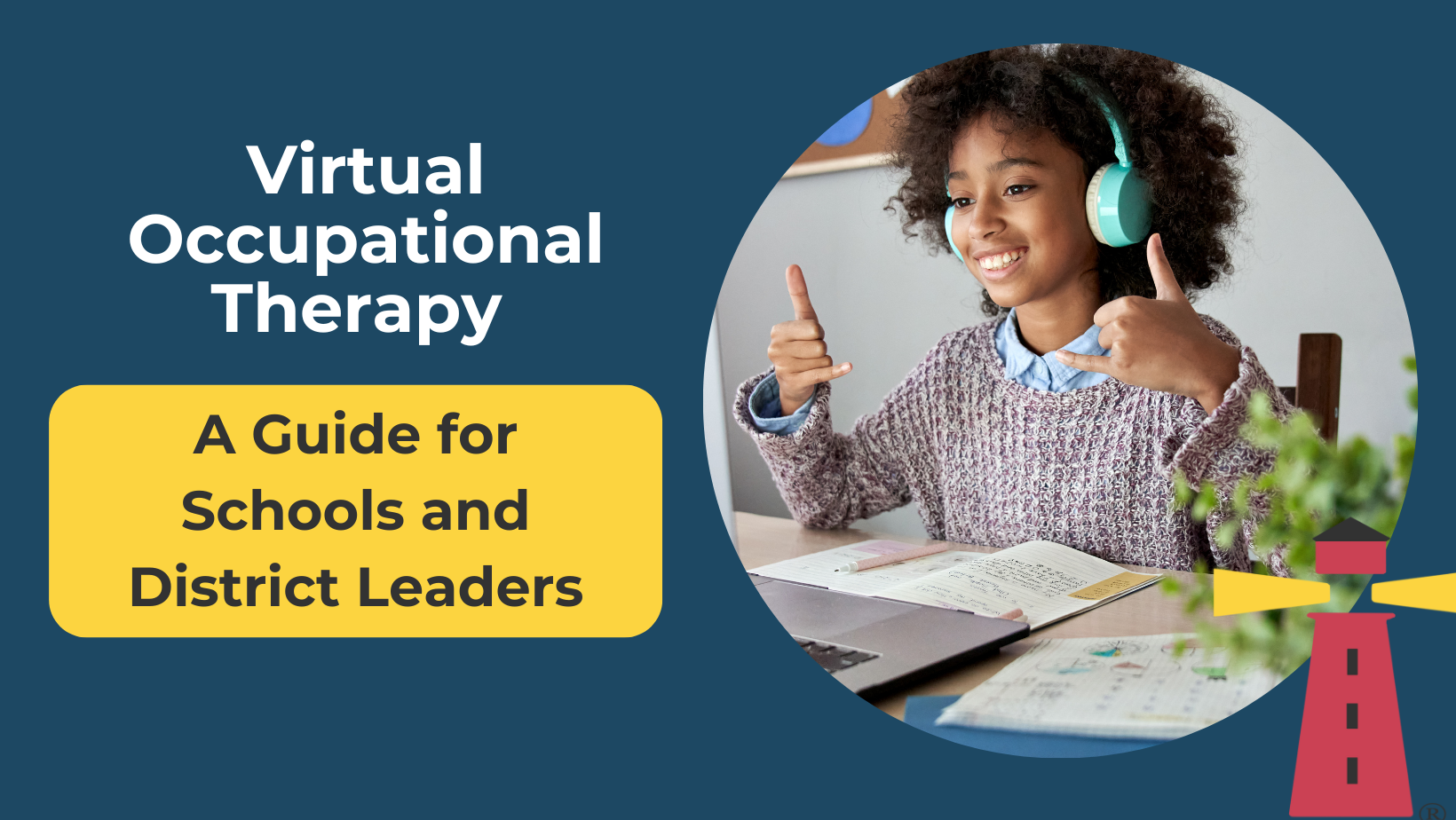
In many school settings, cameras can also be positioned to give therapists a clear view of what students are doing. This may include viewing handwriting tasks, fine motor work, posture, or how materials are being used at the desk or table. With thoughtful setup, therapists can observe movements, provide immediate feedback, and adjust strategies just as they would in person.

Student engagement and attention

Another concern is whether students can stay engaged during virtual sessions. Engagement depends less on the screen itself and more on how sessions are structured. Virtual occupational therapy is most effective when activities are interactive, purposeful, and directly connected to classroom routines or assignments.

Short, focused tasks, visual supports, and collaboration with on-site staff all contribute to stronger engagement. When teachers or support staff are involved, therapists can adjust activities in the moment and help redirect attention as needed. Over time, this shared approach often supports better consistency and follow-through across the school day.

Technology access and consistency

Technology can feel like a barrier, especially in schools with limited resources or inconsistent connectivity. Successful virtual occupational therapy relies on clear expectations, reliable scheduling, and simple technology solutions that fit within existing systems. Most services are delivered using secure, familiar platforms that require minimal setup once routines are established.

Consistency also improves when schools identify a designated space, device, and point person to support sessions. With these structures in place, virtual OT services can run smoothly and predictably, reducing disruptions and allowing therapists to focus on student progress rather than logistics.

When schools take time to address these concerns upfront, virtual occupational therapy becomes easier to evaluate objectively. Understanding both the limitations and the strengths of virtual delivery helps teams decide when it can support occupational therapy in schools in a way that is thoughtful, practical, and student-centered.


Compliance Considerations in Virtual School-Based OT

When schools consider virtual occupational therapy, questions about compliance naturally follow. Special education compliance does not change based on service delivery format, but virtual services do require thoughtful planning and clear communication. Focusing on best practices helps schools implement virtual OT in a way that supports students while remaining aligned with IEP services and special education requirements.

Alignment with IEP goals

Virtual school-based OT should always be driven by the student’s IEP goals. The format of service delivery does not alter the goals themselves or the intent behind them. Therapists and school teams benefit from ensuring that activities, strategies, and supports provided virtually are clearly connected to the functional skills outlined in the IEP. When services remain goal-driven and student-centered, virtual delivery can fit within existing special education frameworks.

Service minutes and scheduling

Service minutes for virtual occupational therapy are scheduled and delivered in the same way as in-person services. Consistency and clarity are key. Schools often find it helpful to establish clear schedules, designated spaces, and expectations for who will support the student during sessions. Thoughtful planning reduces missed sessions and interruptions, supporting both service continuity and compliance.

Documentation and progress monitoring

Accurate documentation remains essential for all IEP services, including virtual OT. Therapists document session activities, progress toward goals, and any adjustments made based on student response. Progress monitoring should reflect observable skill development and functional application rather than attendance alone. Clear documentation supports instructional decision-making and provides transparency over time.

Parent communication and transparency

Open communication with families supports trust and shared understanding. While requirements may vary, many schools choose to discuss virtual service delivery with parents and document those conversations, even when formal consent is not strictly required. Explaining how virtual occupational therapy will be delivered, what goals will be addressed, and how progress will be monitored helps set clear expectations and reduce misunderstandings.

Clear, proactive communication also supports collaborative decision-making. When families feel informed and included, conversations about virtual services are more likely to stay focused on student needs rather than the delivery format alone.

When virtual school-based OT is implemented with attention to alignment, consistency, documentation, and communication, it can support both student progress and special education compliance. A best-practice approach allows schools to use virtual services thoughtfully while maintaining clarity, accountability, and a strong focus on student outcomes.


What Virtual Occupational Therapy Looks Like in Practice

Online occupational therapy in schools is most effective when it is practical, collaborative, and closely connected to the student’s daily environment. Rather than relying on specialized tools or simulated activities, virtual services focus on real routines, real materials, and real-time problem solving. This helps students practice skills where they are actually expected to use them, with support that extends beyond the therapy session itself.

Coaching during classroom routines

Virtual occupational therapy often centers on coaching during everyday classroom activities. Therapists may observe students during writing time, transitions, or independent work and provide guidance as routines unfold. With cameras positioned to show the student’s workspace, posture, or materials, therapists can offer immediate feedback on positioning, grip, organization, or pacing. This live coaching helps teachers and aides reinforce strategies consistently throughout the day.

Guided activities using school or home materials

Online occupational therapy frequently uses materials that are already available to the student. This might include pencils, notebooks, scissors, classroom manipulatives, or digital worksheets. Therapists guide students through activities while observing how they interact with these materials in real time. Shared screens, visual supports, and document cameras allow therapists to model tasks, demonstrate adaptations, and adjust activities based on student response. Using familiar materials supports skill generalization and reduces reliance on specialized equipment.

Collaboration with teachers and aides

Collaboration is a core component of virtual occupational therapy in schools. Therapists regularly communicate with teachers, paraprofessionals, and support staff to align strategies and reinforce goals across settings. Virtual sessions may include brief check-ins with staff, shared planning time, or follow-up guidance after observing a student in action. This collaborative approach helps ensure that strategies introduced during online occupational therapy are carried into the classroom and embedded into daily routines.

When virtual occupational therapy is implemented with thoughtful use of cameras, shared materials, and collaborative coaching, it becomes a highly visible and interactive service model. These practical elements help schools move from abstract ideas about online therapy to a clear understanding of how it supports occupational therapy goals in real educational settings.


What Schools Should Look for in a Virtual OT Provider

As more districts explore virtual occupational therapy services, choosing the right provider becomes just as important as choosing the service model itself. Not all virtual providers are structured the same, and the quality of support can vary widely. Schools benefit from looking beyond availability and focusing on the systems, experience, and collaboration practices that support consistent, student-centered services.

Experience with school-based occupational therapy

A strong virtual OT provider should have direct experience working in school settings. School-based occupational therapy is different from clinic or outpatient work, with a clear focus on educational access, classroom participation, and functional goals tied to IEPs. Providers who understand school schedules, team structures, and service delivery expectations are better positioned to integrate smoothly into existing systems.

Systems that support reliable service delivery

Consistency matters in virtual occupational therapy services. Schools should look for providers with clear systems for scheduling, communication, and coverage. This includes predictable session times, clear expectations for documentation, and processes that support continuity if staffing changes occur. Strong systems reduce disruptions and help ensure students receive services as planned.

Collaboration with school teams

Virtual occupational therapy is most effective when therapists work as part of the school team. Providers should emphasize collaboration with teachers, paraprofessionals, and administrators rather than operating in isolation. Regular communication, shared planning, and openness to feedback help align therapy strategies with classroom routines and school-wide expectations.

Commitment to consistency and student-centered care

Finally, schools should consider how a virtual OT provider supports consistency across students and campuses. This includes clear onboarding, alignment with IEP goals, and ongoing support for therapists delivering services. Providers who prioritize thoughtful implementation and student-centered decision-making help ensure virtual occupational therapy services remain focused on long-term progress rather than short-term fixes.

By evaluating experience, systems, collaboration, and consistency, schools can identify virtual occupational therapy providers that support both service quality and sustainable implementation. A careful selection process helps ensure virtual services enhance school-based occupational therapy rather than adding complexity to already demanding systems.


How Lighthouse Therapy Supports Virtual Occupational Therapy

When implemented thoughtfully, virtual occupational therapy can be a practical and effective way to support students in school settings. At Lighthouse Therapy, our approach is built around consistency, visibility, and collaboration. Students and OTs use the same kit, which helps activities translate smoothly from therapist guidance to student practice and supports carryover beyond the session.

Cameras are used intentionally so therapists can clearly observe students’ workspaces, movement, and use of materials, allowing for real-time coaching and adjustment. Teachers, aides, and, when appropriate, parents are involved to support routines and reinforce strategies throughout the school day. This shared responsibility helps virtual services stay connected to real classroom expectations.

Virtual occupational therapy works best when it is student-centered, aligned with IEP goals, and supported by clear systems and communication. With the right structure and partnership, it can expand access to occupational therapy in schools while maintaining quality, consistency, and meaningful support for students.

how to write iep progress reports

How to Write IEP Progress Reports

IEP progress reports have a way of landing at the busiest moments of the school year. Many times they arrive alongside evaluations, meetings, and a growing list of documentation tasks that already stretch a clinician’s time. At the same time, these reports carry real weight. They need to be clear enough for families to understand, accurate enough to reflect student progress, and thorough enough to meet compliance expectations. Balancing all of that within limited time can feel overwhelming, especially when guidance is inconsistent or overly vague.

This guide on how to write IEP progress reports is designed to make the process more manageable. Below, you will find practical, step-by-step guidance that focuses on clarity, defensibility, and efficiency, so clinicians can complete progress reports with confidence and move forward without second-guessing their work.


What Is an IEP Progress Report?

An IEP progress report is a formal update that documents how a student is progressing toward the goals outlined in their Individualized Education Program. Rather than introducing new goals or changing expectations, the purpose of an IEP progress report is to track growth over time using the goals already agreed upon during the IEP meeting. These reports help answer a simple but important question: is the student making meaningful progress with the services and supports currently in place?

Each IEP progress report is directly tied to the annual goals written in the IEP. Those goals typically remain consistent for the duration of the IEP period, often one year, so that progress can be measured accurately and consistently. What should change from report to report is the progress narrative itself. This section reflects updated data, observations, and performance trends that show whether the student is improving, maintaining skills, or struggling to make gains. When written well, progress reports make it easier to see patterns over time and determine whether instructional strategies are working as intended.

For families, IEP progress reports provide transparency and reassurance. They offer a clear picture of how a child is doing beyond grades or test scores and help parents understand whether supports are effective. From a compliance standpoint, these reports are also a critical part of special education documentation. Clear, timely, and goal-aligned progress reporting demonstrates that services are being delivered as written and that student progress is being monitored appropriately. In that sense, IEP progress reports support both collaboration with families and accountability within special education systems.


What Should Be Included in an IEP Progress Report?

An effective IEP progress report does more than state that a student is “making progress.” It provides clear, specific information that shows how the student is performing in relation to each IEP goal. When written thoughtfully, these reports support strong IEP progress monitoring and create documentation that is useful for both families and school teams.

Goal-Specific Progress Updates

Each IEP goal should have its own corresponding progress update. This section should focus on the exact skill or behavior identified in the goal, rather than offering general comments about classroom performance. For example, if a goal targets expressive language, the progress update should describe changes in expressive language skills, not overall participation or effort. Consistency matters here. The goal itself remains the anchor, while the progress narrative changes over time to reflect growth, regression, or plateaus. Clear goal-specific updates help teams evaluate whether current interventions are effective and whether adjustments may be needed.

Data Sources and Measurement Methods

Strong IEP documentation is grounded in data. Progress reports should reference how progress is being measured, whether through therapy session data, classroom work samples, observation notes, probes, or progress monitoring tools. Including this information does not require lengthy explanations, but it does require clarity. Naming the measurement method and summarizing the data trend helps ensure the report is defensible and meaningful. Over time, consistent data reporting also allows teams to identify patterns, such as steady improvement or stalled progress, which can guide instructional decisions.

Clear, Family-Friendly Language

IEP progress reports are written for families as much as they are for professionals. Using clear, straightforward language helps ensure parents understand what the data means and how their child is doing. Avoiding jargon, acronyms, and vague phrases like “showing improvement” makes the report more accessible. Instead, describing what the student can do now compared to earlier reporting periods creates a shared understanding. When families can easily interpret progress reports, conversations about services and next steps are more productive and collaborative.

Together, these elements create progress reports that are accurate, understandable, and aligned with best practices for IEP progress monitoring.


How to Write IEP Progress Reports Step by Step

We totally understand that writing IEP progress reports can feel daunting, especially when time is tight and expectations feel high. However, breaking the process into clear steps helps make progress reporting more consistent, efficient, and defensible. When clinicians follow a repeatable structure, IEP progress reports become easier to write and easier to understand.

Review the Goal and Baseline

Start by returning to the exact wording of the IEP goal and its baseline. This step is essential, even if the goal feels familiar. The baseline establishes where the student started at the beginning of the IEP period, and it provides the reference point for measuring growth. Reviewing both helps ensure that progress is being described in relation to what was originally expected, not in comparison to peers or grade-level standards. This alignment keeps IEP progress reports focused and accurate.

Reference Collected Data

Next, look at the data you have collected since the last reporting period. This may include session notes, data sheets, probes, work samples, observation logs, or digital progress monitoring tools. You do not need to include raw data in the report, but you should use it to inform your summary. Referencing the data trend allows you to describe progress with confidence and clarity. Even a brief mention of accuracy levels, frequency, or level of support strengthens IEP documentation and supports defensible decision-making.

Describe Progress Objectively

When describing progress, focus on observable performance rather than interpretations or assumptions. Objective language explains what the student is doing now compared to earlier in the IEP cycle. This might include increases in independence, accuracy, consistency, or complexity of skills. If progress is limited or inconsistent, it is appropriate to state that clearly. IEP progress reports are not required to show improvement every period, but they are required to reflect what the data shows.

Avoid Vague or Subjective Language

Phrases such as “making progress,” “doing well,” or “trying hard” do not communicate meaningful information. They also raise questions during audits or disputes because they lack measurable detail. Instead, describe specific changes in performance, even if those changes are small. Clear language benefits everyone involved. Families gain a better understanding of their child’s progress, and clinicians create documentation that accurately reflects their work and professional judgment.

Following these steps helps ensure that IEP progress reports are clear, consistent, and aligned with best practices. Over time, this structured approach also reduces second-guessing and makes the reporting process more manageable during busy documentation periods.


Common IEP Progress Report Mistakes

Even experienced clinicians and educators can fall into a few common traps when writing IEP progress reports, especially during busy reporting periods. Being aware of these issues can help reduce compliance risk and improve the overall quality of special education progress reports. The good news is that most of these mistakes are easy to correct once they are recognized.

Repeating the goal instead of reporting progress

One of the most frequent issues in IEP progress reports is restating the goal without describing what has changed. Progress reports are meant to show movement over time, not simply mirror the original goal language. When the progress section looks identical from one reporting period to the next, it becomes unclear whether the student is improving, maintaining skills, or struggling. This can raise questions for families and for compliance reviews. Each report should include updated information that reflects the student’s current performance in relation to the goal.

Using unclear or non-measurable language

Vague phrases may feel efficient, but they create problems. Statements such as “making progress,” “doing well,” or “continuing to improve” do not explain what the student can actually do. From an IEP compliance perspective, unclear language weakens documentation because it does not show how progress is being measured. Clear, measurable descriptions help ensure that special education progress reports are meaningful and defensible, even when progress is slow or inconsistent.

Missing or inconsistent data

Progress reports should be grounded in data, yet missing or uneven data is a common challenge. This may happen when data collection is inconsistent, when progress is summarized from memory, or when multiple service providers are involved. Inconsistent data makes it difficult to track trends and can create confusion about whether supports are effective. Even brief references to data sources or performance levels strengthen documentation and help demonstrate that progress monitoring is happening as required.


How Often Should IEP Progress Be Reported?

IEP progress reporting requirements are tied to a simple principle: families should receive regular updates on their child’s progress toward IEP goals. In most cases, IEP progress reports are issued on the same schedule as general education report cards. This alignment helps ensure consistency across the school system and makes it easier for families to understand when to expect updates. However, the exact timing should always reflect what is written in the IEP itself.

While IDEA sets the expectation that progress toward IEP goals must be reported, it does not prescribe a single national schedule. As a result, reporting timelines can vary by state and district. Some districts require quarterly progress reports, while others align reporting with trimester or semester schedules. Clinicians should be familiar with both district guidance and individual IEP requirements, as the IEP team may determine a reporting frequency that differs from the standard schedule.

Consistency is one of the most critical pieces. Once a reporting timeline is established, it should be followed reliably. Missed or late progress reports can raise compliance concerns and undermine trust with families. Regular reporting also supports meaningful IEP progress monitoring by creating a clear record of how a student’s performance changes over time. When progress reports are delivered consistently and on schedule, they reinforce accountability and support collaborative decision-making throughout the IEP period.


IEP Progress Reports and Compliance Risk

IEP progress reports play an important role beyond day-to-day communication with families. They are also a key piece of IEP compliance and special education documentation. When questions arise about whether services were delivered appropriately or whether a student is making progress, progress reports are often one of the first documents reviewed. For that reason, how these reports are written matters just as much as how often they are completed.

From a due process or audit perspective, progress reports help demonstrate that the school is actively monitoring a student’s response to special education services. Clear, timely reports show that the IEP is being implemented as written and that the team is paying attention to whether goals are being met. When progress reports align with the goals, reference data, and follow established timelines, they provide a clear narrative of the student’s educational experience over time.

Weak documentation, on the other hand, can create unnecessary exposure. Vague language, missing reports, or repeated statements that do not reflect updated information may raise concerns about whether progress monitoring is actually occurring. In these situations, even well-intentioned services can be difficult to defend because the documentation does not clearly show what was done or how the student responded. This can lead to confusion during compliance reviews and added stress for clinicians and administrators alike.

Well-written IEP progress reports serve as a form of protection for both clinicians and districts. They create a transparent record that supports professional judgment and instructional decisions. When progress is limited, clear documentation shows that the team recognized the issue and continued to monitor it appropriately. When progress is strong, the reports provide evidence that interventions are effective. In this way, thoughtful progress reporting supports accountability while also reinforcing trust with families and safeguarding the systems responsible for delivering special education services.


Tips for Writing Clear and Defensible IEP Progress Reports

When time is limited, it can be tempting to write progress reports as quickly as possible. A few intentional writing habits, however, can make IEP progress reports clearer, easier to understand, and more defensible from a documentation standpoint.

Use simple, precise sentence structure

Clear writing benefits both families and school teams. Short, direct sentences reduce the risk of misinterpretation and make reports easier to read. Focusing on one idea per sentence also helps ensure that progress is described accurately. Avoid combining multiple skills or outcomes into a single statement, as this can blur what the data actually shows.

Align phrasing closely with data

Progress statements should reflect what the data demonstrates rather than what is assumed or expected. Data-aligned phrasing describes observable performance, such as accuracy levels, frequency, or level of support. Even when progress is limited, aligning language with data strengthens IEP documentation and supports professional judgment.

Maintain consistency across reporting periods

Using a consistent structure from one reporting period to the next makes progress easier to track. Similar wording, measurement references, and organization help teams identify trends over time. Consistency also reduces confusion during reviews and supports clearer communication with families.

Supporting Clinicians Through IEP Documentation Demands

IEP progress reporting is one part of a broader clinician workload that includes direct services, collaboration, planning, and ongoing documentation. When time and expectations are misaligned, progress reports can become rushed or inconsistent, not because clinicians lack skill, but because the structure around the work does not support thoughtful reporting. Paid indirect time, clear expectations, and practical documentation support all play an important role in helping clinicians write progress reports that are accurate, compliant, and meaningful.

At Lighthouse Therapy, we believe strong documentation starts with how clinicians are supported. Our approach is designed to account for indirect time and reduce unnecessary pressure around progress reporting, so clinicians can focus on clarity, consistency, and student-centered decision-making. When structure is in place, IEP progress reports become easier to manage and stronger in quality, benefiting clinicians, families, and school teams alike.

IEP Services delivered virtually

Can IEP Services Be Delivered Virtually?

Virtual IEP services are often explored at moments when districts need flexibility to keep student supports consistent. When staffing changes, caseloads shift, or service delivery looks different than originally planned, questions naturally arise about what is allowed and what puts a district at risk. Before evaluating whether virtual services make sense in practice, it helps to understand how IDEA approaches service delivery decisions and how much flexibility the law intentionally provides.

Are Virtual IEP Services Allowed Under IDEA?

This is usually the first question special education directors ask, and it makes sense. When decisions feel high-stakes, everyone wants to be sure they are standing on solid ground. The short answer is yes, virtual IEP services can be allowed under IDEA. The longer, more important answer is that IDEA focuses far more on appropriateness than on format.

What IDEA Actually Requires

At its core, IDEA is about ensuring students receive a free appropriate public education that is individualized to their needs. The law is written to be flexible on purpose. It recognizes that students, schools, and service models look different across districts and change over time.

IDEA requires that services are designed to meet a student’s unique needs, align with their IEP goals, and are delivered by qualified providers. It also expects that progress is monitored and documented, and that decisions are made by the IEP team based on what supports the student best. What matters most is whether the service helps the student make meaningful progress, not whether it happens in a specific room or through a specific medium.

This is where virtual services can fit. If a student can access the service, engage meaningfully, and work toward their goals, the delivery model itself does not automatically conflict with IDEA. For many districts, especially during staffing shortages or coverage gaps, virtual IEP services become one way to maintain continuity and protect student services rather than interrupt them.

What IDEA Does Not Specify About Service Delivery

What IDEA does not do is require that IEP services be delivered in person at all times. The law does not mandate a physical location, a specific service format, or a single “correct” way to deliver related services. There is no language in IDEA that prohibits virtual service delivery simply because it is virtual.

That flexibility is intentional. It allows IEP teams to respond to real-world conditions, including staffing realities, access to specialized providers, and student health or placement needs. Virtual services are not automatically appropriate for every student, but they are also not automatically noncompliant.

The key is documentation and decision-making. When a district can clearly show that the IEP team considered the student’s individual needs, selected a service model that supports progress, and monitored outcomes, the focus stays where IDEA intends it to be. On the student, not the modality.

This framing often brings relief to directors. Instead of asking whether virtual services are allowed in general, the more productive question becomes whether virtual services are appropriate for this student, at this time, with the right supports in place.


When Virtual IEP Services Can Be an Appropriate Option

Virtual IEP services can play an important role when districts are navigating real constraints around staffing, access, or service continuity. For many special education directors, the question is not whether virtual services are ideal in every situation, but whether they can responsibly support students when circumstances make traditional service delivery difficult. When used thoughtfully, virtual special education services can help maintain consistency, protect student progress, and reduce disruption for both students and staff.

Staffing Shortages and Coverage Gaps

Staffing shortages are one of the most common reasons districts begin exploring virtual IEP services. Unfilled positions, extended leaves, and unexpected turnover can quickly create gaps that are hard to solve with local hiring alone. In these moments, the risk is not that services look different, but that services stop altogether or become inconsistent.

Virtual service delivery can help districts bridge those gaps while longer-term staffing solutions are pursued. Rather than pausing services or redistributing already stretched staff, districts can use virtual providers to maintain required IEP minutes and preserve continuity for students. This approach often reduces stress on internal teams and allows directors to move out of constant triage mode.

Access to Specialized Providers

Virtual special education services can also expand access to providers who are difficult to recruit locally. Roles such as speech-language pathologists, school psychologists, counselors, and other related service providers are increasingly hard to staff, especially in rural areas or competitive markets.

Virtual delivery allows districts to connect students with qualified providers they might not otherwise be able to secure. This can be especially valuable for students with more specialized needs or for services that are delivered in shorter, targeted sessions. When the service aligns with the student’s goals and engagement needs, virtual access can be a practical way to prevent service delays and backlogs.

Short-Term or Interim Service Delivery

In many cases, virtual IEP services work best as a short-term or interim solution. Districts often use them to stabilize services during transitions, such as mid-year staffing changes, growing caseloads, or while onboarding new in-person staff.

Positioning virtual services this way helps keep expectations clear. They are a tool to support continuity, not a permanent fix for every situation. When districts communicate this clearly and monitor student progress closely, virtual service delivery can provide breathing room without compromising compliance or student outcomes.

Used intentionally, virtual IEP services offer districts flexibility when it is most needed. The key is approaching them as part of a broader service strategy that remains grounded in student needs, clear documentation, and ongoing evaluation.


When Virtual IEP Services May Not Be Appropriate

While virtual service delivery can absolutely offer meaningful flexibility, it is not the right fit for every student or every goal. Being clear about limitations is an important part of responsible decision-making and helps IEP teams stay focused on what truly supports student progress. In the context of teletherapy special education services, appropriateness always comes back to the individual student and the nature of the support being provided.

Student Needs That Require In-Person Support

Some students benefit most from in-person services because of the type of support they need. Physical guidance, hands-on prompting, or direct modeling can be difficult to replicate in a virtual setting. This is often the case for students working on motor-based goals, sensory regulation, or skills that rely heavily on real-time physical interaction.

Behavioral needs can also influence whether teletherapy is appropriate. Students who require close supervision, frequent redirection, or support with safety and regulation may struggle to engage meaningfully through a screen. In these situations, in-person services allow providers to respond more quickly and adjust supports in ways that virtual platforms may not allow.

These considerations do not automatically rule out virtual services, but they do require careful discussion by the IEP team. The focus remains on whether the service format supports progress toward the student’s goals in a way that is safe, effective, and developmentally appropriate.

Technology, Environment, and Engagement Limitations

Access to technology and a supportive learning environment also plays a significant role in determining whether virtual services are appropriate. Reliable internet, functional devices, and a quiet, consistent space are not guaranteed for every student. When these pieces are missing, teletherapy special education services can become frustrating or ineffective, even when the provider and student are well matched.

Equity is always an important part of this conversation. Students may share devices, experience frequent connectivity issues, or lack adult support during virtual sessions. Engagement can also vary widely depending on age, attention, and comfort with technology. For some students, the screen itself becomes a barrier rather than a bridge.

When these challenges interfere with meaningful participation or progress monitoring, IEP teams may determine that virtual services are not the most appropriate option. Recognizing these limits early allows districts to adjust service delivery before gaps widen or concerns escalate.

Addressing when virtual services may not be appropriate strengthens trust with families and staff. It signals that decisions are being made thoughtfully, with student needs at the center, rather than out of convenience or necessity alone.

Do Virtual Services Count Toward IEP Minutes?

This is one of the most understandable and practical questions districts ask when considering virtual service delivery, and it is often where hesitation shows up. Directors want to know whether virtual sessions truly “count” and how closely those services will be examined. When it comes to IEP minutes, the format of service delivery matters far less than whether the services are delivered as written and documented clearly. In most cases, IEP minutes virtual services can count when they are provided consistently, aligned with the IEP, and properly recorded.

How Virtual Minutes Are Documented

Documentation expectations for virtual services are largely the same as they are for in-person services. Districts are expected to maintain clear service logs that reflect the frequency, duration, and type of service provided, along with the provider delivering it. Virtual sessions should also include notes that demonstrate student participation and progress toward IEP goals.

Progress monitoring remains essential. Whether services are delivered in person or virtually, districts should be able to show how student progress is being measured and reviewed over time. Session records, data collection tools, and periodic progress reports help create a clear picture of how services are supporting the student.

Consistency is especially important with virtual delivery. Clear schedules, documented attendance, and prompt follow-up when sessions are missed help protect both student services and district compliance. When documentation is thorough and routine, virtual IEP minutes are easier to defend and easier to manage.

Aligning Virtual Services With IEP Goals

What ultimately determines whether virtual services count toward IEP minutes is alignment with the student’s goals. The focus should be on what the service is designed to address and whether the student is able to work meaningfully toward those goals in a virtual setting.

If the IEP calls for direct instruction, counseling, or skill development that can be delivered effectively through virtual sessions, the delivery format does not automatically invalidate the minutes. What matters is that the service matches the intent of the IEP and supports measurable progress.

IEP teams benefit from regularly revisiting this alignment. As goals change or student needs evolve, the appropriateness of virtual services may also shift. Keeping the conversation centered on outcomes rather than modality helps teams make informed decisions and maintain clarity around service delivery expectations.

When virtual services are thoughtfully aligned and well documented, IEP minutes virtual services can count in a way that is both compliant and student-centered.

Can Related Services Be Delivered Virtually?

Related services are often where questions about virtual delivery can become more nuanced. While academic instruction may translate more easily to an online setting, districts understandably want clarity about how services like speech, counseling, or occupational therapy fit into a virtual model. In many cases, virtual related services IEP options can be appropriate when they are carefully matched to the student’s needs and delivered with intention.

Common Related Services Delivered Through Teletherapy

Several related services are commonly delivered through teletherapy special education models with strong results. Speech-language services are one of the most frequent examples, particularly for students working on language-based goals, articulation, or social communication that can be supported through structured virtual interaction.

School counseling and social work services are also often well suited to virtual delivery. Sessions that focus on emotional regulation, coping strategies, or problem-solving can translate effectively to a virtual format, especially when students are comfortable engaging through conversation and guided activities.

Occupational therapy may be delivered virtually in a consultative or coaching model. In these cases, providers work with students, teachers, or caregivers to support skill development within the student’s daily environment rather than providing hands-on intervention. This approach can be especially useful for generalization and carryover, even when direct in-person therapy is not feasible.

Determining Appropriateness by Service Type

Determining whether a related service can be delivered virtually should never be a one-size-fits-all decision. Even within the same service category, appropriateness can vary widely based on the student’s age, goals, learning profile, and ability to engage in a virtual setting.

The IEP team plays a central role in this process. Rather than asking whether a service can be delivered virtually in general, teams are better served by asking whether this service, for this student, can support progress toward their specific goals. Factors such as the level of physical support required, the need for sensory input, and the student’s ability to attend and participate all inform that decision.

Avoiding blanket rules helps protect both students and districts. When virtual related services are selected through individualized discussion and documented thoughtfully, they can serve as a flexible and compliant option within a broader service delivery plan.


Parent Consent and IEP Team Considerations

Decisions about virtual service delivery rarely involve the IEP team alone. Parents are often part of these conversations early, especially when services begin to look different from what they expected. How districts approach parent consent virtual IEP services and communication can shape trust, reduce confusion, and prevent concerns from escalating later.

When Consent Is Required

From a legal standpoint, IDEA does not require separate parent consent solely because a service is delivered virtually rather than in person. What matters is whether the IEP itself is being changed. If the service type, frequency, duration, or goals are being amended, then standard IEP procedures and consent requirements apply.

That said, best practice often goes beyond the minimum legal threshold. Even when formal consent is not strictly required, many districts still choose to have parents sign a separate consent form for virtual services or otherwise formally acknowledge the service delivery model. Alongside this, districts often discuss virtual service delivery openly with families and document those conversations. This approach helps ensure that parents understand how services will be delivered and what to expect, which can reduce misunderstandings and complaints.

Clear, proactive communication also supports collaborative decision-making. When parents feel informed and included, discussions about virtual services are more likely to remain focused on student needs rather than delivery format alone.

Communicating Virtual Service Decisions Clearly

Clarity is especially important when services are delivered virtually. IEP meeting notes, prior written notices, and service descriptions should clearly reflect how services will be provided and how progress will be monitored. This documentation helps align expectations among team members and provides a clear record of decision-making.

During meetings, it can be helpful to explain not just that services will be delivered virtually, but why that approach was selected. Connecting the service model to the student’s goals, access to providers, or continuity of services reinforces that the decision is intentional and student-centered.

Transparency builds confidence. When districts clearly document virtual service decisions and maintain open communication with families, parent consent conversations become less about uncertainty and more about shared understanding.

Compliance Risks to Watch When Using Virtual IEP Services

Virtual IEP services can support continuity and flexibility, but they also require careful oversight. From a special education compliance perspective, the risks are less about the virtual format itself and more about how services are managed, documented, and monitored over time. Being aware of common pitfalls helps districts put safeguards in place before issues arise.

Inconsistent Service Delivery

One of the most common compliance risks involves inconsistency. Virtual services often rely on tight schedules, shared calendars, and coordination across teams. When sessions are missed, rescheduled informally, or not clearly tracked, it becomes harder to demonstrate that services were delivered as required.

Unclear schedules can also create confusion for students and families. Without a predictable routine, participation may drop and service minutes can quietly slip. Over time, this increases the risk of missed IEP minutes, even when everyone involved is acting in good faith.

To reduce this risk, districts benefit from establishing clear expectations around scheduling, attendance tracking, and make-up sessions. Consistency supports student progress and creates a cleaner compliance record if services are ever reviewed.

Documentation and Progress Monitoring Gaps

Documentation gaps pose another significant risk when using virtual IEP services. If service logs are incomplete, session notes are vague, or progress monitoring is inconsistent, districts may struggle to demonstrate that services were delivered appropriately.

These gaps matter because they are often what surface during audits, complaints, or due process reviews. When documentation does not clearly show how services were provided and how progress was measured, questions tend to follow, regardless of whether the student was benefiting from the service.

Strong documentation practices help protect both students and districts. Clear session records, regular data collection, and timely progress reports provide evidence that virtual services are aligned with the IEP and responsive to student needs.

By paying close attention to consistency and documentation, districts can use virtual IEP services in a way that supports students while maintaining confidence in their compliance practices.

Final Thoughts: Virtual IEP Services Are a Tool, Not a Shortcut

Virtual special education services can offer districts meaningful flexibility, especially in moments when maintaining continuity feels challenging. At the same time, they work best when they are approached with intention rather than urgency. The strongest decisions remain grounded in what supports individual students, not what is simply easiest to implement.

For special education leaders, this means keeping student-centered decision-making at the forefront. Virtual services can be appropriate when they align with a student’s goals, support engagement, and allow for measurable progress. They can also be adjusted or phased out when they no longer meet student needs. This ongoing evaluation reflects the individualized nature of the IEP process itself.

Leadership responsibility plays a key role in how virtual services function across a district. Clear expectations, consistent oversight, and transparent communication help ensure that flexibility does not drift into inconsistency. When systems are thoughtfully designed, virtual services become one option within a broader service model rather than a reactive stopgap.

At Lighthouse Therapy, we support districts in using virtual services this way. Our focus is on compliant, student-centered implementation that helps stabilize services, reduce gaps, and support IEP teams throughout the school year. We partner with districts to ensure virtual services are delivered thoughtfully, documented clearly, and aligned with both student needs and compliance expectations.

If your district is exploring virtual IEP services or looking for support during staffing transitions, Lighthouse Therapy is here to help. We welcome conversations focused on clarity, collaboration, and sustainable service delivery.