Author: Jen Belcher

AI and IEPs

AI and IEPs: What Special Education Teams Should Know

Why AI and IEPs Are Becoming a Hot Topic

Artificial intelligence in schools has moved quickly from theory to practice. Many districts are experimenting with AI tools to handle everyday tasks like lesson planning, grading, and administrative paperwork. Teachers and special education teams are already stretched thin. These tools promise efficiency and time savings. That momentum makes it natural to ask what role AI could play in one of the most important areas of special education: developing and managing IEPs.

AI in special education raises unique questions because IEPs are not just documents. They represent legally binding commitments to students with disabilities and are the foundation for individualized learning supports. Educators are beginning to wonder whether AI could streamline tasks like drafting goals, generating progress reports, or monitoring student data. If artificial intelligence in schools can reduce the paperwork burden, it may give teachers and clinicians more time for direct student interaction.

At the same time, the idea of AI and IEPs sparks important conversations about oversight, compliance, and ethics. Unlike general classroom lesson plans, IEPs require precision and accountability under federal law. The conversation is heating up because the stakes are higher: families and educators alike want to know whether AI can support, not replace, the human judgment that makes IEPs effective.

What AI Could Offer in the IEP Process

Educators and families know that creating, updating, and implementing IEPs takes a tremendous amount of time and coordination. This is where AI tools show potential. They are certainly not a replacement for the human expertise that drives special education, but potentially a support system to ease some of the heaviest administrative burdens. When used thoughtfully, AI could help special education teams stay organized, highlight important patterns, and even make the IEP process more accessible for families.

Drafting and Goal Suggestions

One of the most talked-about applications is using AI to draft IEP goals. With the right input data: student assessments, teacher notes, or progress history, AI tools can generate sample goals or suggest language that aligns with common benchmarks. For busy special education teams, this could mean starting with a draft instead of a blank page. That time saved can then be redirected back to planning instruction or meeting directly with students.

However, using AI to write IEPs requires careful oversight. Drafts are only a starting point. Every suggested goal must be reviewed and refined by educators, specialists, and families to ensure it reflects the child’s unique needs and complies with IDEA requirements. The real value lies in the balance: letting AI handle the repetitive phrasing while people provide the expertise and personalization.

Smarter Progress Monitoring

Another promising use of AI is in progress monitoring. Collecting data, charting results, and analyzing trends can quickly eat up valuable hours. AI-powered dashboards have the potential to automate much of this work, gathering data from classroom activities, digital platforms, or therapist notes and displaying it in clear, visual summaries.

With this kind of AI student tracking, educators could spot patterns sooner, like a child consistently struggling in one skill area or making faster-than-expected growth in another. Early insights mean earlier interventions, helping students stay on track with their IEP goals. At the same time, educators would spend less time manually entering numbers into spreadsheets and more time working face-to-face with students.

Communication and Accessibility

The IEP process can feel overwhelming for families, especially when reports are filled with technical language. AI in IEP communication could help by creating simplified summaries that translate professional jargon into plain, parent-friendly language. This would make it easier for caregivers to fully engage in the process and feel confident in their child’s plan.

Accessibility tools also show promise. AI translation features could help multilingual families better understand reports, goals, and progress notes in their home language. For parents who cannot attend meetings in person, AI-driven summaries could ensure they remain informed and included.

Potential Benefits for SPED Teams and Families

For many educators and families, the real interest in AI comes down to what it might change in day-to-day practice. Special education already involves layers of documentation, data collection, and collaboration, and adding new technology only makes sense if it lightens that load. The potential benefits of AI in special education are practical: less paperwork, earlier insights into student needs, and more time for the kind of personal interactions that matter most.

Reduced paperwork and time savings

Anyone who has worked on IEPs knows the hours it takes to draft, update, and document services. AI benefits in special education could include generating first drafts of goals, summarizing reports, or organizing data automatically. By cutting down on repetitive tasks, AI could help special education teams reclaim valuable time. That time can then be used where it matters most: teaching, problem-solving, and connecting with students.

Earlier interventions through predictive data

Another promising area is predictive analysis. With adaptive learning AI and progress-monitoring tools, schools could spot learning challenges earlier than before. For example, if a child’s data shows a sudden decline in reading fluency or math accuracy, AI systems might flag the change immediately. This allows teams to adjust supports quickly, rather than waiting for end-of-quarter reports or annual reviews. For families, earlier intervention means fewer missed opportunities and a greater chance for steady growth.

More time for face-to-face collaboration

When educators spend less time buried in paperwork, they have more energy to collaborate with parents, therapists, and general education teachers. That extra time could be used to plan classroom strategies together, meet with families to review progress, or simply talk with students about their goals. Stronger collaboration builds trust, and trust is the foundation of every effective IEP team.

At the heart of these potential benefits is a simple idea: AI can handle some of the background work so humans can focus on the relationships and decisions that truly shape student success.

Risks and Challenges to Consider

As exciting as the possibilities may be, it is equally important to think carefully about the risks of using AI in the IEP process. Special education is governed by strict laws and built on trust between schools and families. Any new tool must be measured against those standards. Below are some of the main challenges schools and districts need to keep in mind when exploring AI in special education.

Compliance with IDEA and FERPA

IEPs are not only educational plans. They are also legal documents. Federal laws like IDEA and FERPA establish specific requirements around individualized planning, family participation, and student data protection. While AI tools can help organize information or suggest draft language, they cannot replace the individualized planning process required by law.

Student data privacy is another critical concern. Using AI in schools often means collecting and processing large amounts of sensitive information. If that data is not handled securely, it could violate FERPA protections and erode family trust. Any use of AI for IEP compliance must come with clear safeguards: strong data security policies, limited access, and transparency about how information is used.

Accuracy and Bias

Another challenge is the reliability of AI in IEPs. While these tools can generate drafts quickly, they may produce generic or inaccurate goals that do not reflect a child’s actual needs. There is also the risk of bias. If the AI is trained on incomplete or unrepresentative data, it could make recommendations that disadvantage certain groups of students.

Because of this, human oversight remains essential. Educators and families must carefully review AI outputs, ensuring they are tailored, appropriate, and legally sound. AI can support the process, but it cannot replace the professional judgment and lived experience of teachers, therapists, and parents who know the student best.

Over-Reliance on Technology

Finally, there is the risk of leaning too heavily on AI. While it may be tempting to let technology handle more of the workload, over-reliance could undermine the professional expertise that makes IEPs meaningful. Special education is deeply relational, and no algorithm can replace the insights gained from working directly with students, listening to families, or collaborating across a team.

The goal should be balance. AI can assist with drafting, data tracking, or simplifying reports, but teachers and specialists remain the drivers of decision-making. When human expertise and AI tools work together, schools have the best chance of supporting students effectively without losing the personal touch that defines special education.

What We Don’t Know Yet

Even with all the conversations about AI in special education, there are still more questions than answers. The technology is moving faster than policies and best practices can keep up, which means schools and families are operating in a landscape filled with unknowns. Recognizing these gaps is important for setting realistic expectations about what AI can and cannot do in the IEP process.

One uncertainty is how federal and state policies will address AI in IEP development. Laws like IDEA and FERPA were written long before artificial intelligence entered classrooms, and regulators are only beginning to consider how these tools fit within existing compliance frameworks. Until clear guidelines are issued, schools will need to tread carefully to avoid unintentionally stepping outside of legal requirements.

There are also questions about how districts will approach adoption. Some may be early adopters, testing AI platforms for drafting or progress monitoring, while others may restrict their use altogether out of concern for student privacy or legal risk. The future of IEP technology could look very different from one district to the next, which may create uneven access to AI’s potential benefits.

Finally, it remains to be seen whether AI tools will consistently meet compliance standards. While many vendors promise efficiency, not all solutions are designed with the specific demands of special education in mind. The unknowns in AI and education include whether these tools can generate documentation that meets the individualized and legally binding nature of IEPs. If they cannot, schools could face more challenges rather than fewer.

In short, the future of IEP technology is still unfolding. The possibilities are exciting, but the rules, safeguards, and evidence needed to guide safe and effective use are still being written.

Human Expertise Still Leads the Way

No matter how advanced technology becomes, the heart of special education will always rest with people. Teachers, clinicians, and families are the ones who know students best. They bring the insights, context, and compassion that no algorithm can replicate. While AI may help with drafting language, sorting data, or flagging patterns, it cannot replace the conversations and collaboration that shape an effective IEP.

The role of teachers in IEPs is especially vital. Educators see how a child learns day to day, notice subtle shifts in behavior, and adjust instruction in real time. Clinicians contribute specialized expertise, whether in speech therapy, occupational therapy, or counseling, while families provide the deep personal knowledge of a child’s strengths, challenges, and hopes for the future. Together, these perspectives ensure that IEP decisions are both legally sound and personally meaningful.

When it comes to human vs AI in education, the distinction is clear: AI can support the process, but it cannot lead it. For example, a program might suggest a reading goal based on assessment data, but only a teacher can decide if that goal makes sense for a child’s classroom context. Similarly, AI might generate a progress report, but only a parent or therapist can interpret whether the progress feels accurate and aligns with lived experience.

Viewed this way, AI should be seen as a helpful assistant: streamlining tasks, highlighting trends, and translating information into more accessible formats, while human expertise continues to drive decisions. The balance lies in using technology to free up time and energy so educators and families can focus on what matters most: supporting students as individuals, not as data points.


Where Lighthouse Therapy Fits In

At Lighthouse Therapy, we recognize the growing conversation about AI in special education services. We see its potential to reduce paperwork, track data more efficiently, and support teams in managing their busy workloads. But we also know that technology alone is not enough. IEPs are legally binding documents and deeply personal roadmaps for students, and they require the knowledge, empathy, and judgment that only educators, clinicians, and families can bring.

That’s why our approach strikes a balance. We believe AI can be a useful assistant for organizing information, but compliance, quality, and student-centered care must remain in the hands of skilled professionals. Our teletherapy for schools model is built on this principle. Every service we provide is backed by licensed clinicians who understand both the technology available today and the requirements of special education law. This ensures that districts have a SPED support partner they can rely on, no matter how the landscape evolves.

We also offer practical resources that help lighten the workload for educators without sacrificing quality. One example is our IEP goal banks, which give teams ready-to-use, research-based goals across skill areas. These can save time while still leaving room for customization, ensuring each plan reflects the unique needs of a child. If you’re curious, we encourage you to browse our Lighthouse IEP goal banks and see how they can support your team in striking that happy medium between efficiency and personalization.

In the end, our stance is simple: AI may help with the background tasks, but the heart of special education will always rest with people. And at Lighthouse, we’re committed to being the kind of steady, responsive partner districts need today and in the future.
 

AI and Accessibility

AI and Accessibility: Smarter Disability Support

There’s no denying that many of us feel uneasy about where artificial intelligence is headed. The rapid pace of change can feel overwhelming, and it’s natural to worry about what the future might hold. But at the same time, it’s impossible to ignore the real benefits AI is already bringing, especially when it comes to accessibility for people with disabilities.

Traditional supports like ramps, captioning, and screen readers remain essential, but AI-powered assistive technology is creating possibilities that go beyond standard accommodations. Imagine voice-to-text tools that let someone who is hard of hearing follow a conversation in real time, or visual recognition apps that describe the world out loud for someone with vision loss. For students with learning differences, AI tutoring systems can break down lessons step by step, making school less stressful and more engaging.

These tools don’t only remove barriers; they give people more independence, more inclusion, and more opportunities to thrive. In classrooms and workplaces, AI can automatically generate accessible documents, provide captions for meetings, or even suggest more inclusive communication. Instead of being an afterthought, accessibility becomes a natural part of how we all interact.


Understanding AI and Accessibility


Before we take a look at how artificial intelligence is reshaping disability support, it helps to pause and think about what accessibility really means. At its core, accessibility is about making sure that people of all abilities can fully participate in everyday life, whether that’s in school, at work, or out in the community. When we look at accessibility through the lens of AI, it becomes clear that technology has the power to open doors that might otherwise stay closed.

What Accessibility Means Today

In modern contexts, accessibility also means ensuring digital and social inclusion. It includes physical spaces, of course, but it also covers digital and social environments. Accessibility technology today spans everything from websites designed with screen readers in mind to captioned video calls that keep remote meetings inclusive. Digital accessibility, in particular, has become critical as more of our lives happen online. For people with disabilities, being able to access and navigate digital platforms is both helpful and essential to education, work, and connection.

The Role of Artificial Intelligence in Support

This is where AI comes into play. At its simplest, AI is technology that can learn, adapt, and make decisions based on patterns in data. Applied to disability support, AI assistive tools can anticipate needs and personalize help. For instance, an AI in disability support might adjust the reading level of an online article, predict what word someone is trying to type, or recommend alternative ways to complete a task.

The strength of AI lies in its ability to make support feel more natural and responsive. Instead of one-size-fits-all solutions, AI-powered systems adapt to the individual. That might mean offering real-time language translation in a classroom, generating instant transcripts for a meeting, or providing personalized study aids for a student with dyslexia. By making everyday tasks easier, these tools also expand opportunities for independence, inclusion, and confidence.


Everyday AI Tools That Support Disabilities

We recognize that artificial intelligence often feels like something futuristic, but many of the tools people use every day already carry powerful accessibility features. What might look like convenience to one person can be life-changing for someone with a disability. These familiar technologies highlight how AI assistive technology can quietly support mobility, learning, and communication without requiring specialized equipment.

Voice Assistants and Smart Devices

“Hey Siri…” might sound like the start of a playlist request, but for many people it’s much more than that. Siri, Alexa, and Google Assistant are powerful voice AI accessibility tools that can act as personal helpers for those with mobility or vision impairments. With simple spoken commands, someone can turn on the lights, adjust the thermostat, send a text, or check the weather: tasks that might otherwise require physical effort or outside assistance. This kind of AI assistive technology doesn’t just add convenience; it makes daily life more manageable and independent.

Auto-Captioning and Real-Time Transcription

Online meetings and video calls have become part of daily life, and platforms like Microsoft Teams, Zoom, and Otter.ai are making those spaces more inclusive. Their built-in AI transcription tools generate real-time captioning so people with hearing impairments can follow along without missing a beat. These features also help in noisy environments or for anyone who prefers to read rather than listen. By weaving real-time captioning into standard communication platforms, accessibility is no longer an add-on…it’s built into the way we connect.

Text-to-Speech and Speech-to-Text Tools

For individuals with dyslexia, ADHD, or mobility challenges, text-to-speech AI and speech recognition accessibility tools can transform the way they work and learn. Text-to-speech software reads aloud digital content, making it easier to process information without struggling through dense text. On the other hand, speech-to-text tools allow someone to dictate notes, write emails, or complete assignments hands-free. What seems like a small shift (listening instead of reading, speaking instead of typing) can reduce frustration, save time, and help people focus on what matters most.


Out-of-the-Box Applications of AI for Disabilities

What’s exciting about AI is how it sparks ideas that go past traditional accommodations and open up surprising possibilities. But artificial intelligence is sparking a new wave of creative solutions that go far beyond the expected. These emerging tools are designed not only to remove barriers but also to give people unique ways to connect, regulate, and navigate the world.

AI for Social Communication and Autism

Social interactions often rely on subtle cues such as tone of voice, word choice, or implied meaning, which can be difficult to interpret for individuals on the autism spectrum. This is where social communication AI comes in. Emerging tools can scan emails, texts, or even meeting transcripts and highlight the intent behind the words. Was that comment meant as a joke? Is the tone professional, frustrated, or supportive? By providing this kind of insight, AI autism support tools help people feel more confident in interpreting everyday communication. For students, professionals, or anyone navigating complex social situations, this can take away some of the guesswork and reduce stress.

Emotion Recognition and Mental Health

Another innovative use of AI is in emotional recognition. Certain apps can pick up on vocal patterns or tone of voice and detect early signs of stress, anxiety, or fatigue. Rather than replacing human judgment, these AI for mental health accessibility tools act as gentle reminders, encouraging self-regulation before emotions spiral. Imagine an app that notices the rising pitch in your voice during a call and suggests a short break, or software that flags when your written communication shows signs of burnout. These subtle nudges can make mental health support more immediate and personalized.

AI in Navigation and Independence

For people who are blind or have low vision, navigating public spaces can be daunting. AI navigation tools are changing that reality. Apps like Be My Eyes connect users with volunteers, while AI-driven image recognition accessibility tools can now describe surroundings without needing a human on the other end. Point a phone camera at a street sign, and the app reads it aloud. Scan a room, and it identifies objects or obstacles. These technologies offer greater independence, allowing people to explore their environments with confidence and reducing reliance on constant assistance from others.

Accessibility in Education and the Workplace

Accessibility matters across every stage of life, from the classroom to the office. Artificial intelligence is stepping in to make both education and professional environments more inclusive, helping people with disabilities not only participate but thrive. By weaving accessibility into everyday tools, AI ensures that learning and working spaces are designed for everyone, not just a select few.

Personalized Learning Through AI

No two learners are exactly alike, and this is especially true for students with learning differences. AI education accessibility tools are making it easier to adapt lessons to individual needs. Personalized learning platforms can analyze how a student learns best and then adjust the content accordingly. For instance, if a child with dyslexia benefits from audio support, the system might read the text aloud. If another student processes information better through visuals, it can highlight diagrams or interactive elements. These personalized learning tools not only boost comprehension but also build confidence, showing students that their unique ways of learning are strengths rather than setbacks.

Workplace Accommodations Powered by AI

The workplace is also evolving with AI disability accommodations. Smart scheduling systems can help employees manage energy levels by suggesting break times or balancing workloads. AI transcription tools ensure meetings are accessible by providing accurate, real-time notes. Screen readers enhanced with AI now offer more natural speech patterns and can even interpret complex layouts like spreadsheets or graphs. Together, these workplace accessibility AI tools allow employees with disabilities to work more efficiently and independently, while also helping organizations foster inclusive cultures where talent isn’t limited by barriers.

Collaboration and Remote Inclusion

Hybrid and remote work have become the new norm, but they can easily exclude people if accessibility isn’t prioritized. AI inclusion tools are stepping up to make virtual spaces welcoming to all. Real-time captioning during Zoom or Teams calls, background noise reduction for clearer audio, and automatic translation features all help create accessible remote work environments. For someone who is deaf or hard of hearing, captions make collaboration possible. For someone with attention challenges, meeting summaries generated by AI can reduce the pressure of multitasking. These technologies turn digital collaboration into a shared space where everyone has equal footing.


Challenges and Ethical Considerations

While artificial intelligence can offer remarkable possibilities for accessibility, it is not without its challenges. Recognizing the risks is just as important as celebrating the benefits. Addressing issues of bias, privacy, and equity ensures that AI grows into a force for inclusion rather than another barrier.

Bias in AI Algorithms

One of the biggest concerns is bias in AI systems. If training data does not reflect the full diversity of disability experiences, the tools built on that data may fail to meet real needs. For example, a speech recognition app trained mostly on voices without speech differences may struggle to understand someone with a stutter or atypical speech pattern. This kind of AI bias can unintentionally exclude the very groups it is meant to support. Inclusive AI requires diverse datasets, rigorous testing, and constant feedback from people with disabilities to make sure the technology works fairly for everyone.

Privacy and Sensitive Data

AI accessibility tools often rely on personal or even medical information to provide accurate support. That means data security accessibility must remain a top priority. Whether it’s storing health records, tracking emotional patterns, or recording conversations for transcription, protecting user privacy is essential. AI privacy disability concerns become especially urgent when sensitive data could be misused by employers, insurers, or third parties. Building trust requires clear consent processes, strict safeguards, and transparency about how information is collected and used. Without these protections, people may hesitate to adopt technologies that could otherwise improve their daily lives.

Cost and Equity Concerns

Even the most innovative AI tools won’t fulfill their promise if they are out of reach financially. Many people with disabilities already face economic challenges, so the high cost of new technology can deepen inequities. Equitable accessibility depends on making affordable AI tools available to all, not just to those who can pay a premium. This may mean schools, employers, and policymakers need to step in, subsidizing costs, expanding access programs, or incentivizing companies to design low-cost solutions. True progress happens only when these technologies are distributed fairly, ensuring that no one is left behind.


The Future of AI and Accessibility

Artificial intelligence is still in its early stages, but its potential to transform accessibility is enormous. Looking ahead, the future of AI accessibility will likely involve tools that are not only more powerful, but also more intuitive and equitable. This next chapter of innovation is less about flashy technology and more about creating inclusive systems that anticipate needs, embed support into everyday life, and align with evolving disability rights.

Smarter Personal Assistants

Today’s digital assistants can follow commands, but the next generation will be predictive, offering help before it’s even requested. Imagine an AI assistant that notices patterns in your daily routine and reminds you to take a break before fatigue sets in, or one that proactively opens an accessible version of a document you use frequently. These smarter personal assistants would shift accessibility from being reactive to proactive, reducing friction and allowing people to focus on learning, working, or connecting without constant adjustments.

Universal Design Meets AI

Accessibility works best when it isn’t an afterthought. Inclusive design AI has the potential to build equity into systems from the start. Instead of modifying apps, websites, or devices after they launch, developers can use AI to test for accessibility gaps early and recommend improvements. This proactive approach ensures that inclusivity is baked into the core of products and services. Over time, the line between “mainstream” technology and “assistive” technology could blur, creating tools that simply work for everyone, regardless of ability.

Policy and Legal Developments

Technology often moves faster than laws, but disability rights and AI will increasingly intersect. In the U.S., frameworks like the ADA (Americans with Disabilities Act) and IDEA (Individuals with Disabilities Education Act) will likely evolve to address AI-based accommodations in schools and workplaces. Globally, accessibility standards may also expand to cover inclusive technology practices, ensuring that governments, businesses, and educators are held accountable. Clearer policies can provide both protections for people with disabilities and guidelines for innovators who want to build responsibly.


Final Thoughts on AI and Accessibility

Artificial intelligence is reshaping accessibility in ways that go well beyond traditional accommodations. From everyday tools like auto-captioning and text-to-speech to emerging applications that support social communication, navigation, and mental health, AI disability support is already changing lives. What makes this moment exciting is that the technology creates new opportunities for independence, inclusion, and confidence.

The journey forward won’t be without challenges. Issues of bias, privacy, and equity need to be addressed so that inclusive technology is built on fairness and trust. At the same time, the potential is enormous. With smarter personal assistants, inclusive design practices, and evolving policies, the future of AI accessibility points toward a world where support is seamlessly integrated into how we live, learn, and work.

AI is not a perfect solution, but it is a powerful tool. Exploring these technologies, staying curious about new possibilities, and keeping conversations open about ethical use will help ensure that they continue to grow in ways that serve everyone.

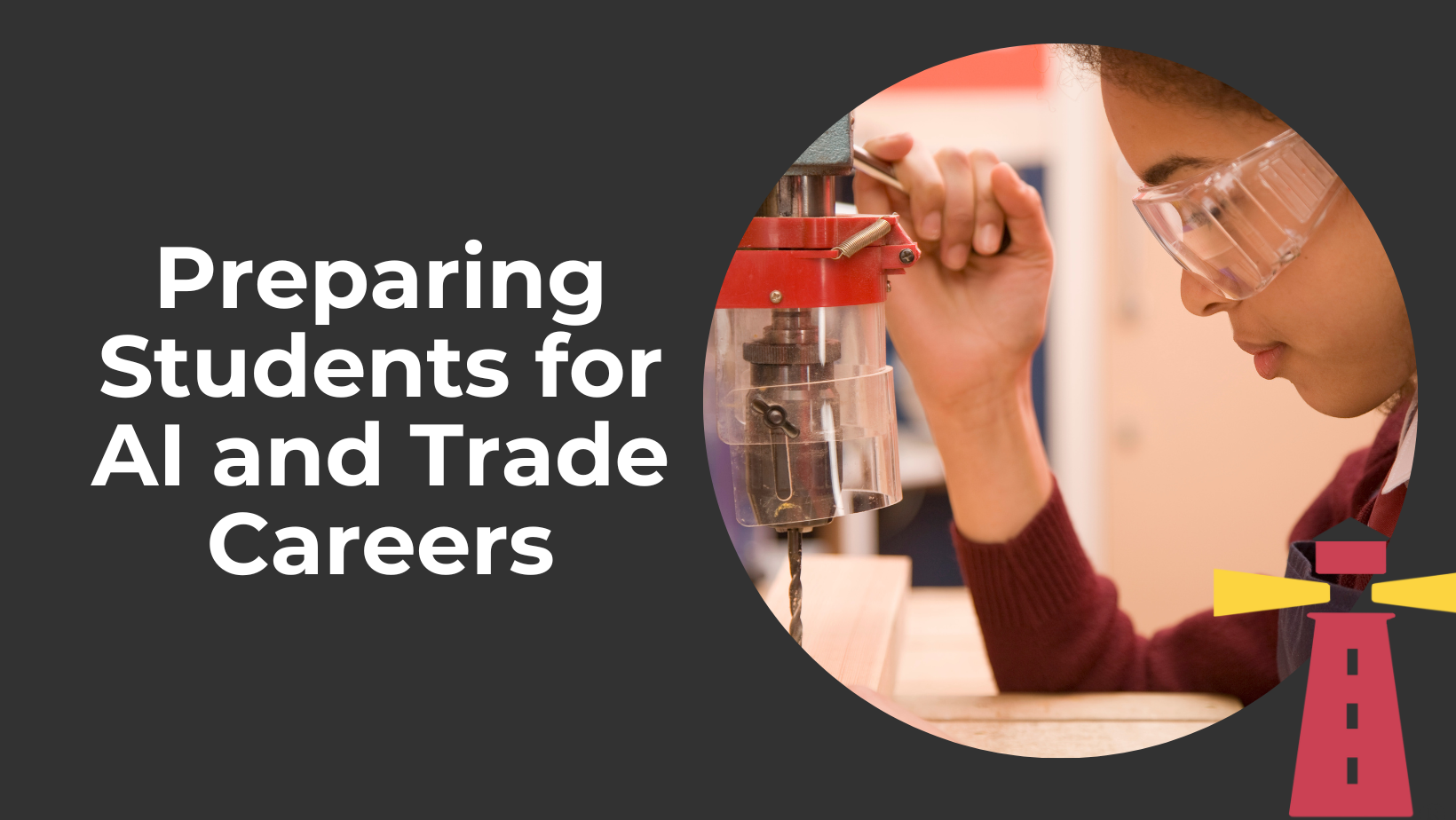
preparing students for ai and trade careers

Preparing Students for AI and Trade Careers

Introduction: Schools at the Crossroads of AI and Trades

Walk into any school today and you’ll hear the same questions circling: What will the future look like for our students? What careers should we be preparing them for? It’s a fair concern. Artificial intelligence is reshaping the job market at lightning speed, while interest in hands-on trades is quietly climbing. Together, these shifts have placed schools at a real turning point: how do we prepare our students for AI careers without losing sight of the value of trades education in the AI age?

The momentum behind both paths is striking. Gen Z enrollment in trade programs has jumped 42 percent in recent years (New York Post), a clear signal that young people see opportunity and security in skilled work. At the same time, AI-related job demand has risen 21 percent (Arxiv), as industries everywhere seek talent to harness new technologies. Students are paying attention, and schools need to do the same.

The truth is, tomorrow’s workforce won’t run on tech alone, or trades alone. An electrician may be wiring smart homes. A mechanic may be troubleshooting vehicles with AI-driven diagnostics. A nurse may be leaning on digital tools for patient care, while still drawing on steady, hands-on skills. Preparing students for this world means giving them both digital fluency and practical expertise.

Students don’t need to view coding and carpentry, robotics and plumbing, as opposing choices. These paths increasingly connect, and understanding that overlap is where real opportunity lies. When schools teach both the value of AI innovation and the skill of timeless craftsmanship, they prepare graduates to step into a future where either direction, or a blend of both, can lead to success.

Why AI Is Forcing a Rethink in Career Preparation

AI and education can no longer be discussed in separate conversations. The rapid growth of workforce automation is changing how students, parents, and educators think about career paths. According to McKinsey, as many as 800 million workers worldwide could be displaced by automation by 2030. The World Economic Forum adds that nearly half of all current job tasks may be automated in the coming decade.

What’s striking is how quickly AI is moving into areas once thought safe: white-collar roles like data analysis, accounting, and even aspects of legal and medical work. While factories and manual labor jobs were long assumed to be at risk, it’s now spreadsheets, reports, and office-based tasks that AI tools are transforming at record speed. In contrast, many trades still require a level of physical presence, adaptability, and problem-solving that machines can’t replicate.

This shift also forces a hard look at the return on investment of a four-year degree. Rising tuition costs and stagnant entry-level salaries are colliding with the rise of skill-based hiring. More employers are asking not where someone went to school, but what they can do. For today’s students, future-ready career education means pairing adaptability with practical skills, ensuring they can thrive in a world where traditional career ladders are being rebuilt.

The Shift to Skill-Based Hiring

Skill-based hiring AI trends are already reshaping the workforce. Employers once considered a bachelor’s degree a baseline requirement for professional roles. Now, that expectation is loosening. Data from LinkedIn shows that degree requirements for many AI-related jobs have dropped by about 15 percent over the last five years. The shift shows that companies are now prioritizing demonstrated abilities such as coding proficiency, problem-solving, or AI tool fluency over a framed diploma on the wall.

For students, this change levels the playing field. A self-taught coder or a trade apprentice with a strong grasp of AI tools can stand shoulder-to-shoulder with someone who pursued a traditional four-year degree. As the AI workforce expands, the emphasis is shifting from pedigree to performance, and schools will need to adjust their programs to reflect that reality.

Which Jobs Are Future-Proof?

One of the biggest questions families and educators ask is: which jobs will survive the wave of automation? Research consistently shows that trades like HVAC repair, plumbing, and electrical work carry low automation risk. These roles rely on physical dexterity, on-the-spot decision-making, and face-to-face problem solving—areas where machines still fall short.

What’s more, the earning potential is stronger than many realize. Median salaries for skilled trades now rival those of college graduates, and the demand for these roles continues to climb as infrastructure ages and new technologies require installation and maintenance. While some white-collar jobs may be reshaped or replaced by AI, trades education offers a level of job security that feels future-proof in the AI age.


The Revival of Trade Education in Schools

For decades, teaching trades in schools took a back seat to the college-prep track. Shop classes were phased out, vocational training was seen as a “second-tier” option, and four-year degrees became the assumed path to success. But that narrative is changing. Modern skilled trades education is experiencing a revival, and schools across the country are rethinking how they prepare students for the future.

The Wall Street Journal has reported on this resurgence, noting a steady return of shop programs and the rise of new vocational training for the AI future. Middleton High School in Wisconsin, for example, recently invested in state-of-the-art labs where students can explore construction, welding, and advanced manufacturing. In Rochester, colleges are expanding their advanced manufacturing programs to meet industry demand, pairing hands-on training with coursework in robotics and automation.

This revival can be seen as a response to the realities of the workforce. Infrastructure-based trades like plumbing, HVAC, and electrical work remain essential to every community. These jobs are local, resilient, and hard to outsource. In the AI age, where algorithms can write reports but can’t repair a boiler or install a power line, the value of trades education has never been clearer. By bringing back vocational programs, schools give students a chance to develop practical skills that will remain relevant no matter how technology evolves.

Gen Z and the “Toolbelt Generation”

Today’s students aren’t blind to these opportunities. In fact, Gen Z choosing trades over college is becoming a noticeable trend. Surveys show that roughly 42 percent of Gen Z are considering or actively exploring the trades, drawn by a combination of stability, strong pay, and independence. For many, the idea of graduating without tens of thousands in student debt, and entering a field where work is in high demand, feels far more appealing than chasing a traditional degree with uncertain ROI.

This generation is sometimes called the “toolbelt generation,” and it’s not just a catchy phrase. It actually reflects a cultural shift where young people view vocational paths as a smart, future-forward choice rather than a fallback option. They’re looking for careers that allow them to build, repair, and innovate in tangible ways while still offering financial security.

Blending Tech into Trades

Of course, modern skilled trades education isn’t about dusting off old shop equipment. The best programs are integrating technology into training in exciting ways. AI in skilled trades and other technological interventions are helping students learn faster, safer, and with greater precision.

Take welding, for instance. Many schools are adopting VR welding simulators, allowing students to practice techniques in a risk-free environment before moving to live equipment. In HVAC training, AR tools are being used to overlay diagnostic instructions directly onto machinery, helping apprentices troubleshoot in real time. Even safety training is being enhanced by AI, with adaptive modules that tailor scenarios to a student’s strengths and weaknesses.

These innovations don’t replace the hands-on experience, but actually enhance it. By blending digital tools with traditional craftsmanship, schools are preparing students for a workforce where technology and trade skills go hand in hand. Vocational training for the AI future isn’t about choosing between hammers and headsets. It’s about teaching students how to wield both.

Building AI Literacy Alongside Trades

As schools revive vocational training, there’s a parallel responsibility of making sure that students graduate with AI literacy in schools. Understanding how artificial intelligence works, where it’s used, and how it intersects with everyday tasks is becoming just as essential as math or writing. An AI fluency curriculum doesn’t mean every student needs to code machine learning models. Instead, it ensures students can navigate AI tools, apply them responsibly, and adapt to an economy where digital skills complement hands-on trades.

AI-integrated learning in education is already taking shape. High School classrooms, technical training centers, and governments are recognizing that students will need both practical skills and AI fluency to stay competitive.

Global Examples of AI in Education

One of the clearest models comes from Estonia, a country often hailed as a digital pioneer. Its AI-Leap program introduces AI education in high schools and vocational schools, teaching students to understand algorithms, ethics, and real-world applications. By embedding these lessons into both academic and trade-focused pathways, Estonia ensures its graduates can troubleshoot a circuit board or use AI-driven diagnostics with equal confidence.

Saudi Arabia is also moving aggressively in this space, with plans to make AI part of its national K–12 curriculum by 2025. Students will not only learn the basics of coding but also explore how AI shapes industries like energy, logistics, and healthcare. This broad rollout reflects a recognition that AI literacy is not optional, it’s a national priority. These global case studies show how countries are tying AI curriculum in schools directly to economic goals and workforce readiness.

U.S. Examples and Policy Moves

In the United States, the conversation around AI in education is quickly gaining momentum. At the higher education level, Ohio State University recently announced that AI fluency will be a requirement across all majors, from engineering to the arts (The Guardian). The idea is simple: whether students are future nurses, architects, or electricians, they need a baseline understanding of AI to thrive in their careers.

At the federal level, new pilot programs are testing AI in STEM and CTE pathways, recognizing the overlap between technical education and digital fluency. These initiatives are beginning to fund AI-integrated learning in education, pairing AI tools with vocational training to modernize fields like advanced manufacturing and healthcare technology. By weaving AI into career and technical education (CTE), policymakers are signaling that the workforce of tomorrow will rely on both toolkits and tech fluency.

Together, these moves highlight a growing consensus: building AI literacy in schools must go hand in hand with modern skilled trades education. Preparing students for the future requires designing pathways where AI fluency and vocational training strengthen one another.


The Convergence: Future-Ready Pathways for Students

The future of work doesn’t belong exclusively to coders or carpenters. It belongs to those who can navigate both worlds. Therefore, schools that embrace dual-path education in AI and trades are creating future-ready career education models that prepare students for whatever direction they choose. By giving students the option to explore both AI and trade careers, educators are equipping them with a competitive edge.

Hybrid programs are already emerging with some schools pairing welding classes with training in digital design software, or offering carpentry alongside modules in 3D modeling. Others are blending coding instruction into traditional vocational labs, where students use AI-driven tools to plan, measure, and refine projects. These approaches recognize that skill-based hiring is on the rise, and when combined with AI literacy, students graduate with a clear advantage in the job market.

This convergence helps to expand students’ toolkits. For example, a graduate who can both troubleshoot HVAC systems and understand AI-enhanced diagnostics is better prepared for long-term success than one with only a narrow focus. Schools that design these future-ready pathways are preparing students for both their first job and for careers that will evolve over decades.

Role of Educators and School Leaders

Educators and school leaders are and will continue to be at the center of this transformation. How schools prepare students for AI careers will depend on the choices made today about funding, training, and curriculum. Expanding CTE (career and technical education) programs is one clear step, ensuring students have access to labs, equipment, and instructors who can teach modern trades. At the same time, professional development for teachers is essential, helping them integrate AI tools responsibly into their lessons and stay ahead of rapid technological change.

Pilot programs can also make a difference. By testing AI curriculum modules in small groups before scaling them schoolwide, districts can identify what works and adjust along the way. The goal isn’t perfection on day one, but steady progress toward building systems where vocational training and AI fluency coexist.

Balancing Technology and Human Skills

Even as AI takes on more routine tasks, there are abilities it cannot replicate. Creativity, empathy, problem-solving, and adaptability remain uniquely human strengths. Schools must balance teaching technical skills with fostering these qualities if they want graduates to thrive in unpredictable futures.

Hands-on projects, collaborative problem-solving exercises, and opportunities for students to innovate are as important as AI coding classes or trade certifications. By emphasizing both human and technological skills, schools prepare students to navigate a workforce where machines handle data, but humans still drive vision and purpose.


Preparing Students for a Dual Future

Preparing students for AI and trade careers is no longer an either-or decision. The disruption brought by artificial intelligence has made trades more attractive and secure, while AI literacy ensures students remain adaptable in rapidly changing industries. Together, these pathways form the foundation of future-ready students who can build, innovate, and lead in a hybrid workforce.

The challenge for schools is also an opportunity. By embracing vocational education and AI-integrated learning side by side, schools can create graduates who are prepared not just for today’s jobs, but for the evolving careers of tomorrow. The call is clear: invest in both toolkits and tech fluency, and equip students to thrive in a dual future where AI innovation and skilled trades go hand in hand.

how will AI impact the future of education

How Will AI Impact the Future of Education?

Introduction: Why AI Is Changing the Conversation

Step into almost any school today and you’ll see hints of the future already at work: students practicing reading with adaptive apps, teachers using AI to craft lesson plans in minutes, and even entire classrooms connecting with specialists through virtual services. These tools may feel new, but they’re quickly becoming part of the everyday rhythm of education.

That’s why the conversation has shifted. For school leaders, it’s not about whether AI belongs in education, but how it will reshape classrooms, districts, and the very idea of what a school can be and how learning can take place. Will we see AI tutors working alongside teachers in every grade? AI-driven schools are no longer just ideas on paper. They already exist, experimenting with personalized learning models and automated supports.

The possibilities are exciting, but they also raise important questions. As AI promises to solve challenges like staffing shortages and individualized learning, districts must also weigh concerns about equity, data privacy, and the role of human connection. Asking how AI will shape the future of education means looking at both sides of this transformation, and preparing for schools that look very different from those we know today.


What Is Artificial Intelligence in Education?

At its core, artificial intelligence in education refers to computer systems that can analyze information, make predictions, and adapt responses in ways that mimic aspects of human decision-making. In practical terms, that means tools that learn from data to provide tailored support, whether it’s an app recommending reading passages at just the right level or software automating attendance and grading.

For school leaders, it might be helpful to cut through the hype. AI in classrooms doesn’t look like robot teachers standing at the front of the room. The reality is far more practical and often invisible. Adaptive learning platforms adjust to each student’s pace. AI-powered writing assistants give instant feedback. Automated grading tools save teachers hours of paperwork. Virtual AI schools are also starting to show what’s possible when these tools are built into the very structure of education itself.

Examples already exist. Alpha School and Unbound School, both centered on AI-driven learning models, design their classrooms around personalization, automation, and student agency. Instead of a traditional one-size-fits-all model, these virtual AI schools leverage technology to create individualized pathways, allowing students to move at their own pace while teachers focus on mentoring and higher-level instruction.

The key takeaway is more nuanced. Artificial intelligence in education is already reshaping the tools and environments schools use to teach, assess, and support students. In many classrooms, AI works alongside educators, handling routine tasks and freeing teachers to focus on mentorship and deeper connections with students. At the same time, some AI-driven schools are experimenting with models that reduce or even replace traditional teacher roles, relying on technology to guide learning in ways that were once unthinkable.

For school leaders, the challenge is to recognize both sides of this shift. AI in classrooms can strengthen human teaching, but it can also redefine what “teaching” looks like altogether. Understanding where your district falls on that spectrum, and what’s right for your students and staff, is central to shaping the future of education.


Practical Applications of AI in Schools

While conversations about artificial intelligence in education can feel abstract, the truth is that AI is already showing up in classrooms and district offices in tangible, practical ways. For school leaders, understanding these applications is key to deciding how AI fits into your long-term strategy.

Personalized Learning and Tutoring

One of the most promising uses of AI and personalized learning is the ability to tailor instruction to each student’s needs. Adaptive platforms adjust the difficulty of lessons in real time, ensuring that advanced learners are challenged while struggling students receive extra support. These systems give teachers clearer visibility into progress, highlighting where interventions are needed.

Beyond the school day, AI tutoring systems are emerging as a resource for after-school study and independent learning. Unlike traditional one-size-fits-all tutoring, these platforms can provide targeted explanations, practice questions, and feedback that align with a student’s unique learning style and pace. For many districts, this kind of support could help bridge equity gaps by making personalized tutoring more widely available.

Administrative Efficiency for Educators

AI isn’t only transforming how students learn. It’s also reshaping how teachers manage their time. With AI tools for teachers, routine administrative tasks such as creating progress reports, finding lesson plan ideas, and even scheduling can be automated. These efficiencies save teachers hours each week, which is time that can be redirected to lesson planning, student engagement, or professional collaboration.

For school leaders navigating staffing shortages and burnout, administrative efficiency with AI offers a way to ease pressure on educators while maintaining compliance and consistency. The result is a healthier balance between administrative requirements and instructional priorities.

Early Intervention and Data Insights

AI in teaching and learning also provides a new layer of insight for early intervention. By analyzing student performance data in real time, AI can detect gaps in comprehension long before they show up on standardized tests. This allows teachers to adjust instruction quickly and prevents small challenges from becoming long-term obstacles.

At the district level, the role of AI in future learning extends to decision-making. Real-time analytics can highlight trends across schools, identify areas where resources are most needed, and even predict which students may be at risk of falling behind. With better data, leaders can allocate staff, funding, and supports more strategically.


AI in Special Education

Artificial intelligence is opening new doors for accessibility and inclusion in special education. At its core, AI can act as a bridge by helping students with diverse needs access curriculum, communicate effectively, and participate fully in the classroom.

Assistive Technologies That Support Accessibility

AI-powered tools are transforming the ways students interact with learning materials. Key examples include:

  • Speech-to-text for students who struggle with writing or need support capturing ideas quickly.

  • Text-to-speech to give learners with dyslexia or visual impairments access to written materials.

  • Translation tools for English language learners and their families, making both classroom content and IEP communications clearer.

  • Predictive text and word suggestion software to support students with fine motor challenges or expressive language delays.

  • Eye-tracking systems and adaptive keyboards that allow non-verbal students to communicate more naturally.

  • AI-enhanced hearing aids that filter background noise, improving focus and comprehension.

  • Automatic captioning systems for videos, lectures, and live discussions.

AI and Virtual Related Services

Beyond direct support for students, AI can enhance how services are delivered. Integrated into virtual related service platforms, AI can:

  • Track student engagement during therapy or instructional sessions.

  • Generate progress reports that align with IEP goals.

  • Highlight patterns in participation or skill development, helping educators plan next steps.

These functions save teachers and therapists time on documentation while strengthening IEP compliance.

Data Insights for IEP Compliance

AI can analyze performance data at scale, making it easier to:

  • Identify gaps in learning earlier than traditional assessments.

  • Monitor progress toward individualized goals.

  • Provide administrators with clear, real-time data that supports compliance requirements.

Used thoughtfully, these insights improve both equity and accountability.

Equity Opportunities and Risks

The potential of AI in classrooms lies in greater equity, removing barriers for students who need additional supports. At the same time, risks exist:

  • Algorithmic bias may reinforce inequities if tools are not designed inclusively.

  • Data privacy and security remain critical concerns when sensitive student information is collected.

The key is balance: using AI to empower educators and learners while maintaining safeguards that protect students and ensure fairness.


Benefits of AI in Education

Artificial intelligence can offer a wide range of opportunities to classrooms, schools, and districts. While still an evolving field, the benefits of AI in education are already visible across different learning environments. From individualized student support to broader systemic changes, AI has the potential to reshape how schools deliver instruction and how teachers use their time.

Personalized, Scalable Support for Diverse Learners

From what we’ve seen, one of the greatest advantages of AI is its ability to personalize learning. Adaptive platforms can analyze a student’s progress in real time and adjust instruction to meet their specific needs. For example, a student who struggles with reading comprehension may receive extra practice passages at the right difficulty level, while a high-achieving student can move ahead to more advanced material.

This kind of responsive instruction is difficult for a single teacher to provide in a class of 25 or more students. AI tools make it scalable, offering individualized pathways for all learners, including students with disabilities. Special education accommodations such as text-to-speech, speech-to-text, predictive spelling, and AI-driven translation are now more seamlessly integrated into mainstream platforms, helping students access content in ways that fit their unique learning profiles. Over time, this kind of personalization has the potential to reduce achievement gaps and give students more agency in their learning.

Expanded Access for Rural and Underserved Schools

AI also creates opportunities to close geographic and resource gaps. In rural areas or underserved communities, schools often face shortages of specialized teachers and services. With AI-enabled platforms, students can access digital tutoring, translation, or even virtual related services that would otherwise be unavailable.

For special education specifically, AI can extend accommodations and supports to schools where staffing shortages limit in-person options. Tools that provide automatic captioning, adaptive learning resources, and real-time data tracking ensure that students with IEPs still receive the individualized supports they are entitled to under the law. This expanded access ensures that students are not limited by their ZIP code when it comes to receiving high-quality education.

Promoting Teacher Creativity and Professionalization

Far from replacing teachers, the future of AI in education lies in giving educators more space to do what they do best: connect with students, inspire curiosity, and design meaningful learning experiences. By automating routine tasks such as grading quizzes, tracking participation, or generating progress reports, AI reduces the administrative burden that often overwhelms educators.

For special education teams, this means more time to focus on personalized instruction and building relationships rather than paperwork. AI-powered progress monitoring tools can track how students are advancing toward IEP goals, ensuring compliance while freeing teachers to engage creatively with their students.

With this time freed up, teachers can focus on creativity,developing innovative lessons, building stronger relationships with students, and engaging in professional growth. AI also provides data-driven insights that help teachers refine their strategies, strengthening their professionalization and positioning them as leaders in using new technologies responsibly.


Challenges and Ethical Considerations

While the benefits of AI in education are promising, the technology is not without serious challenges. Schools, administrators, and educators must confront the risks head-on to ensure AI is used responsibly. The challenges of AI in education span issues of academic integrity, student privacy, equity, and the role of human connection in learning.

Academic Integrity and Critical Thinking

One of the most immediate concerns is the risk of shortcut learning. AI tools make it easy for students to generate essays, solve math problems, or translate text without actually engaging with the underlying concepts. This raises the risk of plagiarism, undermines the development of critical thinking skills, and may even devalue assessments if schools do not adapt.

Educators face a growing challenge: how to differentiate between authentic student work and AI-assisted output. Over-reliance on AI can also limit deeper learning, as students may choose the fastest solution rather than grappling with difficult problems. Without careful guidance, students may leave school less prepared to think critically and solve complex problems independently.

Data Privacy and Compliance

AI systems often require access to sensitive data such as academic records, health information, and behavioral logs to function effectively. This creates significant risks if data is misused, mishandled, or breached. Under laws like IDEA (Individuals with Disabilities Education Act) and FAPE (Free Appropriate Public Education), schools have strict obligations to protect student records, especially for students receiving special education services.

Third-party AI vendors may not always meet these compliance standards. If contracts are vague or protections are weak, student data can be shared without consent or used for purposes beyond education, such as commercial profiling. In an era of frequent data breaches, the stakes are high: a single incident could expose thousands of students’ personal information.

Equity and Bias

AI reflects the data it is trained on, and that data often carries the biases of the broader society. Tools designed to predict performance or recommend interventions can unintentionally reinforce existing disparities. For example, speech recognition software may work less accurately for students with certain dialects, accents, or speech impairments.

In special education, biased AI can have even more damaging consequences. If algorithms misinterpret behavior or academic performance, they may misidentify students for services—or worse, deny them support they are entitled to under federal law. These ethical concerns of AI in education raise a fundamental question: who benefits from AI, and who risks being left further behind?

Over-Reliance on Technology

Finally, schools must guard against the temptation to see AI as a replacement for educators. No algorithm can replace the empathy, intuition, and creativity of a human teacher. Students, especially those with complex needs, require relational support that AI cannot provide.

An over-reliance on technology can erode teacher autonomy and reduce the role of human judgment in instruction. It also risks creating classrooms where screens and data dashboards dominate, leaving less space for curiosity, play, and genuine interaction. The future of education must keep the human element at the center, with AI serving as a tool rather than a substitute.


Preparing Schools for the Future of AI

For AI to truly benefit education, schools cannot take a passive approach. Leaders must anticipate both the opportunities and the risks, making intentional choices about training, policies, and implementation. The role of AI in future learning will depend on how prepared districts are to use it responsibly.

Training Educators to Use AI Responsibly

Teachers need to understand that they will be on the front lines of AI adoption. Without proper training, the technology risks being misused, or worse, sidelined altogether. Schools should invest in professional development that helps educators:

  • Understand how AI tools function and where their limitations lie.

  • Incorporate AI into lesson planning without sacrificing critical thinking.

  • Identify when AI use may undermine academic integrity.

  • Monitor for equity concerns, especially in classrooms with diverse learners and IEP requirements.

When educators feel confident using AI, they are better equipped to integrate it in ways that support, rather than replace, meaningful instruction.

Creating Policies for Ethical, Equitable Adoption

Technology should never outpace ethics. School leaders must create clear policies that establish boundaries around AI use. These policies should cover:

  • Data privacy protections that align with IDEA, FAPE, and FERPA requirements.

  • Academic integrity guidelines so students know what constitutes acceptable use.

  • Equity standards ensuring tools are evaluated for accessibility and inclusiveness.

  • Transparency measures requiring vendors to disclose how student data is collected and used.

Policies give schools a framework for protecting students while signaling to families that AI is being adopted with care and accountability.

Piloting AI Tools Before Large-Scale Rollout

Not every AI solution will be the right fit for every district. Schools should treat AI adoption as a pilot project, starting small before committing to district-wide use. Pilots allow leaders to:

  • Test tools in real classrooms.

  • Gather feedback from teachers, students, and parents.

  • Evaluate accessibility for students with disabilities.

  • Measure whether tools actually improve learning outcomes.

This careful approach prevents wasted resources and ensures that only effective, equitable tools are scaled across the district.


Conclusion: A Future Shaped by People and Technology

AI will undoubtedly reshape the way schools deliver instruction, track progress, and expand access. But two priorities remain non-negotiable: human connection and compliance with student protections. No algorithm can replace the role of a teacher, nor can AI bypass the legal and ethical responsibilities schools carry for every child’s education.

For school leaders, the challenge is not whether to adopt AI, but how to do so thoughtfully. Explore tools carefully, invest in professional training, and keep students at the center of every decision. By balancing innovation with responsibility, districts can harness the benefits of AI while avoiding its pitfalls.


FAQÂ

Q: How will AI shape the future of education?
A: AI will make learning more personalized, automate administrative tasks, and expand access for underserved communities. However, its future role depends on schools adopting it responsibly and keeping educators central.

Q: What are the benefits of AI in education?
A: AI can provide scalable support for diverse learners, expand access to services in rural or underserved areas, and free teachers to focus on creativity and relationship-building.

Q: What are the challenges of AI in classrooms?
A: Key challenges include risks to academic integrity, concerns over student data privacy, the potential for bias in algorithms, and the danger of over-reliance on technology at the expense of human connection.

Q: How is AI being used in special education?
A: AI supports accessibility through speech-to-text, text-to-speech, translation, predictive text, eye-tracking, and adaptive technologies. It also helps track progress toward IEP goals, though it must be used carefully to avoid bias and compliance issues.

Q: How can school leaders prepare for AI in education?
A: By training educators, creating ethical policies, and piloting tools before broad adoption. Preparation ensures AI strengthens learning rather than introducing new risks.

top virtual related service providers

Top Virtual Related Service Providers for Schools

Picture this: it’s midsummer, and you’re reviewing staffing assignments for the upcoming school year. The numbers don’t add up. You’re already short on speech therapists, your school psychologist is stretched across multiple campuses, and families are asking how services will be in place by the first day. For many district leaders, this is not an unusual scenario. It’s a recurring challenge of running special education programs today.

That’s why schools are turning to the top virtual related service providers for support. These partners connect districts with licensed professionals through secure online platforms, helping schools bridge staffing gaps, stay compliant, and reassure parents that their children will get the special education support promised in their IEPs.

And the demand is only growing. In Texas, for example, full-time virtual school enrollment increased by more than 1,200 percent in the past decade. That kind of growth makes one thing clear: families and districts are no longer treating virtual services as a stopgap, but as a core part of how education is delivered.

For administrators navigating shortages, compliance pressures, and rising expectations, the right virtual service provider can function less like an outside vendor and more like a trusted extension of the district team. The key is knowing which providers stand out, and how to choose the best fit for your schools.

Why Schools Are Turning to Virtual Related Services

The push toward virtual related services didn’t happen overnight. It has been building for years, fueled by a mix of practical needs and changing expectations from families. One of the biggest drivers is the nationwide shortage of special education professionals. According to the American Speech-Language-Hearing Association (ASHA) and the National Association of School Psychologists (NASP), thousands of districts report difficulty hiring enough providers to meet mandated service minutes. In some states, unfilled positions stretch across entire regions, leaving administrators scrambling to find solutions that won’t compromise compliance.

Geography also plays a role. Rural districts often have only one or two providers serving large areas, which means long commutes, inconsistent coverage, or students waiting weeks for services. Virtual related services remove those barriers. With secure platforms, students in a remote classroom can access the same licensed professional that a child in a suburban district does, closing gaps that geography once made unavoidable.

The pandemic accelerated another trend: flexibility. Families grew more comfortable with technology, and educators discovered that many therapy models translate well to online delivery. For some students, particularly those who thrive in structured, one-on-one environments, remote SPED providers offer a setting that feels less intimidating than a busy resource room.

Taken together, these shifts explain why virtual related services have become more than an emergency fix. They’re now a sustainable strategy for schools looking to balance staffing challenges, compliance requirements, and family expectations—all while keeping student needs front and center.

By the Numbers: Special Education Provider Shortages

  • Over 70% of districts report shortages of special education teachers or related service providers (ASHA, NASP).

  • Some states report vacancy rates as high as 15–20% in critical roles like school psychologists.

  • Rural districts are disproportionately affected, often relying on one provider to cover multiple schools.

What to Look For in a Virtual Service Provider

Choosing virtual service providers goes well beyond filling vacancies. It’s also about finding a true school teletherapy partner that can meet compliance requirements, integrate seamlessly with your teams, and, most importantly, deliver consistent, high-quality support to students. The best providers feel like an extension of your district rather than an outside vendor.

Licensing and Compliance Standards

Licensing and compliance standards should be the first consideration. The right provider will have licensed professionals in the states they serve and systems designed to support IEP alignment. That includes meeting IDEA compliance requirements, safeguarding student information under FERPA and HIPAA, and documenting services in a way that stands up to audits or reviews. When providers take compliance as seriously as you do, it reduces risk and ensures students receive the services they’re entitled to.

Breadth of Services Offered

It is also important to look at the breadth of services offered. Some vendors can only cover one area, such as speech therapy, but most districts need more than that. Working with a provider that offers a full range of services, which might include speech therapy, occupational therapy, school psychology, and counseling, creates consistency and simplifies communication. Rather than juggling multiple contractors, districts can coordinate with one partner that understands the whole picture of student needs. A wide service menu also gives schools the flexibility to scale support when enrollment shifts or unexpected staffing gaps arise.

Technology and Integration

Technology is another key factor. The platforms behind virtual related services should be secure, reliable, and easy for staff and families to use. Encrypted systems protect student privacy, while features like built-in documentation tools help schools track progress and generate reports without creating extra paperwork. The best platforms also integrate with your existing systems so that teachers and administrators aren’t forced to learn an entirely new process just to access therapy.

Collaboration with IEP Teams

Finally, collaboration with IEP teams sets great providers apart. A strong school teletherapy partner will participate in IEP meetings, contribute to MTSS discussions, and share progress updates as if they were on-site staff. They prioritize communication with teachers, administrators, and families, respond to parent concerns, and keep documentation timely and accurate. In short, they don’t just provide services—they help districts strengthen their entire system of support.


Comparing the Top Virtual Related Service Providers for Schools

At Lighthouse Therapy, we know every district has unique needs. While we pride ourselves on being a responsive, clinician-owned partner, we also recognize that sometimes another provider may be a better fit based on circumstances, scale, or service models. If Lighthouse isn’t the right fit for you, for whatever reason, here are some other companies we respect and encourage districts to consider.

With so many options available, it’s important for administrators to compare virtual related service providers side by side. The best teletherapy companies for schools share core qualities: licensed professionals, strong compliance practices, and seamless integration with district teams, while also bringing their own distinct strengths. Taking time to evaluate these differences helps ensure districts find a partner that aligns with their needs, values, and long-term goals.


Axis Teletherapy

Axis Teletherapy delivers online, interactive therapy sessions across speech-language, occupational therapy, and mental health. Their providers are state-certified, teletherapy-trained, and bring school-based experience to each session. Axis emphasizes compliance with HIPAA and FERPA standards, and makes implementation simple for schools by requiring only a computer, webcam, headphones, and internet connection. With built-in progress tracking, dedicated contract managers, and scalable solutions, Axis positions itself as a flexible partner for districts navigating ongoing shortages.

LinkUp Teletherapy

LinkUp Teletherapy is a therapist-owned company focused on speech therapy for PreK–12 students. Their model centers on engaging, goal-directed sessions via secure video platforms while also handling key school-facing responsibilities. Services include case management, evaluations, screenings, Medicaid documentation, and active participation in IEP meetings. LinkUp also emphasizes parent and teacher communication, ensuring transparency and consistency in student progress. Their portal documents all sessions and make-ups, giving administrators confidence in compliance and reporting.

Seagull Student Services

Seagull Student Services has been a pioneer in teletherapy since 2012, beginning with speech services and later expanding to occupational therapy and school psychology. They offer flexible models—virtual, hybrid, and in-person—to meet the varied needs of districts. Seagull highlights continuity of care, carefully matching therapists to schools to minimize turnover and strengthen long-term relationships. Their HIPAA-compliant platform and proprietary “Formula for Success” framework combine evidence-based and curriculum-based practices, supporting both compliance and student growth.


Side-by-Side Comparison of Virtual Service Providers


Feature/Focus Axis Teletherapy LinkUp Teletherapy Seagull Student Services
Background Experienced, nationwide provider Experienced, nationwide provider Pioneer in teletherapy since 2012
Core Services Speech, OT, mental health Speech therapy (PreK–12), evals, screenings Speech, OT, school psychology
Compliance HIPAA & FERPA compliant Medicaid documentation, IEP compliance, FERPA HIPAA compliant, evidence- & curriculum-based framework
Therapist Expertise State-certified, teletherapy-trained, 2+ years school-based experience Experienced SLPs integrated with school teams Experienced “good-fit” therapists, focus on continuity
Technology Simple setup, built-in progress tracking Secure portal for sessions, attendance, and reporting Proprietary platform with monitoring and progress tools
Collaboration with Schools Dedicated contract managers, regular progress updates Active in IEP meetings, communicates with parents/teachers Long-term therapist matching, strong school partnerships
Delivery Model Fully virtual Fully virtual Virtual, hybrid, or in-person options
Standout Strength Flexibility and scalability Strong compliance and school-facing support Continuity of care and relationship building


Where Lighthouse Therapy Fits In

At Lighthouse Therapy, we don’t see ourselves as another virtual related service provider. We see ourselves as a school teletherapy partner. Because we’re a smaller, clinician-owned, family-run company with no investors or board of directors to answer to, our priorities stay with schools and students…not shareholders. We know what it’s like to be in the trenches with districts, balancing compliance pressures, staffing shortages, and parent concerns. Our focus is always on being responsive, approachable, and deeply invested in student success.

Licensed and Experienced Providers

All of our clinicians are fully licensed in the states where they serve, and many bring direct school-based experience with them. We understand the rhythms of the academic year, the need to align services with educational goals, and the importance of timely progress monitoring. Compliance is built into the way we work, so districts can trust that services are both high-quality and legally sound.

Seamless Team Collaboration

We believe therapy should never happen in a vacuum. Our providers join IEP and MTSS meetings, share progress data, and communicate regularly with administrators and families. We make it a priority to be accessible and responsive, so teachers and parents feel supported and included. When you partner with us, you gain team members who are actively invested in your school community.

Compliance and Documentation Support

We take compliance seriously. All of our sessions are delivered through secure, encrypted Zoom platforms that meet FERPA and HIPAA standards, keeping student data safe. Our clinicians document every session in detail, providing clear records, progress reports, and notes that districts can rely on during audits or reviews. We know how much weight documentation carries, and we’ve designed our systems to give administrators peace of mind.

Onboarding and Ongoing Support

Starting something new can feel overwhelming, which is why we put a lot of care into onboarding. We guide school teams step by step, helping administrators, staff, and families feel comfortable with the technology and processes before services even begin. Our team provides training, troubleshooting, and personalized support to make the transition smooth. This support doesn’t stop after the first week, either. We stay close, checking in regularly and being available whenever questions or challenges come up. District leaders tell us that this ongoing partnership is one of the things that sets us apart. We’re not a “set it and forget it” provider, we’re present for the long haul.

When you work with Lighthouse Therapy, you’re partnering with a team that understands the challenges schools face and is committed to walking alongside you every step of the way.

How to Choose the Best Fit for Your District

When it comes to choosing a virtual service provider for schools, the decision goes far beyond filling a gap on a staffing chart. What district leaders really need is a partner they can rely on: one with the expertise to serve students well, the flexibility to adapt when challenges arise, and the commitment to work alongside your team instead of at arm’s length.

Start with expertise. Ask yourself: does this provider employ clinicians who understand schools? Are they familiar with IEP processes, progress monitoring, and the daily realities of balancing multiple priorities? Experienced providers save districts time and reduce stress because they know how to step into the rhythm of a school environment and keep services moving smoothly.

Partnership is just as important. The best district SPED solutions come from providers who act like an extension of your team. They show up for IEP meetings, communicate regularly with teachers and administrators, and make families feel supported. If a provider feels transactional rather than collaborative, the relationship won’t last.

Service range is another piece of the puzzle. Many districts need support across multiple areas: speech therapy, occupational therapy, school psychology, and counseling. Working with one school teletherapy partner that covers these needs streamlines communication and creates consistency for students.

And yes, compliance matters too. Any provider you consider should be licensed in the states where they serve and have clear systems to meet IDEA, FERPA, and HIPAA requirements. Compliance safeguards focus on protecting students and ensuring services are both effective and defensible.

Finally, consider cost, but keep it in context. The lowest price doesn’t always equal the best value. A provider who offers reliable services, strong documentation, and true collaboration often saves districts time and resources in the long run.

A Quick Reflection Checklist for Leaders:

  • Do their providers bring real expertise in working with schools?

  • Will they feel like partners, not just contractors?

  • Can they offer the full range of services your district needs?

  • Are their compliance and documentation practices strong and transparent?

  • Does their pricing reflect sustainable, high-quality support?

Partnering for Student Success

At the end of the day, virtual SPED support is about more than filling positions on a staffing chart. It’s about creating partnerships that help districts keep their promises to students and families. The right school therapy providers strengthen teams, ease administrative burdens, and ensure every child has access to the services outlined in their IEP.

That’s the role we’ve built Lighthouse Therapy around. We walk alongside districts with licensed providers, thoughtful onboarding, ongoing collaboration, and a commitment to compliance that gives leaders peace of mind. Whether you’re navigating staff shortages, rising compliance pressures, or exploring new models of service delivery, we’re here to make the process easier.

If you’d like to see what a true partnership can look like, reach out to Lighthouse Therapy for a consultation or demo. Together, we can create solutions that support your teams, empower your families, and give students the services they need to succeed.

What are virtual related services?

What Are Virtual Related Services for Schools?

Why Schools Are Turning to Virtual Related Services

Schools everywhere are running into the same problem: student needs keep growing, but staff capacity hasn’t caught up. Special education directors, administrators, and families are left asking the same question: how do we keep services consistent and compliant without stretching teams past their limits? More and more, the answer has been turning to virtual related services for schools. What used to feel like a temporary fix has now become a reliable, long-term solution.

The momentum behind virtual related services hasn’t happened overnight. Staffing shortages have made it tough for districts to hire and hold onto qualified speech-language pathologists, occupational therapists, and mental health providers. In rural areas, the challenge is even greater, with specialists sometimes hours away from students in need. Then came the pandemic, which shifted expectations almost overnight. Families and districts alike saw that therapy could be delivered virtually, and delivered well, when supported by the right tools and expertise.

The numbers speak for themselves. In Texas, enrollment in virtual schools has soared more than 1,200 percent in just a few years. That growth highlights two realities: families want flexible, accessible options, and districts need new ways to deliver services without delay. Virtual solutions aren’t experimental anymore. They’ve become part of the educational landscape, especially in special education where timely access and IEP compliance matter most.

For administrators, parents, and providers, the urgency is clear. Students can’t wait months for support, and schools can’t risk falling out of compliance. Exploring virtual related services for schools offers a way forward: bridging staffing gaps, expanding access, and ensuring every student gets the chance to thrive.


What Are Virtual Related Services for Schools?

When families and schools talk about special education, they often focus on classroom instruction. But instruction alone isn’t always enough for a child to succeed. That’s where related services come in. Under the Individuals with Disabilities Education Act (IDEA), related services are the additional supports that help a student benefit from their education: things like speech therapy, occupational therapy, physical therapy, counseling, or transportation. In short, they are the “wraparound” services that make learning possible.

So what does it mean when those services become virtual? Virtual related services are the very same therapies and supports required by a student’s Individualized Education Program (IEP), but they’re delivered through secure online platforms instead of face-to-face in a traditional classroom. Students meet with a licensed professional via video conferencing, interactive software, or a blended model that pairs in-person staff with virtual specialists. The goals, requirements, and accountability stay the same, however, the delivery method just shifts.

This is also where confusion often arises. Some people use the word “teletherapy” to describe any kind of virtual therapy, but virtual related services for schools goes well beyond teletherapy alone. Teletherapy usually refers to clinical services like speech or occupational therapy. Virtual related services include the full range of IEP supports that can be provided online, from counseling to specialized instruction to assistive technology consultation. In other words, teletherapy is one piece of the puzzle, but not the whole picture.

For parents and guardians, this distinction matters. Knowing that IEP virtual services are still governed by IDEA helps ensure confidence that their child’s rights are protected and their needs are met. Whether a student receives speech therapy through a laptop, counseling in a secure online session, or coaching from a therapist who collaborates virtually with school staff, the commitment remains the same: individualized support designed to help every child thrive.


Types of Virtual Related Services Offered

District leaders and administrators know that related services are often the hardest positions to staff. That’s why virtual special education services have become a practical way to ensure consistency, maintain compliance, and expand access to specialists who may not be available locally. Through secure platforms and collaborative tools, schools can connect students with licensed professionals who deliver therapy and support in a flexible format that meets IEP requirements.

The range of telepractice related services schools can offer is broad:

Speech-Language Pathology

Speech services remain the most common type of virtual support. Licensed speech-language pathologists (SLPs) provide direct therapy sessions, conduct evaluations, and collaborate with IEP teams through virtual platforms. For schools with significant caseloads or difficulty filling SLP roles, virtual delivery can help reduce backlogs and keep services on schedule.

Occupational Therapy

Occupational therapists support students in developing fine motor skills, self-regulation, and adaptive strategies. Virtual OT sessions can be structured around everyday classroom activities, with therapists guiding students through tasks while collaborating with on-site staff. This flexibility helps schools serve students in both general and special education settings, even when local OT candidates are scarce.

Counseling and Mental Health

Access to mental health providers is increasingly critical, yet many schools struggle to recruit counselors or psychologists. Virtual models allow districts to connect students with licensed professionals for individual counseling, group sessions, and behavior support planning. Virtual counseling not only expands access but also offers discreet and timely interventions, helping schools address the growing demand for mental health services.

Physical Therapy and Adaptive Services

Though less common virtually, physical therapy and adaptive services can still be provided through targeted online sessions. Licensed physical therapists coach students through exercises, monitor progress, and collaborate with staff to ensure goals are addressed. Adaptive services, such as assistive technology consultation, are especially well-suited for virtual delivery, giving schools access to specialized expertise that may not be available locally.

Flexible Models to Meet District Needs

Virtual related services don’t have to be “all or nothing.” Many districts blend models to fit their context. For example:

  • Hybrid delivery pairs on-site staff with virtual specialists, ensuring hands-on support while leveraging remote expertise.

  • Asynchronous options allow providers to share recorded lessons, adaptive materials, or progress activities that staff and families can implement between live sessions.

This flexibility makes it possible for schools to tailor services to their staffing realities while keeping students’ IEPs on track.


Delivery Models for Virtual Related Services

Not every district has the same needs or the same resources. That’s why flexibility in virtual related service delivery models is essential. Schools can choose the format that best aligns with their staffing realities, student populations, and IEP compliance requirements. The good news: virtual models aren’t “one size fits all.” They can be fully virtual, blended with on-site staff, or even structured around a mix of real-time and recorded sessions.

Fully Virtual Telepractice

In a fully virtual model, students receive services entirely online. Licensed providers deliver therapy, conduct evaluations, and collaborate with IEP teams through secure video platforms. This approach is particularly valuable in districts where recruiting specialists, such as speech-language pathologists or occupational therapists, has proven difficult. For administrators, this model ensures that students continue receiving services without interruption, even when local candidates aren’t available.

Hybrid In-Person + Virtual Support

A hybrid model combines the strengths of on-site staff and virtual specialists. For example, a paraprofessional or support staff member may sit alongside a student during therapy while the provider connects virtually. This model works well when schools want to maintain a hands-on presence but still need the reach of remote expertise. Hybrid delivery is also useful for younger students or those who benefit from in-person prompts and redirection.

Synchronous vs. Asynchronous Services

Another consideration is whether services are delivered in real time (synchronous) or through pre-recorded and guided materials (asynchronous).

  • Synchronous sessions mirror traditional in-person therapy, with live interaction between provider and student.

  • Asynchronous supports may include recorded modeling, digital resources, or structured activities that teachers and support staff implement between live sessions.

This combination can extend the provider’s impact, reinforce skill development, and give schools more scheduling flexibility.

Choosing the Right Fit

The most effective approach often blends these models. For instance, a district might rely on fully virtual speech services, hybrid occupational therapy, and a mix of synchronous and asynchronous counseling supports. The flexibility allows administrators to design service delivery that balances efficiency, compliance, and student engagement.

Benefits of Virtual Related Services for Schools

District administrators know the stakes: if related services aren’t delivered on time, compliance issues arise, and more importantly, students fall behind on critical supports. Exploring the benefits of virtual related services for schools reveals why so many districts are building them into long-term staffing plans rather than using them as short-term stopgaps.

Expanding Access for Rural and Underserved Areas

One of the clearest benefits is access. For rural districts, finding licensed speech-language pathologists, occupational therapists, or mental health providers can be nearly impossible. Students may face long waitlists or be forced to travel significant distances for care. Virtual related services remove these barriers by connecting schools with qualified professionals regardless of geography. The result is timely support for students who might otherwise go without.

Cost Savings and Staffing Flexibility

Hiring full-time specialists isn’t always practical, especially for smaller districts or those with fluctuating caseloads. Virtual models allow schools to scale services up or down based on need. Districts can contract for just a few hours per week or build larger virtual teams without absorbing the overhead of full-time hires. This staffing flexibility not only helps balance budgets but also ensures services can adapt as student needs shift throughout the school year.

Promoting Equity and Timely Service Delivery

As we all know, when services are delayed, students lose valuable learning time. Virtual related services help districts stay on top of IEP timelines and deliver support consistently, even when in-person staff are absent or positions go unfilled. This consistency promotes equity: students receive the services they’re entitled to, regardless of where they live or how challenging recruitment may be. For administrators, this also means peace of mind knowing compliance requirements are being met.

Increasing Opportunities for Family Engagement

Virtual platforms often open new doors for collaboration. Families can more easily join meetings, observe sessions, or receive coaching from providers without the barrier of travel or scheduling conflicts. For districts, this increased engagement helps strengthen home–school connections and gives families confidence that services are being delivered effectively. When families feel included, they become stronger partners in supporting student progress.

The Bigger Picture

Taken together, the benefits are clear: virtual related services help schools reach more students, use resources wisely, meet compliance obligations, and foster collaboration. For administrators balancing competing priorities, these services provide a pathway to maintain high-quality support without overextending already limited staff.

Challenges of Virtual Related Services

While the benefits of virtual special education services are significant, administrators also need a clear understanding of the challenges. Awareness of potential pitfalls helps districts prepare in advance, avoid compliance gaps, and set realistic expectations with staff and families.

Technology Barriers and Student Engagement Issues

Technology is the backbone of virtual service delivery, but not every district has equal access. Students need reliable internet connections, working devices, and quiet spaces for sessions to be successful. Even when those pieces are in place, engagement can still be a hurdle, particularly for younger students or those who struggle with attention. Without strong collaboration between virtual providers and on-site staff, sessions may lose effectiveness.

State-by-State Licensure Restrictions

Licensure remains one of the more complex aspects of virtual service delivery. Each state sets its own rules about whether a provider can serve students across state lines. For administrators managing multi-state virtual schools or regional partnerships, this can create additional layers of coordination. It’s critical to ensure that any provider offering virtual special education services is licensed in the state where the student resides.

Maintaining Compliance with IEP Timelines and Documentation

No matter the delivery model, IDEA requirements remain unchanged. Schools must meet IEP timelines, document services, and ensure Free Appropriate Public Education (FAPE) is provided. With compliance IDEA virtual services, the challenge lies in aligning digital platforms and provider workflows with the district’s existing processes. Missed communication, unclear documentation, or gaps in service tracking can quickly create compliance risks.

Questions to Ask When Evaluating Risks

To minimize these challenges, administrators can start by asking targeted questions:

  • Do all students have access to devices, internet, and a quiet space for sessions?

  • How will on-site staff support engagement during virtual sessions?

  • Are providers licensed in the student’s state of residence?

  • What systems are in place for tracking service minutes, progress notes, and IEP compliance?

  • How will communication flow between virtual providers, case managers, and families?

  • What backup plans exist for technology disruptions or missed sessions?

By addressing these questions upfront, districts can anticipate obstacles and design solutions that make virtual related services a reliable part of their special education program.


Compliance and Legal Considerations

For district leaders, the most important question isn’t just can virtual services be delivered, but can they be delivered in compliance with IDEA and state regulations? The answer is yes, but only with careful planning and consistent oversight. Understanding the legal framework for compliance IDEA virtual services helps administrators avoid missteps while ensuring students receive the supports they are entitled to.

IDEA Requirements and FAPE in a Virtual Context

The Individuals with Disabilities Education Act (IDEA) makes clear that students with disabilities are entitled to a Free Appropriate Public Education (FAPE). That requirement doesn’t change simply because services are provided virtually. Districts must still provide services outlined in the IEP, measure progress, and document outcomes. What changes is the delivery method. Ensuring FAPE in a virtual environment requires secure technology platforms, accurate tracking of service minutes, and collaboration between on-site staff and remote providers to meet student needs effectively.

IEP Team Decision-Making and Documentation

IEP teams remain the central decision-makers when determining if and how IEP compliance virtually can be achieved. Teams must consider the appropriateness of virtual delivery for each service, based on student needs, goals, and available resources. Documentation is critical: service delivery models, provider credentials, and progress monitoring plans should all be clearly recorded in the IEP. Districts must also ensure that all virtual providers participate in IEP meetings, contribute to progress reports, and communicate with staff and families to maintain continuity of care.

State-Specific Guidance

Beyond federal law, states often add their own requirements for service delivery. For example, New York has specific telepractice rules for speech-language pathologists, while other states impose restrictions on cross-state licensure. Administrators must review and follow their state’s education department guidance to avoid compliance gaps. Partnering with providers who are already licensed and familiar with state-specific regulations is often the most efficient way to ensure services remain valid and enforceable.

Compliance Checklist for IEP Teams

To support consistent decision-making, IEP teams can use a simple checklist when considering virtual related services:

  • Does the service delivery model meet IDEA and FAPE requirements?

  • Is the provider licensed in the student’s state of residence?

  • Are secure platforms in place to protect student confidentiality?

  • How will service minutes and progress be documented?

  • Are families informed and included in IEP decision-making?

  • Is there a plan for addressing technology disruptions or missed sessions?

  • Has state-specific guidance been reviewed and applied?

How to Choose a Virtual Related Service Provider

With demand rising, districts now have more options than ever for virtual related services for schools. One of the challenges is how to choose a virtual related service provider that will align with district goals, maintain compliance, and support students effectively. Careful vetting ensures that the provider is more than a quick fix; they should be a trusted partner in delivering consistent, high-quality services.

Provider Credentials and Licensure

The first step is confirming that providers hold the appropriate credentials. Speech-language pathologists, occupational therapists, counselors, and other specialists must be licensed in the state where the student resides. Some providers may also carry certifications in telepractice, which adds assurance that they are trained in virtual delivery methods. District leaders should request documentation of licensure, as well as ongoing professional development opportunities offered by the provider organization.

Technology and Integration with School Systems

Even the most qualified provider will struggle without the right infrastructure. Districts should ask how a provider’s technology integrates with existing school systems. Does the platform align with district firewalls and security protocols? Are there tools for scheduling, data tracking, and reporting? Providers should offer secure, user-friendly platforms that protect student data and make it easy for administrators to monitor progress.

Communication and Collaboration with IEP Teams

Virtual services must be woven into the IEP process, not layered on top of it. Strong providers will demonstrate a clear process for collaborating with case managers, teachers, and families. They should attend IEP meetings, contribute to progress reports, and maintain open lines of communication. For administrators, this level of collaboration ensures continuity of care and reduces the risk of compliance issues.

Accessibility and Student Engagement

Not all students will thrive in the same virtual environment. Providers should be able to adapt services for diverse needs, including students who require assistive technology or additional support to stay engaged. Asking providers to share examples of engagement strategies—such as interactive tools, flexible scheduling, or on-site staff collaboration—gives administrators confidence that services won’t just be delivered, but delivered effectively.

Next Steps for Schools Exploring Virtual Services

With student needs growing and staffing gaps widening, districts need proactive solutions rather than hoping the shortages will ease. Exploring virtual related services for schools offers a practical way forward: expanding access for rural and underserved students, providing staffing flexibility, ensuring equity, and keeping IEP timelines on track.

Of course, challenges exist—technology barriers, licensure restrictions, and compliance requirements must all be addressed. But with careful planning and strong provider partnerships, districts can turn potential risks into opportunities for growth. A clear framework for compliance, collaboration with IEP teams, and robust documentation ensure that students continue receiving the Free Appropriate Public Education (FAPE) they are entitled to under IDEA.

For administrators, the next step isn’t a leap—it’s a pilot. By starting small, districts can evaluate how virtual models fit into their existing workflows, measure impact on student outcomes, and build confidence before scaling further.

At Lighthouse Therapy, we specialize in helping schools overcome SPED staffing shortage solutions with flexible, high-quality virtual related services. Our team of licensed professionals collaborates directly with IEP teams, ensuring services remain compliant, student-centered, and effective. If your district is ready to explore the next step, we’re here to help.

Contact Lighthouse Therapy today to schedule a consultation and discover how virtual related services can keep your students supported, your staff empowered, and your district in compliance.


FAQ: Virtual Related Services for Schools

Q: What are virtual related services for schools?

A: Virtual related services are the therapies and supports outlined in a student’s IEP, such as speech therapy, occupational therapy, counseling, or physical therapy, delivered through secure online platforms instead of face-to-face in a classroom setting.

Q: Are virtual related services IDEA-compliant?

A: Yes. Virtual services must meet the same IDEA requirements as in-person services, including ensuring FAPE, meeting IEP timelines, and documenting student progress. Compliance depends on careful planning, provider licensure, and collaboration with IEP teams.

Q: How can schools assess virtual providers?

A: Districts should evaluate provider credentials, licensure, technology platforms, communication processes, and engagement strategies. Using a structured checklist helps ensure providers meet both compliance requirements and district expectations.

Q: What services can be provided virtually under an IEP?

A: Many related services can be delivered virtually, including speech-language therapy, occupational therapy, counseling, and even physical therapy or adaptive services. The decision depends on the student’s needs and the IEP team’s determination of what delivery model is most appropriate.