

Episode Description
What if the key to transforming virtual special education outcomes wasn’t another technology—but a person? In this powerful conversation, we uncover how one Ohio virtual academy achieved remarkable student success by reframing the role of the learning coach as the “missing puzzle piece” in distance learning. Discover the strategies that are keeping struggling students engaged, supporting overwhelmed families, and giving burned-out special education teachers the breathing room they need.
About Our Guests
Rekha Manakkal and Erin Fatafehi are Directors of Special Education Services at Ohio Connections Academy in Columbus, Ohio. With deep expertise in virtual special education delivery, they’ve built a comprehensive support system that prioritizes family partnership and student persistence—transforming what many students see as “a last resort” into a pathway to success.
What You’ll Learn
In this episode, Rekha and Erin reveal:
– The critical role of the learning coach and why this relationship often matters more than classroom technology
– How to overcome parental hesitation about supporting their child in a virtual environment
– Concrete strategies for boosting engagement among high school students who are skeptical about online learning
– The hidden benefit of virtual school: deeper family awareness and investment in their student’s education
– How constant accessibility and partnership create the conditions for students with IEPs to truly thrive
Key Takeaways
✓ The Learning Coach is the Puzzle Piece — Success in virtual special education hinges on having a committed adult at home who ensures students are “where they need to be, when they need to be there”—not as a teacher, but as a supportive guide.
✓ Virtual Learning Increases Family Engagement — When families can observe and participate in their child’s learning throughout the day, they become more invested partners in their student’s success.
✓ Accessibility Builds Trust — Being available to students and families “pretty much all day long” signals that your school is a genuine partner committed to answering questions and providing real-time guidance.
✓ High School Engagement is Possible — Even students who view virtual school as a final option can stay motivated when they have consistent support and a credible message that “you can make it, you will get your diploma.”
✓ A Structured Platform Strengthens Partnerships — The right virtual infrastructure enables the constant communication that deepens relationships between teachers, families, and students in ways brick-and-mortar settings often can’t match.
Notable Quotes
“That learning coach is the piece of the puzzle that makes this learning environment successful. Because if the student has that support at home, it ensures the student is where they need to be when they need to be there.” — Erin Fatafehi
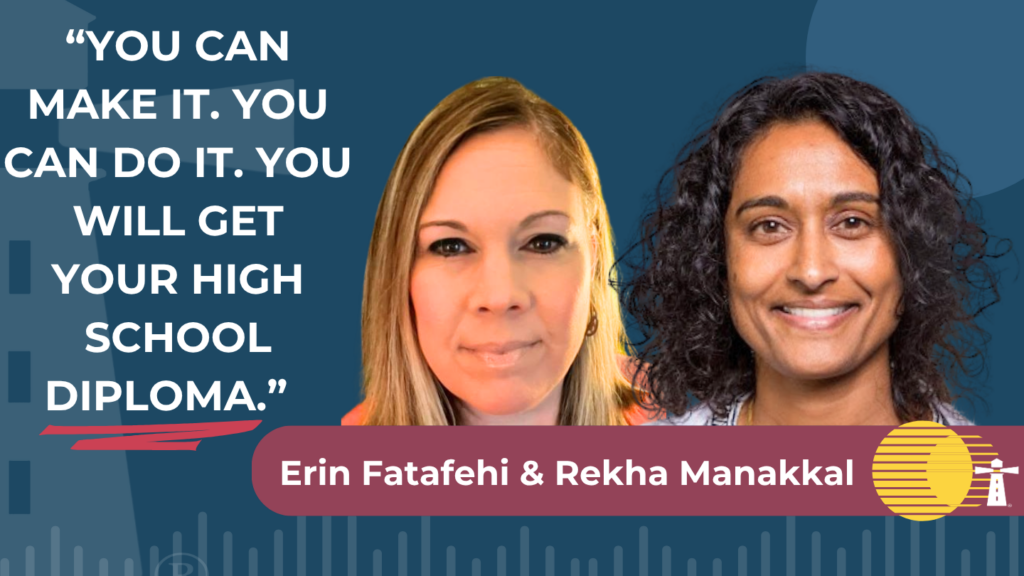
“I wish we could just show them, just stick it out with the support that we have here. You can make it. You can do it. You will get your high school diploma.” — Rekha Manakkal
“COVID gave families an opportunity to see what distance learning was all about. And for those families that really like it, they’re now more invested in what their student is doing.” — Rekha Manakkal
—
Ready to transform your approach to virtual special education? Listen now to discover how Ohio Connections Academy is redefining what’s possible for students with IEPs—and how you can bring these insights to your own school community.
Subscribe to stay updated on strategies that work for today’s learners.
FULL PODCAST Transcript
Lighthouse Therapy (00:01.141)
Hello everyone and welcome to the Brighter Together podcast. My name is Janet Courtney and my special guests today are Aaron Fatafehi and Rekha Manikal. They are both directors of special education services at Ohio Connections Academy and the office is in Columbus, Ohio. But as we know with a virtual school, you guys are all over the place, right? So welcome to the show.
Rekha Manakkal (00:26.414)
Thank you for having us.
Erin Fatafehi (00:26.705)
Thanks. Yeah, thank you for having us.
Lighthouse Therapy (00:29.307)
Absolutely, absolutely. was telling, I was talking to Erin and Rekha before, I have a personal connection. At one point back in my career, in my 30 year career, I actually worked a little bit at Ohio Connections Academy and at Michigan Connections Academy. So was kind of a full circle moment for me. So thank you so much for what you do and for the students that you serve because I know it’s a tough job.
Rekha Manakkal (00:56.14)
that so we wouldn’t be here.
Lighthouse Therapy (00:57.195)
Yeah, absolutely. And that’s it. That’s it exactly, right? It’s not for the faint of heart, but you work hard. So tell me a little bit, and you guys can, whoever wants to go first or however you wanna do it, tell us what’s going on with you guys in special education and what are some of your wins and maybe some of your challenges?
Rekha Manakkal (01:19.542)
I mean, I guess I can go first and then Aaron can go next. So I think what’s going well for our school is we have a place for families who might not have felt where they live and what school district that their student would be normally attending, that they can come here.
and we can give them an ear, listen to their needs, and work together to meet the needs of their student. We take a lot of pride in doing that, K to 12. We do serve K to 12. And as far as challenges, I think we are always, Erin and I, our school, we’re always trying to figure out the best ways to do what I just said.
to meet their needs. It’s not perfect. We don’t have everything neatly boxed in one beautiful product that is just part of our system. But we use what resources we have to try to meet the needs of our students. So Erin, I don’t know if there’s anything else you want to say.
Erin Fatafehi (02:27.577)
I think that’s greatly stated. think right now, just for perspective purposes, we do service students all throughout the state of Ohio.
Rekha Manakkal (02:37.582)
Thank
Erin Fatafehi (02:37.585)
Our special education population is sitting today at 815 students who are on IEPs across all the categories. So we do have many, many students with a variety of needs. So I think this school of choice, because that it is, right? It is a public school, but it’s a school of choice. And families choose this learning environment for various reasons. We’ve certainly seen an increase, I think,
Lighthouse Therapy (02:56.959)
Mm-hmm.
Erin Fatafehi (03:07.569)
over the last several years of students with anxiety related disabilities, maybe bullying, and again, back to what Rekha said initially as well. So we have to always be aware of what our students’ needs are. And I think the one thing that makes us…
Lighthouse Therapy (03:13.419)
Mmm.
Erin Fatafehi (03:29.541)
maybe special in my opinion, and I of course have a biased opinion, but our teachers are really involved. I think a lot of our families find the communication from the schools almost shockingly overwhelming. Maybe at the very beginning they they don’t maybe realize the level of involvement that our teachers have. Our counselors have not only our special education teachers, but our general education teachers. So.
Lighthouse Therapy (03:56.885)
Jenna too, yeah, yeah.
Erin Fatafehi (03:58.443)
Everybody is involved and we really have a lot of almost like that wraparound services in in some ways for our students. So we’re very well aware of what’s going on with them at home and trying to find ways to help parents and learning coaches support their students while they’re with them every day because we don’t physically see them all day long every day as well. So there’s there’s a lot going on and any given day.
Lighthouse Therapy (04:06.058)
Mm-hmm.
Lighthouse Therapy (04:24.619)
Mm hmm. Well, and I apologize. Usually when I start the podcast, I give you an opportunity. I know so much about it that I skipped over it and I would like to step back and give our listeners, tell them what is Ohio Connections Academy. And, you know, I guess a little bit about your how did you come to this role? These are the first two questions that I always ask. And because I know I just like.
And I, that’s my failing. So I apologize for doing that. But if you could just give our listeners a little bit about your, know, how you guys got to where you are and a little about what connections Academy is so that those that don’t know, understand you’ve already touched on an Aaron and I apologize that I’m doing it backwards. But I realized as you were talking, I was like, boy, that was not good.
Rekha Manakkal (05:13.324)
Yeah, so Ohio Connections Academy, sorry, it’s a K to 12 virtual public online school. So it is unique in the sense that our district is the state of Ohio. So families can literally live anywhere within Ohio borders and choose this school. And everything is done online. Our entire curriculum, our services in the special ed world, they’re all delivered.
Lighthouse Therapy (05:21.141)
Mm-hmm.
Rekha Manakkal (05:43.022)
And then, you know, of course you didn’t ask this, but if students need some face-to-face services, we of course have those options, but we always default to virtual first. K to 12, if I didn’t say that already. And then as far as myself, I taught in a brick and mortar setting for four years and then just took a break from education when I had my son. And then I was looking to get back.
Lighthouse Therapy (05:51.605)
Sure.
Right.
You did. That’s great.
Rekha Manakkal (06:11.086)
into teaching again after he got to a certain age and my neighbor actually told me about Ohio Connections Academy. I didn’t seek it out. I didn’t know anything about it, but it sounded pretty cool. So when I went in for the interview and just understood, wow, there’s a lot of potential here, a new paradigm at that point, because I’ve been here over 20 years now.
Lighthouse Therapy (06:33.855)
Mm-hmm. Yeah.
Rekha Manakkal (06:37.75)
Yeah, but it was really kind of on the cutting edge there. I was excited to join that and try to make an impact, but I wasn’t a director of special education at that time. I went in as a special ed teacher, also working with at-risk kids at that time, but that’s how I got here. See you, Erin.
Lighthouse Therapy (06:41.161)
Yeah.
Lighthouse Therapy (06:56.989)
Awesome.
Erin Fatafehi (06:58.597)
Yeah, and…
Similarly, I taught in the brick and mortar setting as well and was the special education director in Arizona prior to coming back to my home state of Ohio. And as I was looking for, you know, positions, I came across Ohio Connections Academy and I thought, you know, what is this virtual school all about? And it was just really intriguing. I had spent a lot of time in the classroom and was really ready for a different challenge.
I’m very impressed by my interview and what I learned about the school. When I first started, I had the opportunity to teach for a semester before becoming the assistant special education director at the time. And then the following year was able to move up to being director and then Rekha joined me. So we’ve been working together for 16 years now.
Rekha Manakkal (07:30.392)
Thank
Lighthouse Therapy (07:54.271)
Wow.
Erin Fatafehi (07:55.417)
Yes, so we have been here for a while. I did step away for a couple years and joined our parent company at Pearson. And so I was able to support the special education directors in a variety of schools across the United States, so that was exciting. But I really did miss working with families, working directly with teachers, and so I got to come back home, I’d like to say, and join Rekha back on our team. So a lot had changed. We’ve grown tremendously.
Lighthouse Therapy (08:03.093)
Mm-hmm.
Erin Fatafehi (08:25.331)
just because I think the interest of many families, you know, had spiked during that time over COVID time. Yeah.
Lighthouse Therapy (08:34.793)
I was just gonna say yeah, I’m gonna ask you that question. am definitely so in so you guys have been doing this for 16 to 20 years. Amazing. People didn’t even realize before COVID. I mean, I’ve been I’ve been as I’ve been a teletherapist. I’ve been doing online therapy since 2011. So
tell our listeners like how, what have you seen over that time? How has virtual education and especially special education, because that’s where your expertise is, how have you seen it grow and modify if it is at all over those years and what things have made it better? Because I know that what we’re doing today is always better than what we were doing 20 years ago, right?
Rekha Manakkal (09:20.142)
think what COVID did, from my opinion, is it gave families an opportunity to see what distance learning or virtual learning was all about. And that made more awareness out there for schools. And obviously, some schools did it better than others. No blame there. But for those families that really like, wow, I now am a little more
Lighthouse Therapy (09:30.687)
Mm-hmm.
Right.
Lighthouse Therapy (09:39.699)
Right, of course.
Rekha Manakkal (09:45.432)
invested in what my student is doing, right? Because when you send them to brick and mortar, you don’t really know and they come home from school. Not all of your kids are chatty and tell you every single thing that happened. But when you’re at home, you get to see what’s going on and you get to be a part of that learning. So because of that, we definitely saw enrollment rise each year. Not just that, I’m just saying in general.
Lighthouse Therapy (09:55.836)
Right, right.
Lighthouse Therapy (10:08.017)
Increase, yeah. Yeah. Right.
Rekha Manakkal (10:14.048)
And I think the beauty of that though, it gave then our school a chance like, wow, we have all these different types of learners here. It made our school self-reflect more and continually change processes or what is it that we need here? How do we advocate to get those things? And…
Erin and I don’t work on an island just by ourselves. Yeah, we have a fantastic administrative team that…
Lighthouse Therapy (10:39.219)
Yeah, exactly.
Rekha Manakkal (10:45.47)
listens to all the different departments, elementary school, middle school, high school, know, counselors, and it gave us a chance then to always collaborate and say this is what we’re seeing, is there a way to do this? And I think that really opened some doors of communication and over those years we have really improved in our way to individualize our instruction.
And sometimes that takes changes to our learning management system. Keep in mind that was built before I came on board. And I think I came on board the second year this school was actually open. So it’s changed drastically.
Lighthouse Therapy (11:16.938)
Mm-hmm.
Lighthouse Therapy (11:21.129)
Right.
Lighthouse Therapy (11:26.859)
Wow.
Yeah, yeah. And that’s, you know, I heard so many stories and, know, Lighthouse was was established in 2018. So we were already operating as a company. And exactly, you know, it was one of those things where it was like we tried very hard to just help. You know, it’s like all of a sudden we were the experts. You know, I’ve been a speech therapist for 30 years, you know, but I have been a teletherapist at that time for
nine years. So helping schools to understand how you can do virtual, how kids can learn virtually. I love talking, know, schools like to talk about learning loss and what was lost during COVID. And I was like, I’ve said this many times, but I was like, children didn’t stop learning.
during COVID, they didn’t stop learning. They just stopped learning what we wanted them to learn. You know, it’s like, they’re still gonna learn whether we’re teaching them or not. It’s just a matter of, they gonna learn the things that we think as professionals and educators that they should learn? And that’s the thing I love about virtual services is that you can have access to so many different teachers, so many different professionals that…
not a small district or even a big district might not have access to because you have that distance learning. And I know schools have started to address distance learning and that. But but it’s just I think it’s just a really amazing thing how COVID just pushed if there’s a great thing that came out of COVID. And I’ll stop talking in a minute because I get going because I love what I do. I absolutely love and I love virtual services is it shoved us forward. It helped.
Lighthouse Therapy (13:18.719)
to move virtual education and virtual services into the spotlight in a way that never would have happened and would have taken probably five, 10 years longer had COVID not happened.
Erin Fatafehi (13:30.395)
Yeah, I just to add to that. think you’re you’re right and I know I wasn’t here during that that big transition period right in the heat of that COVID period. But I do know and Rekha you might be able to better speak on it, but I do know that Ohio Connections Academy. You know we reached out or other districts reached out to us to say if you have any tips and any guidance just because you know the teachers did the best they could with what they had. I know my daughter was in school at the time so she did shift
Lighthouse Therapy (13:50.731)
All right.
Erin Fatafehi (14:00.439)
to virtual learning for a school that wasn’t set up to be that way, right? The service delivery and the teachers did a fantastic job because I was listening, you know, when she was in a Zoom call in first grade, you know, so that was, it was kind of exciting to see how she was learning and engaging with her teachers. But I do know that schools reached out. I do know that Ohio Connections Academy reached out to offer sessions to talk with educators about
Lighthouse Therapy (14:11.156)
Mm-hmm.
Erin Fatafehi (14:30.259)
out some tips and strategies and how we got students to engage online and in Zoom and using their camera and the chat features that you have within the virtual classroom, how to incorporate resources that they were already using in their classroom and that they could use online as well. So I think that was kind of exciting. And again, back to Rekha’s point before about just opening up educators’ eyes
Lighthouse Therapy (14:47.317)
Mm-hmm. Mm-hmm.
Right.
Erin Fatafehi (15:00.179)
to what this learning platform actually looked like and parents as well. And so they have to choose what learning environment they feel is best for their own child, whether it’s IEP or not, right? So I think that.
Lighthouse Therapy (15:11.095)
Mm-hmm. Right, right. Yeah. And I think that’s such an incredible point, Erin, because parents are the first and always will be the primary teacher for their child. I’m a Christian. God gave them that child in my eyes. So you are the decision-maker as a parent to decide where your child’s going to go. So let’s.
Go down that path just a little bit. So when a parent is considering the virtual schools that are out there or even just going into virtual schools, what kind of advice, especially, mean, special ed, let’s specifically talk about special education students. What kinds of questions and what kinds of things should they be considering? Because you guys aren’t the only, you aren’t the only show out there, right? We know that. But what kinds of things should they look for and what kinds of things set?
make Ohio Connections stand out.
Rekha Manakkal (16:10.904)
When I talk to families, I definitely want to know first of all, what grade band their student is that they’re considering to enroll. Elementary, middle school, or high school. Because dependent upon that solely, there is a level of involvement that the learning coach, that’s what we call the person at home, doesn’t always have to be the parent, what we call that learning coach, has to have in order to form that partnership.
Lighthouse Therapy (16:30.155)
Mmm.
Rekha Manakkal (16:40.46)
with our school so all of us together can learn about their student and work to meet their needs. So once they give me that information, find out if they have that time or somebody that will be able to assist their student and then.
we talk a little bit about what the setup is here because the delivery of instruction is just like what we’re doing. We’re talking through a computer and then video and then oftentimes we have to get that parent to understand or think about is this appropriate for the way their student learn? Are they going to be able to
Lighthouse Therapy (17:06.602)
Right.
Rekha Manakkal (17:25.93)
look at their parent as a, I don’t want to call them a teacher, but somebody different than a parent, somebody that they have to listen to and get online and are they going to be able to listen.
for the amount of time that they need to in order to get the instruction or the support that they need to make this environment work. On the flip side, we make a very good point, whether it’s me or anybody else, to let them know if your student has special needs here, you will have not just the support of your special education teacher, you’ll have the support of the general education teacher, and you’ll have the support of any other related service professional.
And when a parent actually enrolls and they see that, they’re just amazed because often they don’t get that level of communication. It’s very difficult to anyways in a brick and mortar setting. they understand for the first time what a team approach is and they get listened to. Like we aren’t just accessible after four.
Lighthouse Therapy (18:27.775)
Mm-hmm.
Yeah.
Mm-hmm.
Rekha Manakkal (18:33.984)
Or before school starts. We are accessible pretty much all day long, to 4, and during the day. So we are there to listen to them, answer their questions, and guide them. So that’s what I think is the conversations I have with
Lighthouse Therapy (18:46.389)
Yeah.
Lighthouse Therapy (18:51.461)
One of the things when I moved from brick and mortar setting to a virtual setting as myself as an SLP, I was almost, I was, I’ll be honest, I was intimidated by parents. I was like, I have to talk to the parents. And then it didn’t take very long, but a switch flipped in my brain and went, I get to talk to the parents. I get to have access.
to the person that’s gonna follow up on absolutely everything I do. And that is one of the most incredibly supportive things about virtual services is that, I’m calling or when I’m setting up services, there is, I’m talking to the parent. And so then I get to specifically say, what makes your child tick? What kinds of things can I do to help hook your child to get them to wanna be in therapy?
kinds of things do they love? And as a speech therapist, I can make anything a language, language lesson. you know, it’s a little bit easier, it’s just such a privilege to be able to step up into that situation and walk alongside parents because they care about their kids and they, not that others don’t, I don’t want anybody to call me and say, hey, you’re saying that nobody else cares. That’s not the truth. But it’s just a special relationship that you get when you do this.
Erin Fatafehi (20:14.501)
Yeah, I completely agree. I felt coming from a brick and mortar setting that when I started to work with students online, I did feel like I knew their families and I knew the students better than I was able to. Not that, you know, I didn’t want to, or not that the families didn’t want to, you know, have that partnership with us there, but I just felt like the way that the platform is structured and the online setting is set up.
Lighthouse Therapy (20:24.286)
Mm-hmm.
Lighthouse Therapy (20:27.946)
Right.
Right, nine.
Erin Fatafehi (20:41.281)
is we did have that constant communication. We need that. And that learning coach is that piece of the puzzle that I always say in our, at least our IEP meetings, I say, you know, that that learning coach is the piece of the puzzle that makes this learning environment successful. Because if the student has that support at home and it’s not to be the teacher, but it is to help make sure the student is where they need to be when they need to be there. So they have, you know, a daily planner that they follow.
Lighthouse Therapy (20:45.663)
Yeah.
Lighthouse Therapy (20:58.07)
Mm-hmm.
Erin Fatafehi (21:11.355)
in terms of their day-to-day lessons. But they also have live, what we call live lessons that are like this, where the teacher is providing the direct instruction, both general education and our small group intervention sessions for their IEP services, including related services. So I always explained that. And then the other thing that I like to say is that level of support that the learning coach needs to provide is the level of support that their child
Lighthouse Therapy (21:30.795)
Mm.
Erin Fatafehi (21:41.135)
needs. So it could vary from you know checking in to once or twice a day to sitting with the student throughout the day to help keep them on task and keep them on track.
Lighthouse Therapy (21:42.281)
Mm-hmm.
Lighthouse Therapy (21:52.287)
Right. And I think, I think part of what we’re saying here too is just opportunity because the opportunity we get more opportunity as a virtual therapist or as a virtual teacher because we’re directly interacting. So it opens up those opportunities more for us to be able to talk to the parents and talk to and
and have that so it’s not they aren’t just coming to school for the IEP meeting and then we’re sending notes home or we make a phone call once in a while if there’s a if there’s a situation you know as an SLP sending home homework in a backpack and never to be seen again you know those kinds of things don’t always give us that opportunity and I think that’s a big part of it is people will take that opportunity and and capitalize on it.
to have an incredible educational experience for their child. So yeah, definitely. So I’m a parent and I’m scared that I can’t be a learning coach. What do you say to them? I’m not smart enough. I’m not a teacher. I don’t know if I can do this. It’s very intimidating. scared that I’m, remember when I started homeschooling my kids and I’m an SLP. I was like, what if I can’t teach them to read?
Rekha Manakkal (23:06.702)
I think we really want them to know it is not an I. I mean, they are exactly what Aaron said. We need your level of support to hopefully get them where they need to be, teach them how to maybe use the planner. It’s a visual planner.
Lighthouse Therapy (23:12.315)
Mm-hmm, that’s great. Great answer, yeah.
Lighthouse Therapy (23:30.495)
Mm-hmm.
Rekha Manakkal (23:31.338)
and let us do the rest over here. And we will help provide the instruction that’s needed, us and the Gen Ed, of course. And then along that way, while the parent is there listening or whatnot, they learn a lot. They see what their student responds to, or what their student doesn’t respond to, or what their student knows or doesn’t know. And then we can then open up that conversation. Hey.
Lighthouse Therapy (23:51.113)
Mm-hmm.
Rekha Manakkal (24:00.418)
Here’s one simple thing you can do at home if you want until we meet again. So it gives them something concrete also that they can use and reinforce at home. And we absolutely tell them, you’re not the teacher. So we try to really make that conversation something that they understand that we’re a partner.
Lighthouse Therapy (24:28.031)
Right, yeah. So I wanna just go down one other path, because we’re quickly running out of time. I could talk to you guys for two hours, I swear. But let’s talk about the teachers. So when COVID happened, you had, obviously had an influx of students. I’m assuming also on the flip side of that, some teachers who never thought that they, because I saw, I’ve seen this with therapists, definitely.
All of sudden, therapists went, I never thought that I would like virtual services. I want to do that. And I have seen in my career and in Lighthouse’s career, we saw therapists that were, and we mentored, we definitely take care of our therapists because that’s our mission. But it is something that you can do this and they never thought they could. So I’m curious if you, I’m assuming.
and I don’t want to assume, you guys, I’d like for you to like talk about what did you see when it comes to that and how has that benefited Connections Academy?
Erin Fatafehi (25:31.835)
Well, I…
would say we do have a of teachers and when we’re interviewing that may not have had virtual experience and that is absolutely okay. We welcome that because what is a challenge but also I think really fun for some educators is to figure out okay here’s what I did really really well in my brick and mortar setting this was my strength now how can I do that here not can I do that here but how can I do that here and they can’t and they
Lighthouse Therapy (25:44.779)
Mm-hmm.
Lighthouse Therapy (25:59.497)
Yeah. Yeah. Cause it’s a modality. It’s a moda. It’s not a yeah. And I’ve said that before. I’m sorry to interrupt you, but that’s exactly the point. And when I, you know, I, I talked to tons of schools because we are a contract company and we contract with schools. That’s what we do. But I always tell them, I’m like, you have to understand that speech therapy or education is education. Speech therapy is speech therapy. Yes. There are very specific times where you need to be in front of that child. I would never.
Erin Fatafehi (26:02.675)
you
Yes. No, it’s okay.
Lighthouse Therapy (26:28.169)
be able to do parallel play on the floor with an autistic child who needs parallel play in this setting. That is one of the things that I will never be able to do. But there are so few and so far between and so many amazing ways that you can, and it is still speech therapy, there’s still education. So I’m sorry, mean, but I was just like, it’s so true.
Erin Fatafehi (26:49.905)
Yeah, that’s exactly right. just and I think that that’s exciting. We’ve had a lot of teachers who have come from brick and mortar. There’s a learning curve. Of course there is right. We provide a lot of training for our new teachers that come on board. We will connect them with a veteran virtual teacher as well to allow them the opportunity to share their resources and what works for them and the same as students, right? They each learn differently. So do our teachers and so they’re able to
Lighthouse Therapy (26:58.837)
Yes, of course, right.
Lighthouse Therapy (27:18.495)
Right.
Erin Fatafehi (27:19.859)
sort of experiment with what works best for their style of teaching in this setting. So I think that that’s pretty exciting, but it goes hand in hand with training and support and it’s ongoing. It’s, you know, we’re constantly like Rayka shared earlier as well. We are always reflecting at the end of each school year and you know what worked well this year and what could we improve on for next school year and brainstorming with our teachers because we really want them to be part of that
Lighthouse Therapy (27:33.579)
Mm-hmm.
Erin Fatafehi (27:49.771)
discussion there, you know, their hands are in the pot, right? They’re there every day. And so we want them to be making those decisions and having that collaboration together.
Lighthouse Therapy (28:02.502)
Absolutely fabulous. So one of the things that schools and you guys are 191 for me interviews that I’ve done. I’ve done a lot of these is there aren’t enough teachers. There aren’t enough special education teachers. Is that something that you guys are experiencing as well? Staffing.
Rekha Manakkal (28:22.574)
think it’s been ebbing and flowing. think early on it was definitely a little more of a struggle. Possibly after COVID, people trying this out. We’ve had more, I think more than just virtual teaching. I just think special education in general sometimes, it’s a very, very difficult demanding job so it can burn people out.
Lighthouse Therapy (28:25.322)
Okay.
Lighthouse Therapy (28:46.41)
Mm-hmm.
Yeah.
Rekha Manakkal (28:49.354)
So more than that, but yeah, I’ve had some very good word of mouth. So some of them may have worked at another virtual school and have gotten the word about what it is to work here. And then they come on over here. So we’ve had a lot more of those, those who used to work at a different school and want to come here for whatever reasons that might be.
Lighthouse Therapy (29:01.855)
Mm-hmm.
Lighthouse Therapy (29:13.557)
That’s nice. Yeah. Work-life balance, work-life balance. That’s a big one. That’s a big one. We talk about that all the time. And for us, it’s like special education and as speech language pathologists are 99 % female, and we are the ones that have the babies. And so having that ability, we have a lot of…
Rekha Manakkal (29:16.632)
For sure. Yeah. Yeah.
Lighthouse Therapy (29:34.731)
moms, you know, that want to be able to be done at three so that they can go and see their child’s sporting event or whatever, or only work part time or whatever. It’s it virtual services gives them the opportunity, especially with a company that like ours, the where it’s like, we want we want we need a commitment from you. But that doesn’t mean you have to work.
40 hours a week and it doesn’t mean you have to see 100 kids while you’re trying to do that. you know, having that balance is really, really good and really important. So, one last question for you both. So, if you could just fix one thing and it can’t be money, not money. Fix one thing in your world, in your world as a director of special education.
Rekha Manakkal (30:16.535)
you
Erin Fatafehi (30:16.995)
you
Lighthouse Therapy (30:23.529)
and never have to worry about it again. It’s just miraculously gone. You never have to think about it again. What would that one, it’s a tough question. know what would that one, Erin’s going, I don’t know. Well, I know there’s lots, but what would that, just pick one. What would that one thing be?
Rekha Manakkal (30:32.973)
Yeah.
Rekha Manakkal (30:38.222)
Okay, I think for me at the moment, and I’m primarily high school, we have to divide up duties here, obviously. So in my world, I think I wish there was a way that I had the magic answer to engage all of these high school kids that maybe choose to come here as their last resort.
Lighthouse Therapy (30:46.707)
Okay? Sure.
Rekha Manakkal (31:07.584)
And we do lots of engagement here, but if we could just show them, just stick it out with the support that we have here. You can make it. You can do it. You will get your high school diploma and then you know can do what you need to do. After you get that in your hand, I wish I had that magic formula. We’re getting better at it, but that’s what I personally would like to fix and that would be fantastic.
Lighthouse Therapy (31:15.38)
Mm-hmm.
Lighthouse Therapy (31:29.407)
Awesome.
Lighthouse Therapy (31:34.163)
Yeah, that was a great, great answer. Okay, Erin, your turn.
Erin Fatafehi (31:37.421)
my gosh. Well, mean, yeah, that’s a really difficult question to answer. I would probably piggyback off of Rekha’s response. I sit in mostly the middle school meetings, but help oversee our K to 8 teams. And I would say if we could fix that.
engagement piece where we could get all students to attend the live classes with the teachers all the time. You know, there’s some outside barriers that we don’t have that, you know, control over all the time. So I think if the students, you know, had that availability to be, you know, with us when we are here live in all of our classes, that engagement piece is something that we’re always striving to improve and figure out ways to make sure that students
Lighthouse Therapy (31:58.091)
Mm-hmm.
Erin Fatafehi (32:26.295)
feel most comfortable, families feel most comfortable to be here and to allow us that constant opportunity to provide the support that they need.
Lighthouse Therapy (32:36.457)
Yeah, that’s, no, you’re fine, right?
Rekha Manakkal (32:36.558)
And I think Erin said that too, sorry to interrupt. It’s because they chose us. So you know what I mean? And that’s why we know we can help. We all do, not just in the sped world. So give us that chance. Learn to trust again, because sometimes that has happened. Something has happened, right?
Lighthouse Therapy (32:47.178)
Mm-hmm.
Lighthouse Therapy (32:53.247)
Been broken.
Erin Fatafehi (32:53.893)
working.
Rekha Manakkal (32:56.606)
And that’s why it is a top down, top down approach here to engage and keep kids here. And that’s what we do. And that’s why we’re passionate about virtual learning. It can work. Give us a chance.
Lighthouse Therapy (33:01.397)
Mm-hmm.
Lighthouse Therapy (33:09.579)
Mm Yeah, absolutely. Yeah. And we’ve said that, too. It’s like kids don’t kids aren’t going to get better if they’re not coming to therapy. Kids aren’t going to learn if they’re not coming to school. Right. You got to get them there. So those are great answers. Thank you so much. Well, Rick and Erin, it has been such a pleasure to have such an engaging conversation. Where do people go to learn a little bit more about Ohio Connections Academy? And if they have questions, who do they ask those questions to?
Rekha Manakkal (33:35.49)
Yeah, they can go to connectionsacademy.com and they can filter to the state of Ohio, which will then definitely bring up our school and all the important people, so to speak. If they want to talk directly, special ed, our name is out there, our number is out there. They even provide emails so they can get to us that way as well. So that would be the best place to go, connectionsacademy.com.
Lighthouse Therapy (33:41.002)
Okay.
Lighthouse Therapy (33:54.035)
Okay, awesome.
Erin Fatafehi (33:55.057)
Mm-hmm.
Lighthouse Therapy (33:58.741)
Okay. All right. Well, thank you so much for being here, for taking the time. I appreciate your time immensely. Keep doing what you’re doing. I love it. just because we’re brighter together. So thanks for being here.
Rekha Manakkal (34:14.383)
Thank you. You too. Bye.
Erin Fatafehi (34:14.661)
Thank you so much. Have a great day.
Lighthouse Therapy (34:16.681)
Mm-hmm.