


If you’ve worked as a school speech-language pathologist, you already know that therapy sessions are only part of the job. There are IEP meetings to attend, teachers to consult, evaluations to complete, and documentation to keep up with. So when you picture working as a virtual school SLP, you might wonder how all of that happens when you’re working from home and your students are at school.
The answer is that much of the clinical work will feel familiar. You’re still supporting students’ communication goals and working as part of their school team. What changes is how you connect with students, collaborate with staff, and organize your day. Here’s a closer look at what a school-based teletherapy job can involve.
Starting the Day as a Virtual School SLP
A virtual school SLP’s morning often begins with a look at the schedule. You may review the students you’re seeing that day, check for messages from school staff, and make sure your therapy materials fit each student’s IEP goals. If you have an evaluation or meeting coming up, you might also set aside time to review records or prepare your notes.
Because you’re providing speech therapy online, a quick technology check is part of the routine. Having your links, camera, audio, and digital activities ready helps you make the most of your time with students. You may also need to coordinate with someone at the school who helps students get to their sessions or connect to the call. The exact setup depends on the district, the students, and the support available onsite.
What Happens During Virtual Speech Therapy Sessions?
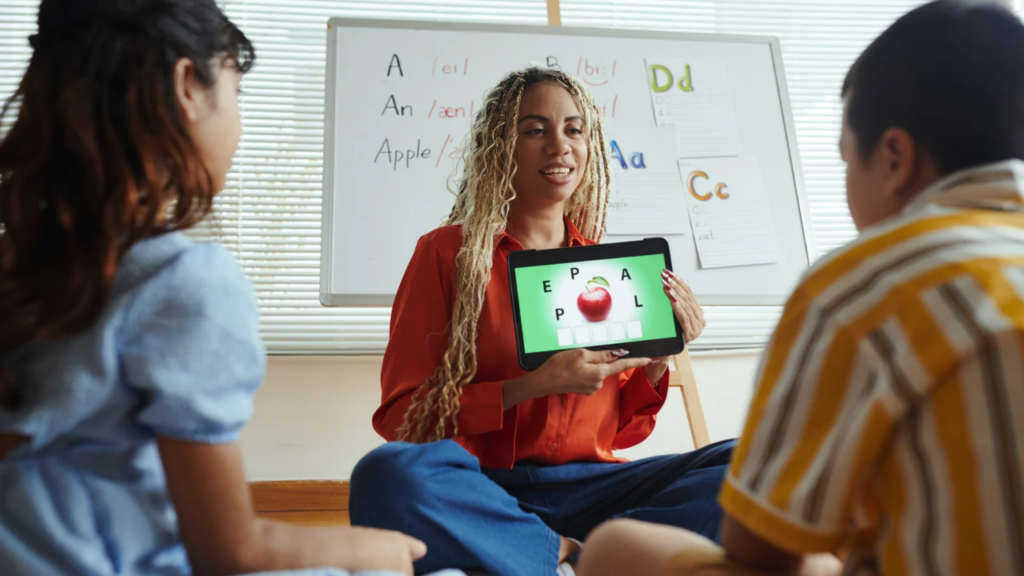
Once students begin joining, your work looks a lot like school-based speech therapy delivered in person. You’re targeting individual goals, adjusting activities based on how a student responds, and paying attention to progress over time. A session might focus on speech sounds, language, fluency, or another area of communication identified in the student’s plan.
The screen changes some of your tools, but it doesn’t replace your clinical judgment. You might share a digital activity, use visuals, model a skill, or ask a student to practice something connected to their classroom work. If an activity isn’t holding their attention, you adapt it. If a student needs a different kind of support to participate, you work with the school team to find an approach that fits.
Some virtual school SLPs see students individually, while others also work with small groups. Students may join from a room at school with help from an onsite staff member, though arrangements vary. That partnership can make a difference, especially when a younger student needs help getting started or a technology issue interrupts a session.
The Work Between Student Sessions
One of the biggest misconceptions about remote SLP jobs is that the day consists entirely of video calls. The time between sessions matters, too. It’s when you record data, finish a therapy note, respond to a teacher’s question, or adjust materials for a student you’ll see later.
Those stretches of time aren’t always predictable. A student may be absent, a class schedule may change, or someone at the school may reach out about an upcoming meeting. Virtual school SLPs still need to stay connected to what’s happening in the building, even when they aren’t physically there. Clear communication with school contacts helps sessions run smoothly and keeps speech services connected to the student’s broader educational experience.
How Do IEP Meetings, Evaluations, and Collaboration Fit In?
Direct therapy may take up a significant part of the day, but school-based SLP teletherapy can include many of the same responsibilities as an onsite role. Depending on the assignment, you may participate in IEP meetings, consult with teachers, contribute to progress reports, or conduct speech and language evaluations. You’ll also need time to prepare for those responsibilities and complete the related documentation.
Working remotely means being intentional about collaboration. Instead of catching a teacher in the hallway, you may schedule a conversation, send a message, or meet with the team virtually. Those exchanges help you understand how a student is communicating outside therapy and give teachers a chance to share what they’re seeing in the classroom. The goal is for your work with the student to carry over into the school day.
Does Every Virtual School SLP Have the Same Schedule?
No, and that’s one reason to look closely at the details of a school teletherapy job. Your day can vary based on the grade levels you serve, the number of students on your caseload, their service minutes, and the district’s schedule. One position may involve a full day of student sessions with dedicated time for paperwork, while another may include more evaluations or meetings.
Before accepting a virtual SLP position, ask how direct and indirect work are handled. Find out who coordinates student schedules, what onsite support is available, and how much time is built in for planning, documentation, evaluations, and IEP meetings. It’s also helpful to ask what happens when a student is absent or a school has a testing day. These details will tell you more about the day-to-day experience than a job title alone.
What’s Different About Working as a School SLP From Home?
For many clinicians, the most noticeable change is the commute, or the lack of one. Instead of traveling to a school or between campuses, you can begin your workday from your own workspace. That can give you more time and energy for the parts of your day that matter outside work.
At the same time, working from home calls for a different approach to building relationships. You’ll get to know students through their sessions and stay connected to teachers and other staff through planned communication. It can take time to find your rhythm with digital materials and remote collaboration, particularly if you’ve spent most of your career working in person. Having responsive school contacts and a clear understanding of your role can make that transition easier.
Is a Virtual School SLP Job Right for You?
If you enjoy school-based speech-language pathology but are curious about working remotely, a virtual position may be worth exploring. You can continue supporting students’ IEP goals, collaborating with their educational teams, and using your clinical skills in a school setting. The best way to judge a particular opportunity is to look past the promise of flexibility and ask what your caseload, schedule, responsibilities, and support will actually look like.
At Lighthouse Therapy, we work with clinicians in school-based roles across a range of service delivery models. If you’re considering a virtual SLP job, explore our current openings and talk with our team about the assignments available. We’d be happy to help you get a clearer picture of the work before you decide what’s right for you.