

Episode Description
What if the biggest barrier to transforming your district isn’t budget constraints or technology—but a willingness to demand more? In this powerful episode, we sit down with PJ Caposey, Superintendent of Oregon Community Unit School District 220, who shares how he’s leading his community from complacency to excellence, even while navigating impossible financial pressures and the anxiety surrounding AI adoption.
Meet Your Guest
PJ Caposey is a visionary educational leader with deep expertise in systemic change, technology integration, and building cultures of excellence. As Superintendent of Oregon CUSD 220, he’s championed initiatives that raise academic standards while addressing the very real constraints that keep many districts stuck in the status quo.
What You’ll Learn
In this candid conversation, you’ll discover:
- The mindset shift required to demand excellence even when your budget says “settle”—and how to build community buy-in around higher expectations
- A practical framework for AI adoption that transforms anxiety into opportunity and positions your staff as empowered innovators rather than threatened workers
- How to navigate the impossible math of escalating fixed costs while protecting student outcomes and maintaining core services
- The leadership decisions that keep superintendents up at night—including when serving the greater good means difficult trade-offs
- Why “how well we do AI” matters more than whether we do it—and what this means for your district’s competitive future
Key Takeaways
✓ Excellence isn’t a luxury reserved for well-funded districts—it’s a choice that requires courageous leadership and clear vision
✓ The superintendent’s role includes helping staff transition from AI anxiety to AI advocacy through intentional communication and trust-building
✓ Financial constraints demand prioritization, but they shouldn’t be an excuse for lowered expectations—they’re an opportunity to get smarter about what matters most
✓ Building a culture that refuses to be “okay with okay” requires transparent communication about why higher standards serve every student
✓ Strategic technology adoption, when framed as a tool for equity and efficiency, can actually help districts do more with less
Notable Quotes
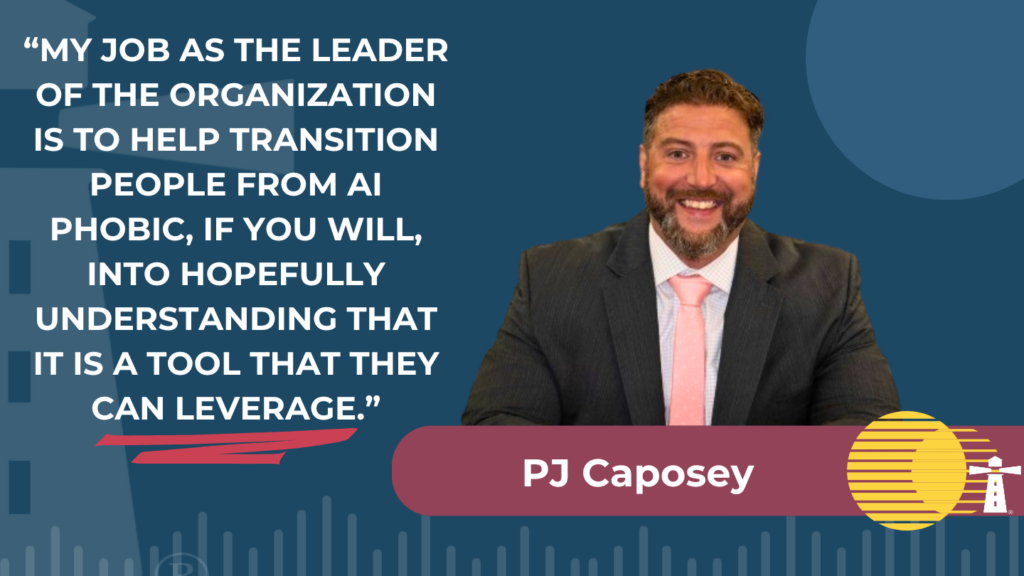
“My job as the leader of the organization is to help transition people from AI phobic, if you will, into hopefully understanding that it is a tool that they can leverage.”
“I don’t want our community to be okay with us being okay. And so we’re in this unique challenge of trying to thread the needle of increasing expectations. The way we phrase it all the time is we need to demand excellence.”
“It’s not a choice of whether we do AI, it’s a choice of how well we do AI. That is the question.”
“The thing that actually the hardest decision that I make on a consistent basis is when I have to walk into a decision that might not be best for an individual kid, but that is best for the other 400 kids or my 1,500 kids in the district.”
Ready to rethink what’s possible in your district? Tune in to hear how one superintendent is proving that excellence isn’t about having more resources—it’s about using what you have with intention, courage, and unwavering commitment to every student.
Listen now and subscribe so you never miss an episode that challenges the status quo in K-12 education leadership.
FULL PODCAST Transcript
Lighthouse Therapy (00:01.05)
Hello everyone and welcome to the brighter together podcast. My name is Janet Courtney and my special guest today is PJ Kaposi. PJ is a superintendent at Oregon Community Unit School District 220 and that’s in Oregon, Illinois. PJ, I got it. Tell us a little bit PJ about you. Welcome to the show. First of all, thank you for being here.
PJ Caposey (00:19.351)
You nailed it.
PJ Caposey (00:25.868)
Thank you so much for having me.
Lighthouse Therapy (00:27.608)
And tell us a little bit about your background PJ and a little bit about Oregon Community Schools demographics.
PJ Caposey (00:34.102)
Absolutely. So I started my career in the inner city of Chicago. I say inner city gingerly because I think there’s some pejorative that comes with that. But I moved from inner city to urban and I think they’re two dramatically different environments. And so my entire teaching career was in Chicago. I started my administrative career in Rockford, Illinois, which at the time was the second largest urban system in the state.
was divorced and looking to get kind of back toward home. I’m a suburban kid and about halfway between where I was at in Rockford and home an opening came for high school principal in Oregon, Illinois. Had never been there, had driven by the exit a number of times but there’s not even a bathroom at the exit so I never stopped. And so went in for the interview, became a high school principal at 27 and was here for
Lighthouse Therapy (01:17.306)
Yeah, right?
Got ya.
PJ Caposey (01:28.8)
four years and I can share some stories but there’s some really high highs and some really low lows. As a principal at 27 I was full of ambition and drive and in reflection probably a bit underskilled and so there are some bumps in the road and did well enough though that the neighboring district hired me as a superintendent just four years later. So was in our neighboring district of Meridian
Lighthouse Therapy (01:45.616)
It’s okay.
PJ Caposey (01:58.386)
which is located in Simmon Valley for 12 years. We had a lot of success there, which afforded me ton of opportunities to develop my career in different ways. I’ve been able to travel the world speaking and consulting, and have written 10 books at this point, and was our Illinois Superintendent of the Year.
Lighthouse Therapy (02:16.592)
Wow, good for you.
PJ Caposey (02:20.407)
runner-up for national superintendent of the year, so able to enjoy a ton of success there. But we never moved and so my kids still went to school in Oregon. My wife taught in Oregon and so…
when the opportunity came to come back home, even though was just 15 minutes away, I took the opportunity to come back to Oregon. The transition in Meridian didn’t go the way that we had a beautiful plan on paper, just didn’t necessarily work out. So last year I had the unique opportunity to be superintendent of two completely different school districts. So that was last year and now we are three quarters of the way through year two in Oregon and it’s.
Lighthouse Therapy (02:38.426)
Mm-hmm.
Lighthouse Therapy (02:50.712)
Wow. my goodness.
PJ Caposey (03:00.694)
It’s been a really, really interesting and really fun ride so far. No, this year I’m just a, I’m a one district man again. Yes.
Lighthouse Therapy (03:05.542)
So you’re not into now, just that one year. It was just a transition year. There you go. That’s good. Congratulations on superintendent of the year though. That’s amazing. That’s hard work. That’s hard work.
PJ Caposey (03:18.464)
It is. It’s a profession that I am very fearful of, quite honestly. It’s a dying profession. There’s not enough people that want to do the work of superintendent. I think there’s a litany of reasons for that. I actually have a book coming out on this and wrote an article on it earlier this year, but…
Lighthouse Therapy (03:25.318)
Hmm.
PJ Caposey (03:35.874)
In Illinois, we have, I don’t know, roughly 10 % of the positions that need to be filled by interims each year because we don’t have enough people willing to do the job anymore. So it’s a really interesting position for, think, the profession writ large. And I can give you a laundry list of things that could or should change to make it more attractive.
But that said, I still think I’ve got the best job in the world. So I am pretty content with it, but I also am eyes wide open to some of the things that that plague the industry in totality.
Lighthouse Therapy (04:11.194)
Yeah, yeah, and it is a problem. We know that teachers and educators are on the decline and that is part of what Lighthouse and Brighter Together are doing is just trying to put a light on some of that. Also to give you guys a voice, know, we need more of this. We need more people that are willing to talk about the good things and the hard work that’s happening in education and not just.
taking one crazy teacher’s experience that went national and applying that to every single district and every single teacher across the United States, it’s just not fair and it’s not realistic. And so here we are. And I’m a fighter. I’ve never been somebody who is backed down. You wanna talk to me about something and we don’t agree. We’ll have an intelligent conversation about it.
and you can try to persuade me and I will try to persuade you and that will be, we’ll probably leave both not agreeing, but there you go. But it’s not, it’s not duking it out, right?
PJ Caposey (05:10.442)
Well…
The ability and willingness to engage in dialogue, particularly with people with differing perspectives right now, is just dramatically lacking. And I think there’s a lot of reasons that we can point to for that. But the willingness to allow somebody to potentially persuade you and to be open to new ideas or concepts and quite honestly, new facts.
Lighthouse Therapy (05:24.442)
Mm-hmm.
PJ Caposey (05:42.355)
is something that we are actually working with kids on, right? Like, and we work with our teachers on because it’s not hard to look on the internet, which is where so many of us live these days, and see that that is sorely lacking in the society that we live in now.
Lighthouse Therapy (05:58.055)
Yeah, yeah. And it’s something that that is just it’s just needed. And it’s not just need an education. And we’re not I’m not going to get political. I will try to I try to stay very, very far away from that. But, you know, education is political no matter what. I mean, you can’t you don’t get to choose that it’s not political by me saying it’s not political. I just won’t go there. I just am like, I have my opinions and I’ve talked to so many people and we all want the same thing. And that’s for
kids to be educated and feel like they have value. And that’s the most important thing. And that’s what, that’s the most important part of what we do as educators. So, and I don’t care if you’re a liberal or a, a conservative or anywhere in between on that spectrum, we all love the kids. Yeah. So tell us, tell me a little bit more about like what’s going on in Oregon community schools. I know we talked about your journey.
PJ Caposey (06:45.111)
Amen.
Lighthouse Therapy (06:53.438)
and super you’ve been superintendent been principal what kinds of initiatives or what kinds of things are you guys doing right now?
PJ Caposey (07:00.277)
So Oregon’s an interesting place. It’s the county seat. There’s a long storied history and there’s a lot of very proud people in the community. All of that said, there’s kind of been a dramatic demographic shift in the community.
largely not in terms of racial or ethnic diversification, but in terms of economic diversification. And so there’s been a dramatic influx and increase in terms of number of students that are free and reduced or come from disadvantaged situations. And I don’t…
we’re still in the process of catching up to that, right? And as a district and quite honestly as a community, right? Figuring out what that new normal looks like for us as this community. So I would say that when I arrived here, there’s really two primary challenges that we had to attack right away. And like there’s some logistical, very school strategic planning type stuff that we had to do, but if I’m talking at the very conceptual level.
Lighthouse Therapy (07:43.472)
Mm-hmm.
Lighthouse Therapy (08:05.574)
Mm-hmm.
PJ Caposey (08:08.814)
We have some financial challenges. We are small town rural and just like I think most districts across the country right now there’s a surge in funding with everything that happened with COVID and now that has kind of fallen off of a cliff. And so it’s just figuring out exactly how we can provide the services that kids.
Lighthouse Therapy (08:25.466)
Mm-hmm.
PJ Caposey (08:32.15)
deserve and the community wants with not necessarily the funding to be able to do so. So there’s the financial issue, but the secondary issue, which has been more emergent and more prominent in terms of the efforts that we’ve taken as a leadership team, is the fact that average is just okay. And there really was no sense of urgency. And we actually just had our leadership team meeting this morning for this week and talked about again that
Lighthouse Therapy (08:42.502)
you
Lighthouse Therapy (08:48.55)
Yeah.
PJ Caposey (08:59.744)
We are the urgency, right? Like we are the urgency. And so in some ways it’s very fortunate, right? There’s no top-down pressure from the board or from the community of test scores need to be A, B or C or athletic performance needs to be any, it’s, we have to create that. And so I would say like, as we are, or as I inherited even, we are average, average plus. So we’re okay.
Lighthouse Therapy (09:01.798)
Mm.
Lighthouse Therapy (09:17.221)
Right.
Lighthouse Therapy (09:27.61)
Yeah. Yeah, right.
PJ Caposey (09:28.046)
but I don’t wanna be okay. And I don’t want our community to be okay with us being okay. And so we’re in this unique challenge of trying to thread the needle of increasing expectations. The way we phrase it all the time is we need to demand excellence. And so we need to demand excellence, meanwhile, looking at continually reducing the services we provide. And so that’s a really tough thing to say, hey, we’re gonna increase here, decrease there.
Lighthouse Therapy (09:33.166)
Mm-hmm.
Lighthouse Therapy (09:41.925)
Nice.
PJ Caposey (09:54.785)
And so that’s the challenge that we have in front of us right now. And it’s eminently winnable challenge, right? Like we can absolutely do it. It is just, it’s a very interesting place to be where we are the pressure and we want to kind of rally people to actually hold us accountable more in the public light and for the ability that we have and how we’re serving kids.
Lighthouse Therapy (10:21.284)
Yeah, and having accountability partners is so important if you have a goal. If you want to reach that goal, you got to have somebody that you’re accountable to. And yeah, otherwise, otherwise it’s and that’s the other thing is like, I always tell people it’s like, it’s not a goal of it’s not written down. You got to write down your goals. They’re all on my board behind me. You know, they are there. And there’s all kinds of stuff all over one of them. One of my big thing right now. And it wasn’t mine. I stole it from a motivational speaker. Stick to the plan.
PJ Caposey (10:38.05)
Yep.
Lighthouse Therapy (10:49.988)
You know, it’s like that’s like been my goal for my my north true north right now is like, we’ve got to stick to the plan that we’ve laid out to make sure that we’re meeting those milestones. Because if we don’t, it goes backwards. And as you were saying, it’s like good as it were okay. And I did I learned that the hard way it’s like, yeah, we were we grew really fast as a company, we got to 2200 kids, and we were there for three years, and we started going backwards. And it was like, because we weren’t pushing to go forward, we got
comfortable and that is not a good place to be. So I totally can relate to exactly what you’re saying. 2200 was great. We have 3600 kids already. We’re our goal is 5000 kids this year and we’re we’re close. We’re going to get it. I think we’re going to get there so it’s exciting but but you gotta be moving forward. You can’t just sit and go. Oh, this is beautiful. I just want to be in this place. That’s for vacations only.
PJ Caposey (11:35.31)
It absolutely is.
PJ Caposey (11:44.399)
Yeah, and again, we are very fortunate. Like my leadership team is highly, highly driven, highly motivated. I’ve got, in some ways I always feel guilty when I talk about this because I’ve been in two districts now as superintendent for the last 13 years. I’ve been blessed by just really.
really great boards of education. And so I hear some of my contemporaries and colleagues talk and I’m like, man, like, I do think there’s a role that the superintendent plays in leading the board of education as well, but I have just genuinely good human beings on my board. And so we don’t always agree on everything, but they’re good people. And so we can…
Lighthouse Therapy (12:23.867)
Right.
PJ Caposey (12:24.93)
we can move forward. we’re positioned very well. If we can get the financial stuff figured out, which is ultimately my job, if we can get that figured out in the next year or so, I’m quite confident in where we’re gonna end up.
Lighthouse Therapy (12:31.984)
Yeah.
Lighthouse Therapy (12:39.184)
Do you think it’s gonna, and this is just popping into my head, it isn’t anything I’ve spent a lot of time on, I’ll be honest, but do you think that, I mean, I know Essar money is gone, it’s gone, I get that, but it seems like we swing in education, like there’s times where it becomes political and they throw money at education, and that’s what they did during the pandemic, right? I mean, they threw money at education and then.
it’s got a expiration date, which we got to that expiration date. And now we’re kind of swinging back and everything’s really tight again. And I’m proud to say even in this environment, lighthouse therapy is growing, which is amazing. And I’m grateful for that. But we’re different. We love the kids and we love the schools and that’s everything that we do relates back to those kids. And I think that just is part of it. But
Is there, to get back to my question, sorry, I went down that hole. I love what I do, can you tell? But do you think there is going to be some return of those funds in some other form in the near future?
PJ Caposey (13:47.064)
It’s hard to tell. My experience tells me yes, right? Same experiences that you’ve had as you know, 2008 was a disaster, slowly got better, slowly got better, got real good during the pandemic and now it’s kind of cycling back. So I assume that it’s going to yo-yo again because that’s, you know, I think part of intelligence is pattern recognition, right? So that’s the pattern. That said, there’s certain things that I don’t know where we come back, right?
Lighthouse Therapy (13:51.236)
Yeah.
Lighthouse Therapy (14:03.664)
Yeah.
Lighthouse Therapy (14:07.322)
Right? Mm-hmm.
PJ Caposey (14:16.751)
Like one of the things we just had our insurance renewal and we had we’ve had negative loss ratio years, three years in a row, means we have good or we’ve done good compared to premium. Our renewal is over 25%. And so for a district, you know, my size, that’s 3 % of the budget gone, just gone.
Lighthouse Therapy (14:30.479)
Wow.
Lighthouse Therapy (14:38.757)
Yeah.
PJ Caposey (14:39.535)
in terms of where the insurance renewal is going. So, I don’t know where that comes back. I don’t see negative renewals in the future, right? So that’s just gonna continue to escalate. Things that the public don’t necessarily see, like the cost of leasing a bus, which obviously you need buses to get kids to school, has tripled, tripled in less than a decade. And so, I don’t…
Lighthouse Therapy (14:47.781)
Mm-hmm.
Yeah.
PJ Caposey (15:05.237)
Even if funding increases, expenses are outpacing that, I guess is what I’m trying to say. So do I think that we might get additional funding? Sure. Because as things get bad, it gets attention. The attention then turns into revenue. The revenue that can get dispersed. But there are certain costs that we have to have to operate. You need insurance, need buses. need. So I don’t know that it’s going to keep up. So it is a, it’s a scary proposition. Now.
Lighthouse Therapy (15:09.872)
Yeah, yeah, exactly.
Lighthouse Therapy (15:24.686)
Yeah, yeah.
Lighthouse Therapy (15:32.591)
No.
PJ Caposey (15:34.968)
So the question then becomes like, does right sizing look like, right? Are there positions that we have now that are nice to have, positions that need to have, and potentially if we reduce, we save taxpayers money, but we also can maintain performance, and that’s essentially what I’m tasked with right now, is trying to the reductions that all of them will hurt, and all of them…
are sad in a way because they involve human beings. But how do we create reductions in a way that create the least amount of loss for kids? And if we can do that, then I’ve done my job, but it’s not the fun part of the job.
Lighthouse Therapy (16:06.235)
Right.
Lighthouse Therapy (16:12.166)
Right.
Lighthouse Therapy (16:18.202)
And it’s a lonely place to be because you’re the one that has to make those decisions. I get that 1000%. It’s awful. It is awful. Yeah, because they are people. are, are, they are, every single one of those is a person. And one of the things that I have seen, and I think that it is a little bit of a glimmer, and I haven’t really talked that much. We’ve talked about technology, and we’ve talked about AI on the show before, but I, what I am seeing and what we’re, because we’re, we are embracing it.
you know, as a tech company, a company that does teletherapy and talks about technology and finds ways to do things more efficiently is AI. AI in its form as it grows is becoming a time saver when it comes to the amount of time it takes to write notes, the amount of time it takes. Now, there are schools out there, I know that, are scared to death.
of AI because they’re like put it on chat GPT and it’s out there for everyone to see. Well, that’s true if you do it on chat GPT, but if you do it through a private server and it’s something actually that at that lighthouse is working on is finding a way to give schools a way to have AI in a way that’s HIPAA and FERPA compliant, right? And if you, if we can do that and we are, we’re, we’re, and it’s so, it’s so crazy how fast it is, but it will allow
special education teachers and directors and teachers that have to write all these notes and do all these things and all this documentation to have it done in half of a heartbeat. It’s amazing what I’ve seen and what’s coming when it comes to AI. Again, you have to be careful and you as a superintendent know this, it has to be compliant. And then we recognize that as a company. So we are working on that for not only for us, which is a crazy thing. We started out as something that it was just going to be for Lighthouse.
But we have, as we’ve been developing it, we’re like, oh my goodness, this would save schools and teachers and therapists. You can’t get enough therapists. Well, half of that is because how much time are they spending writing notes and writing IEPs and all of that stuff. If we can find you a way to half that time, guess what? All of a sudden, your therapist can be more productive because they don’t have to work as much on paperwork. And I think that, I think it’s coming. I really do.
PJ Caposey (18:38.607)
It’s already here, right? So there’s no putting the genie back in the bottle. The question becomes, will this be…
Lighthouse Therapy (18:40.58)
Yeah. Yeah.
Lighthouse Therapy (18:45.68)
For sure, yeah, yeah.
PJ Caposey (18:52.513)
a job saver, job replicator, a job creator, right? And so, 100%. And so that’s the difficult part of where we are at. And so I have been fortunate to be part of large organizations and I’ve also been part of lean organizations. And so I can say in some of the places I’ve been, AI could have saved
Lighthouse Therapy (18:58.052)
I think it can be all of those things, right? Yeah.
PJ Caposey (19:19.247)
hundreds of thousands of dollars a year, right? Because we would, but then I look at a place like we’re at, like where I’m at now, and we are so thin that we’re still going to need some human to operate, like, you know what saying? like there’s, in this,
Lighthouse Therapy (19:21.574)
Mm-hmm.
Lighthouse Therapy (19:28.442)
Alright.
Lighthouse Therapy (19:32.164)
Yeah, yeah. yeah, it’s it doesn’t. And I’m not saying that. Absolutely not. You still have to have humans. Absolutely. 1000 % I agree with you.
PJ Caposey (19:40.364)
Yeah, and so it’s all about scalability, amplification of use. and it is terrifying to certain teachers. And so as a district, we’ve embraced it, but we also haven’t pushed it. It’s an interesting,
Lighthouse Therapy (19:44.582)
Mm-hmm.
PJ Caposey (19:57.284)
kind of layer of self-discovery we’ve allowed our teachers to go through. Certain departments have taken a really hard stance, other departments have not. Sometimes it’s individual by individual on what it looks like. So it’s a very interesting and evolving place. I am very thankful for my perspective on it because as I came into the profession, I kind of came in with Google. And so…
Lighthouse Therapy (20:13.062)
Do you ever?
Lighthouse Therapy (20:20.164)
Yeah, I was just gonna I was just gonna say that. Do you remember when the internet started? That was me too. 94. Yeah.
PJ Caposey (20:26.176)
And so with Google coming in and the value of rote memorization and knowledge of facts, having much less esteem in the classroom, because now we can Google that and then we need to actually have kids think and create content.
Lighthouse Therapy (20:40.582)
Mm-hmm.
PJ Caposey (20:41.751)
I was part of that and I knew how terrifying it was for teachers. So I think it’s allowed me to have a different level of empathy for teachers than I might have had otherwise because I’ve seen that go through this, but I also have a different, like a very firm sense of inevitability. So this, it’s not a choice of whether we do AI, it’s a choice of how well we do AI. That is the question. And so, like I said, we’re not putting the genie back in the bottle. And so my job as the leader of the organization is to…
Lighthouse Therapy (20:47.386)
Yeah.
Lighthouse Therapy (20:54.789)
Mm-hmm.
Lighthouse Therapy (20:59.598)
Right, exactly.
PJ Caposey (21:09.187)
help transition people from.
AI phobic, if you will, into hopefully understanding that it is a tool that they can leverage. And so it’s been really cool because I’ve been open about how I use AI. And so I’ve been able to usher, you know, a handful, a couple handfuls of people from that AI phobic to now people that have had their lives made easier by it. And I’ve got to play a part in that. eventually like that conversation in two years will sound silly because everyone will figure it out.
Lighthouse Therapy (21:35.28)
Mm-hmm.
Lighthouse Therapy (21:41.828)
Yeah, of course. Everybody. Yeah. Yeah, exactly. Right.
PJ Caposey (21:43.557)
But if I would have said that a year ago, would have been controversial, right? So it’s just accelerating at a pace that is quite remarkable.
Lighthouse Therapy (21:52.325)
Yeah, yeah, it does. It does very much remind me of when the Internet came out. You know, it just was what is this thing? You know, the World Wide Web and we don’t even call it that anymore. You know, and just how how incredibly quickly it became such an ingrained part of our day to day lives. And I see that with AI, even myself. I can I can identify with what you were talking about being phobic of it, because when I first looked at it and started as like.
Well, and one of the things they laugh about us, those of us over 50 who are using AI as a Google tool. it’s, chat, GPT will act like Google if you ask it that way. But when you get it, give it a prompt in a way that gives, that helps your workflow. It’s a totally different game. And so, you know, I’m just like, cause I was the same way. was like, I don’t know about that.
And now it’s like, I’m excited about it. really, you know, and again, I probably a year ago would not have said that. I’m like, I don’t know. And here I am cheering it on because, but again, you have to be, you have to be, go into it with your eyes open for sure. Yeah. Uh-huh.
PJ Caposey (22:58.703)
100 % in guardrails like anything else. And I feel like as a leader, that’s my job, right? Is to make sure that I put the appropriate guardrails up for myself, for my teachers, for my students, for my own kids. This is where it’s appropriate, this is inappropriate. And how to leverage it, so it’s interesting.
Lighthouse Therapy (23:04.358)
Yeah.
PJ Caposey (23:16.847)
I teach for a handful of universities and so I just gave an assignment and I was like, this is an AI friendly assignment. Like you should use it in this format. And when I opened the door.
to it. Like a lot of the assignments I got, had to kick back and be like, no, like that, like this, we’re in week seven. I know you’re writing. This is not your writing. I said, like, you could use it for X, not for Y. And ever in its grad school, everyone’s like, I get it. I get it. get it. But even with the professionals, right? Like, so I just laugh because those are teachers in the classroom right now that I’m teaching. I can just imagine what it would have been like if Johnny in seventh grade would have turned in what they turned in. So it’s interesting to our our graying lines of, of potential
Lighthouse Therapy (23:39.078)
gotcha.
Lighthouse Therapy (23:54.0)
Right?
PJ Caposey (23:58.754)
potential, what’s good for me is good for me, but what’s good for you is different.
Lighthouse Therapy (24:02.98)
Yeah. One of the things I think too that we’re going to see is more teaching of executive function because you, you you touched on the fact that we could Google the facts, you know, you don’t have to have all the facts in your head. And I know we’re teaching this already, but, really honing in on getting these kids to think for themselves, to plan for themselves, to make sure that where they’re going, they, they have, they put it, they put three steps ahead and thought through it, you know, and I’ve seen that I’ve seen that.
kind of emerging more and more as we’ve been talking about high school kids and, and, career technical education and getting them a plan after high school, where are they going after high school and getting them to understand that, Hey, you know, you’re going to have to pay your bills. You’re going to have to make sure that the electricity stays on and that you have food on your table and that your, that your rent’s paid and that your, your car payment is, is scheduled properly and all of those things.
I love the fact that schools are recognizing that these are really like fundamental tools and skills that kids, because it’s shifting.
PJ Caposey (25:11.221)
So I hope, and we have programmed classes along those lines, so we are putting our money and resources behind that. But I also just think it’s important to kind of call out like, this is a new phenomenon in terms of that being the school’s job.
Lighthouse Therapy (25:27.142)
Mm-hmm.
Lighthouse Therapy (25:31.468)
yeah, no, I’m not arguing that with you. Yeah, for sure. Yeah.
PJ Caposey (25:32.88)
And so that is so like when we we had the conversation about finance before Schools have become the social service And particularly in small-town rural and again having the experience of working inner-city urban small-town rural
Lighthouse Therapy (25:41.382)
Mm-hmm.
Lighthouse Therapy (25:45.221)
Yes, they have.
Lighthouse Therapy (25:49.606)
Mm-hmm.
PJ Caposey (25:53.456)
We are it, right? We are the lifeline to social services, we are the lifeline to DCFS, we are the lifeline to the police, and oftentimes they tell us when we call, you guys are better equipped to handle this than we are. And not only are we that, now we’re supposed to be the ones teaching them how to change a tire. We’re supposed to help them change their oil, we’re supposed to help them balance their bank accounts and understand compound interest and all of those things. And I’m not necessarily shying away from that. I’m just saying,
It’s very interesting when we’re supposed to do all of those things, but then God forbid a test score that measures none of that comes out. None of it comes out and then people want to cherry pick those things or the opposite test scores are great. Yeah, but my kid left and didn’t know how to do his taxes. Correct, because we don’t teach kids how to do their taxes. That’s not our job, but now it’s become our job too. So it’s just very, very interesting because people have gotten very
Lighthouse Therapy (26:30.598)
None of it, yes, I have 1000%, yeah.
Lighthouse Therapy (26:44.026)
Right? Yeah. Yeah.
PJ Caposey (26:52.655)
opinionated slash jaded on the role of public schools in America. I’ve dedicated my life to public schools in America. So I feel very, very passionately about this. And so when, people talk about things like indoctrination or dereliction of duty and all of those things, I just think it’s very interesting to remind them of, cause most of the people that are saying those things are my age, right? So we’re in the 40 to 55 range.
Lighthouse Therapy (26:57.798)
Mm-hmm.
Lighthouse Therapy (27:01.942)
Absolutely, as you should, right?
Lighthouse Therapy (27:18.598)
Mm-hmm.
PJ Caposey (27:21.991)
what you’re asking of schools is fundamentally different and in every way more than before. And so it’s just a very interesting concept to go around. So yes, I do think that we need to help in all of those ways that you said, but also that used to not be what we were designed to help with.
Lighthouse Therapy (27:30.648)
Absolutely.
Lighthouse Therapy (27:41.073)
Right, no. And it is true and it is something that, and I’ve said it before too, it’s like when you talk about a child that comes from an environment and you’ve seen them all, I know, they’re not ready to learn unless they are fed, right? Unless they feel safe, unless they have some place to go to lay their head and somebody that they can trust.
PJ Caposey (28:04.493)
Yeah.
Lighthouse Therapy (28:10.692)
those, yeah, yeah, there you go. But all and somehow along the way, all of those things, because we as passionate educators want the kids to be able to learn, have taken those things on to get them to there. And I think that was the start of it. And now it’s gone beyond that. And I’m really, I’m really hopeful that as AI comes in, it will help us in a way that at least makes it a little bit easier.
PJ Caposey (28:10.895)
The Maslow before Bloom.
Lighthouse Therapy (28:37.87)
You know, it’s not gonna, no, is not gonna fix everything. I get that. But I really am hopeful that, because whether we want it or not, PJ, society is still pushing it on education. I don’t think education took it on, but it somehow became our responsibility because the kids spend the majority of their day outside of home in our classrooms, right? Yeah.
PJ Caposey (29:03.265)
Absolutely. It’s, this was nothing made this clearer than during COVID. The first three months of COVID, people are sending love letters to teachers saying, my gosh, I have no idea how you did this. Like it is so hard. like, you know, let teachers are heroes. Like that was the first three months of COVID.
And then depending on what state you’re in, you went back to school the next year, you didn’t go back to the school the next year. And then God forbid you didn’t go back to school. Then it was teachers are lazy. Why aren’t they doing their jobs? We need the daycare. Like it’s just been this, it’s this really interesting perspective as to, yeah, we get that it’s super hard. We don’t care that it’s super hard. Don’t raise my taxes and do better. And so I tell my buddies a lot, like I happen to be, I’ve
Lighthouse Therapy (29:44.784)
Yeah.
PJ Caposey (29:52.868)
You know, you’re in a million different group chats, but I’m in one group chat where there’s a lot of very successful people my age. And most of time we’re talking about football or fantasy baseball or just normal stuff, but every once in while we’ll have a real conversation about life. And it’s always interesting to explain to my people that are not in education that the better I run my organization as the de facto CEO of this organization, unlike anywhere else in the world, it doesn’t create more revenue.
Lighthouse Therapy (29:58.79)
Mm-hmm.
PJ Caposey (30:21.217)
And so the better I do, in fact, in many ways you get less revenue with success. You’re less eligible for grants. You’re less eligible for different supports that the better I do, the less money I get. And so it’s, it’s a counterintuitive principle. So it’s very interesting as people, cause I don’t think Joe public understands that either.
Lighthouse Therapy (30:40.486)
Right, right, yeah. They don’t, they don’t. And that’s why it’s so important that we talk about it because it does, and you’ve written books and I know that you get this and this conversation went down the road. didn’t know we were gonna go down. Really didn’t, PJ, but I love it. I love the fact that we’ve had this conversation because it does matter and it does make a difference. And we need people to know that fundamentally how we fund schools is,
majorly broken and how we measure schools and how schools are doing is completely insane and and and we can’t be the be-all end-all of everything for everybody even though we try.
PJ Caposey (31:25.634)
Yeah, so it’s one of the,
PJ Caposey (31:30.529)
And this does get political and I’m not trying to but
Lighthouse Therapy (31:33.562)
No, it’s okay.
PJ Caposey (31:36.504)
A lot of my friends are very left leaning. I’ll say it that way, right? And I think that’s pretty common in education. It just is what it is. And some of them live in incredibly affluent areas because they want their kids to the best access to things. And so when we talk about does all mean all, everyone says yes. And then I said, well, then should some of your tax dollars from your school that spends $40,000 here to educate kids flow through to mine that spends $18,000? Like, well, no, right? So it’s great in concept. It’s an amazing theory.
Lighthouse Therapy (31:39.718)
Mm-hmm.
Mm-hmm.
Lighthouse Therapy (32:04.368)
Right? Right.
PJ Caposey (32:06.755)
But it’s also, we’re gonna take care of ours first, and then whatever’s left is whatever’s left, and that should be somebody else’s problem to fix. And meanwhile, I’m sitting here being like, okay, great, like, you’re in a district that has 5 % of underprivileged kids and are spending twice as much to educate them. And I’m over half underprivileged kids, and I have 50 % to educate them with, but then we’re measured on the same scale, right? And somehow…
Lighthouse Therapy (32:23.333)
Mm-hmm.
PJ Caposey (32:33.527)
Like we were supposed to be okay with that, right? And fundamentally, I don’t think anyone would say that somebody’s zip code should determine the quality of their education.
Lighthouse Therapy (32:42.598)
But it does, but it does. Yes, it does. Yes, it does. Yeah.
PJ Caposey (32:44.909)
But it does, right? And we all know it. It’s like the worst kept secret ever. And I am working my tail off and I am imploring my leadership team and they’re working with the teachers and the staff to make sure that it doesn’t matter, right? That we are the one that people will look at be like, well, this zip code should be here. And it’s actually all the way up here because they demanded excellence and we had outstanding outcomes. And that’s ultimately what I see is my work, right? That’s what I’m dedicating my life to. But we also have to be very like, let’s be honest with each other, right?
Lighthouse Therapy (32:57.316)
Mm-hmm.
PJ Caposey (33:14.833)
If we’re gonna say all means all, then we shouldn’t be okay with the way that we’re set up right now as a society to support schools, because it just doesn’t.
Lighthouse Therapy (33:25.614)
It doesn’t, it doesn’t, and it doesn’t, I don’t have an answer. I don’t have the answer. I love that we can talk about it. I wish I had an answer. I wish I could wave my magic wand and fix it all. you know, but the beautiful thing about education and about what I do is no matter, no matter the socioeconomic status of the kids at the school, people like you that come onto this show are fighting that fight every single day and working so hard for those kids.
That to me is the part that I get to bring to light is that there are so many people in this country that are fighting so hard for our kids and wanting our kids to be successful in a society that it’s not fair, it’s not equitable, it’s not any of those things, and yet we continue to do it. Because there’s a lot of people out there that look at that and they’ll go, I’m not doing that. And we talked about that too, how it’s going, the amount of
of educators we have is going down because of it. So I don’t know. It’s, it’s, it’s, I wish I, I wish I could fix it. I really do. PJ really do.
PJ Caposey (34:30.807)
Yeah. And I’ll say the thing that actually the hardest decision that I make on a consistent basis is, is not, tied to this, but not necessarily directly. And it’s also something that I think public needs to consider as they, as they think about schools. I’m putting the position because critical high impact decisions funnel up. Right. And so I get to make some of those that I have to make decisions.
that consistently are what’s best for all, even though I know it’s going to hurt some or one. And so when you think about education, you think about, what are you doing for Johnny? And sometimes the best thing I can do for Johnny is not the decision I’m gonna make because it’s gonna benefit 420 other kids if I make a tough decision for Johnny. And that’s an underside of education that I just don’t think people process through enough, is that…
I can’t, and I’m pretty honest when I look at some parents across the table and are having some difficult conversations about decisions you’re making with them or for them, that I don’t know that this is the best decision for your kid, but I do know it’s the best, or do believe that it’s the best decision for my organization. And I have to weigh both. And that is the hardest part, is when I have to walk into a decision that might not be best for an individual kid, but that is best for the other 400 kids or my 1,500 kids in the district.
That’s the worst part of the job.
Lighthouse Therapy (35:56.046)
Yeah, yeah. Well, it’s, we’ve been talking for 35 minutes, which is amazing, but we need to wrap it up. So where do people go PJ if they want to, cause we’ve had a great conversation and I’m sure there’s somebody who’s gonna have a question for you. So tell us how to get, how to find your school. And I’m sure there’s probably a link somewhere on that website to get to you as a superintendent.
PJ Caposey (36:18.627)
Yeah, mean, so the easiest way to find me is if you, my name’s been on the screen the whole time, it’s just www.pjcomposite.com and that’ll take you to everything me, to get a hold of me. And then the district is ocust.net if you want to go that way, but you can link through my website directly, directly there as well.
Lighthouse Therapy (36:26.831)
Okay.
Lighthouse Therapy (36:34.958)
And Kaposi, for those of you that are listening, is C-A-P-O-S-E-Y, just so that people can find it quickly. Thank you so much for the conversation and your passion. And are those books you mentioned, and I wanted to give you a second to plug your books. Will they find the books that you have published and the ones that are coming out? Are they on PJ Kaposi website?
PJ Caposey (36:58.241)
Yeah, they’ll be linked there, but in Amazon search, we’ll pull them all too. So if you’re interested, they’re all on Amazon as well.
Lighthouse Therapy (37:02.785)
okay.
Lighthouse Therapy (37:06.596)
Okay, beautiful. Thank you so much for being here. It’s been a pleasure.
PJ Caposey (37:09.965)
Appreciate the time.
Lighthouse Therapy (37:13.285)
There we go.