

Imagine being responsible for the special education services of 400 students spread across six remote Alaskan communities—with no speech therapists, occupational therapists, or specialized providers within driving distance. This isn’t a hypothetical challenge; it’s the daily reality for Alaska Gateway School District. In this episode, discover how one dedicated special education director is leveraging innovation, collaboration, and unwavering commitment to ensure every student receives the support they deserve.
Meet Your Guest
Ann Hilburn serves as Director for Special Education at Alaska Gateway School District, where she oversees special education services across one of Alaska’s most geographically expansive regions. With deep expertise in rural education delivery, culturally responsive practices, and innovative service models, Ann shares invaluable insights into solving the unique challenges facing remote school districts.
What You’ll Learn
This episode tackles one of education’s most compelling logistical and cultural puzzles: How do you deliver specialized services across 28,000 square miles while honoring Native languages, traditions, and community autonomy? You’ll discover practical solutions including:
- How tele-therapy is transforming access to speech and language services in remote Alaska
- Creative staffing and retention strategies for extreme climates and isolated locations
- Building culturally responsive special education programs that respect indigenous languages and traditions
- Innovative collaboration models, including CTE consortiums that extend beyond traditional district boundaries
- The mindset that drives educators to go above and beyond legal requirements
Key Takeaways
✓ Telehealth is essential, not optional – Alaska Gateway uses tele-therapy for all speech services, making specialized care possible where providers simply don’t exist
✓ Culture and compliance can coexist – Effective special education in Native communities requires intentional respect for language preservation and traditional practices alongside legal accountability
✓ Collaboration solves resource scarcity – Strategic partnerships with neighboring districts create career and technical education opportunities that individual districts cannot provide alone
✓ Commitment transcends legal obligation – The best special education leaders serve students because it’s right, not just because it’s required
✓ Geography is a challenge, not an excuse – With creativity and determination, even the most remote districts can deliver exceptional, equitable services
Notable Quotes
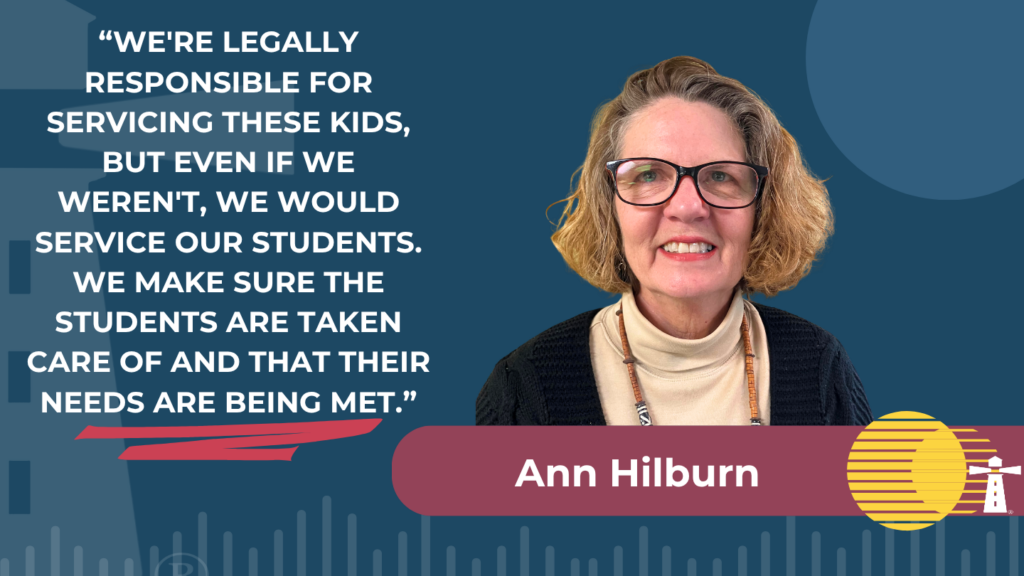
“We’re legally responsible for servicing these kids, but even if we weren’t, we would service our students. You know, that’s just what we do in education. We make sure the students are taken care of and that their needs are being met.”
“In Alaska, we use tele-therapy for all of our speech services.”
“Their language is important to them and we want to preserve that and their traditions and culture. That’s important as well, and so we want to be respectful of that as we navigate into their communities to help with education of their students.”
Don’t miss this inspiring conversation about rural resilience, educational equity, and the power of district-wide commitment. Whether you lead a remote district or simply want to understand how educators solve impossible challenges, this episode will expand your perspective on what’s possible.
Listen now and subscribe to never miss an episode that matters to school leaders like you.
Full Podcast Transcript
Lighthouse Therapy (00:00.906)
Hello everyone and welcome to the brighter together podcast. My name is Janet Courtney and my very special guest today is Ann Hilburn. Ann is the special education director at Alaska gateway school district in Toke, Alaska. And Ann and I had the great pleasure of having dinner together at case the national case and cases the council of administration of special education.
because I don’t know it and I had to look it up. I know case, but it’s a great organization and we were both at this conference. So, and I am so happy to have you here with me today.
Ann Hilburn (00:39.246)
Thank you, Janet. I am excited about being here. This is going to be good.
Lighthouse Therapy (00:42.236)
Awesome. Yeah. So tell everybody a little bit about Ann and a little bit about Alaska Gateway School.
Ann Hilburn (00:52.334)
Okay, so a little bit about Ann. I am 40 plus years in the field of education, the majority of it in special education. And currently I am the director for special education for the Alaska Gateway School District. I’m married, 43 years.
Lighthouse Therapy (01:13.052)
Wow, congratulations. Yeah, your husband, her husband was there. He’s lovely. He’s a pastor, isn’t he? Retired pastor, yeah, awesome. Yeah.
Ann Hilburn (01:20.086)
Retired, yes. And yeah, three children, all grown, successful. Four grandchildren, almost all grown. full life, yes.
Lighthouse Therapy (01:30.506)
Wow, good for you. Yes, for sure, for sure. And Alaska Gateway is in, where’s Tok? Where’s Tok, Alaska?
Ann Hilburn (01:40.994)
So Toke, Alaska is in South Central. It’s considered part of the interior. And it holds the record for the coldest recorded temperature in the state of Alaska. That was several years ago. We didn’t close it there this year. We were close, but not quite. The negative 70s was pretty cold.
Lighthouse Therapy (01:59.419)
Okay.
Lighthouse Therapy (02:08.319)
So what is the recorded coldest temperature? And were you there when that happened? Okay, okay.
Ann Hilburn (02:14.92)
No, was not there when I was not here when that happened. No, it’s negative 80 something, but I don’t remember exactly what.
Lighthouse Therapy (02:23.884)
my goodness. I can’t, that’s freeze your lungs cold, right? I mean, you can’t stay out very long in that.
Ann Hilburn (02:28.502)
Yes, you definitely need something covering your mouth and nose to breathe through when you’re in that cold of weather. And don’t be in it long. Yeah.
Lighthouse Therapy (02:39.785)
Yeah, don’t stay out in it long. can’t be, because you just die. You would just freeze to death, right? Wow.
Ann Hilburn (02:45.312)
Yeah, it’s hard to breathe that cold of an air.
Lighthouse Therapy (02:48.937)
Wow, okay, mom, takes a special kind of person to live there and I’m not that person. I don’t even like 60 degrees.
Ann Hilburn (02:57.518)
I know friends down south are like complaining, it’s 40 degrees it’s so cold and I’m like yeah come up here.
Lighthouse Therapy (03:05.151)
Yeah, for sure. For sure. Yeah, I lived in Michigan, so I know some cold, but I don’t know that cold. mean, I know negative 20 is about as cold as we would get, but that was rare. That was rare. Zero. You know, we lived in we lived in zero weather and below freezing a lot, but not not negative negative 20, 30, 40. No, no, no, no, no. That’s that’s really cold. That’s really cold.
Ann Hilburn (03:30.455)
It’s warmed up here. We’re in the negative 20s. That feels much better.
Lighthouse Therapy (03:33.471)
lovely. And it is for those of you that are listening right now, it’s February 12th, 2026. So it’s still, we’re still in the grip of winter for sure. So, up there especially. So, okay. So, Alaska gateway, tell me a little bit about maybe a little bit about the demographics and how many kids and is it K-12? Do you have pre-K tell me about that.
Ann Hilburn (03:59.641)
So Alaska Gateway School District actually encompasses about 28,000 square miles. It extends from the Alaska Range to the Yukon River and the Canadian border. Our student population is approximately 400, but that is spread out over six different communities, as well as our homeschool reach program. So we actually have.
schools in Dodd Lake, Mentasta, Tetlin, Northway, Eagle, Toke, and we did have one in Tana Cross but we had to close that one down and then we have our homeschool program. It’s a statewide program so it’s a big big community large district.
Lighthouse Therapy (04:46.314)
Wow. Yeah.
Lighthouse Therapy (04:52.394)
So do you go to all of those schools? You do.
Ann Hilburn (04:56.014)
I do. I do. Typically, I am in the office on Monday, Wednesday, and Friday. And then Tuesday and Thursdays, I travel to the different sites. The closest one, other than obviously the one in Toke, so the closest one is about 45 miles away. And then the furthest one is 175 miles away. So that one is always an overnighter.
Lighthouse Therapy (05:24.288)
Mmm.
Ann Hilburn (05:25.494)
You can drive. We are on the road system, although the roads to some of these communities are not like when you think, you just get on the highway and drive. You know, don’t. It’s not highway roads, but it’s still roads that are navigable. The Eagle School is the one that’s about 175 miles away, and it’s only accessible by road for about five months out of the year.
Lighthouse Therapy (05:34.908)
No, no you don’t.
Ann Hilburn (05:55.084)
and the rest of the year you have to fly in.
Lighthouse Therapy (05:57.429)
So you fly, you do fly some. Wow. Wow. Yeah, I knew that. I knew that there was a lot of instances, especially before teletherapy, speech therapists flew. They flew up there. They would go like once a month and that not enough and everybody had to kind of go through what their plan was. So has that changed? Are you guys using?
Ann Hilburn (06:00.812)
Some, yeah. So, it’s crazy.
Lighthouse Therapy (06:25.78)
technology more now as technology has become available? Does that does it happen?
Ann Hilburn (06:32.524)
It does happen. And so for Alaska Gateway School District, we use tele-therapy for all of our speech services. And then our school psychologist will come in three times a year to do evaluations, re-evaluations. Although she is now beginning to do some of them online as well. That’s starting to happen.
Lighthouse Therapy (06:40.352)
Mm-hmm.
Lighthouse Therapy (06:57.738)
virtual. Yeah, yeah.
Mm-hmm.
Ann Hilburn (07:01.998)
Our occupational therapy and physical therapy, the therapists come in once a quarter. They’ll fly or drive in once a quarter. And then after that, we will, you know, they show us what to do and then we do it. And then they come back and check to see if we’re making any progress.
Lighthouse Therapy (07:20.512)
Right, right.
Right, yeah, it’s way different. It’s way, way different than anything you would see in other states, honestly. mean, but you’ve done, I know you do what you have to do to try to get the services to the students, right? Yeah.
Ann Hilburn (07:39.084)
Right, right. We’re legally responsible for servicing these kids, but even if we weren’t, we would service our students. You know, that’s that’s just what we do in education. We make sure that the students are taken care of and that their needs are being met.
Lighthouse Therapy (07:47.488)
Right, right.
Lighthouse Therapy (07:56.575)
Right, right. Of course. Is there a problem? Is there, I heard a, no? Okay. I’ll just note it down. It sounded like somebody was rubbing on the speaker. okay.
Ann Hilburn (08:11.279)
I shifted papers. Sorry. No.
Lighthouse Therapy (08:13.504)
There you go. Yeah, that did it. That did it. Yeah. Okay. It’s okay though. I’ll just, I’ll just, I’ll just mark it. cause it’s a, it was a, it was a like that sound. Yeah. So no, no, it’s okay. It’s okay. all right. So, so, so when you, when you talk about like these services and, and, and how you handle them,
Ann Hilburn (08:20.321)
Okay.
Yeah. Sorry.
Lighthouse Therapy (08:38.464)
How many kids in special education do you have? If you have 400 students, not every child’s, what’s your utilization look like?
Ann Hilburn (08:47.31)
So right now we are at 77 students in special education. Some of that is speech only services, but the majority of that are students with some kind of disability.
Lighthouse Therapy (08:50.848)
significant. Yeah.
Lighthouse Therapy (09:03.588)
And the other thing that I know you and I talked quite a bit when we were at dinner, but like there’s also some cultural things that really need to be considered when you’re talking about working. Cause you’re not just, mean, there’s cultural anywhere. get that, but there’s significant cultural differences when you’re talking about native people to Alaska versus your, you know, other children.
Ann Hilburn (09:27.478)
Right, right. And so three of our districts are. 90 to 100 % native and then toke is kind of a mixture and and Eagle and Dot Lake are still a mixture, but less so it’s but but yes and there are cultural differences with our our native.
Lighthouse Therapy (09:41.184)
Mm-hmm.
Lighthouse Therapy (09:49.312)
Mm-hmm.
Ann Hilburn (09:56.067)
population. We meet those differences head on though, and we have people in the district that will that are, you know, go to the schools, the different sites and and work with the teachers and the community kind of as a liaison and and help us, you know, make sure that we’re doing okay.
Lighthouse Therapy (10:00.256)
Mm-hmm.
Lighthouse Therapy (10:19.7)
Navigate that, yeah. Yeah, because it’s important, know, that’s just, yeah, it’s so important, yeah.
Ann Hilburn (10:25.26)
It is important. Their language is important to them and we want to preserve that and you know their their traditions and culture. That’s important as well and so we we want to be respectful of that as we navigate into their communities to help with education of their students.
Lighthouse Therapy (10:35.476)
Mm-hmm.
Lighthouse Therapy (10:46.538)
Yeah, and the one school that you closed, it was closed because of declining enrollment. Is that why? Yeah. Now, if that, sorry.
Ann Hilburn (10:52.876)
Yes. State of Alaska? In the state of Alaska, you have to have at least 10 students to keep a school open. And they had consistently been under that, like seven to eight students. And luckily, only like 12, 15 miles up the road from Tok, and so we can bus them in. Our parents will drive them in.
Lighthouse Therapy (11:00.511)
Okay.
Lighthouse Therapy (11:14.732)
okay. Okay. So it’s unlikely that that one will reopen then. No, okay. Yeah. Just curious, like if it waxes and wanes, like how do you handle that if it changes one generation you’ll have five and then the next generation you have 20, what do you do, right? So I was curious about that. But it sounds like you’ve got it figured out. That’s really, it’s just, so then when you look at your staff,
Ann Hilburn (11:20.951)
Yeah, probably not.
Ann Hilburn (11:36.556)
Yeah.
Lighthouse Therapy (11:44.05)
you know, where is it primarily like Alaskans people that have moved there? Are there, are there natives that become teachers? What does that look like for you guys?
Ann Hilburn (11:59.107)
So you’re aware there is a terrible teacher shortage, and that’s everywhere. so most of our staff right now have come up from outside of Alaska. We have a couple in the SPED department. I’m just talking about in the special education department. And so we do have a couple of teachers that
Lighthouse Therapy (12:04.275)
yeah. Mm-hmm. Mm-hmm.
Ann Hilburn (12:28.374)
you know, are from Alaska, you know, whether they’re actually from the Toke area or, but they are from somewhere in Alaska. We have three teachers that are from the Philippines and this is their second year with us. They’re doing well. And then the rest of our teachers come up from the South somewhere.
Lighthouse Therapy (12:50.42)
Yeah, yeah, yeah. It’s interesting to think about all of the nuances that you guys have to go through to, but I love that you do. And the passion is there because these kids need you. They just need you. And has your whole career then and been in Alaska? Have you always lived in Alaska?
Ann Hilburn (13:13.28)
No, no, this is our 10th year in Alaska. We are, I’m originally from Mississippi, my husband from Louisiana, New Orleans, and yeah, south. This is our 10th year in Alaska. And now I retired in Mississippi and then we headed north. And so, you know, now 10 years, here we are. Who knew?
Lighthouse Therapy (13:22.878)
And the south, yeah, you’re far from the south.
Lighthouse Therapy (13:35.797)
Wow.
Lighthouse Therapy (13:40.158)
Your kids are not all in Alaska though. I think I remember us having that conversation that they were not there. Yeah. Yeah.
Ann Hilburn (13:43.934)
No, no, no. We have our two oldest children are in Texas and our youngest is in Alabama.
Lighthouse Therapy (13:51.007)
Yay, Yay, Texas. Yeah, that’s where I am in Carp is Christie. So yeah. So so when you retire, because you are getting ready to retire, right? Pretty soon. Congratulations. And thank you so much for those kids that you served for all of those years, because, you know, we the impact we have as educators is just beyond what we can measure. So thank you for.
Ann Hilburn (14:05.068)
Yes, I am pretty soon. Thank you.
Lighthouse Therapy (14:19.206)
All of those years of service. I’m sad that you’re retiring, but I’m happy for you that you are retiring. That’s amazing. So do you plan on staying? Are you going to stay in Alaska or do you think you’ll move?
Ann Hilburn (14:33.87)
We’ll go back south where we can be closer to family.
Lighthouse Therapy (14:35.368)
Yeah, yeah, yeah. Well, if you end up settling in Texas, you need to let me know because we will definitely get together. Texas is big, but it is not as big as Alaska. So, yeah.
Ann Hilburn (14:47.054)
Wherever I settle, I’ll let you know we can always visit. Who knows, you may have a conference wherever I’m going to be living and we’ll have dinner.
Lighthouse Therapy (14:51.164)
Yeah, definitely. Yeah.
Lighthouse Therapy (14:57.288)
Yeah, absolutely. It was it was super fun. you know, it’s it I love I love the fact that you have just so much knowledge and you have embraced where you are. Now, when when you leave, how hard is it going to be for them to find somebody to replace you then? Do you do you know? Like, is there a succession plan that they’re going to put in place? How does that work?
Ann Hilburn (15:22.04)
So they’ll advertise my position, you know, soon and start looking and then, you know, people will apply hopefully. It’s always great if we can promote from within. I know I have a couple of teachers that are working on their educational administration master’s degree, but they’re not quite there yet. So that might be a possibility of looking at that, you know.
Lighthouse Therapy (15:32.724)
Right?
Lighthouse Therapy (15:51.146)
doing something like interim or until they’re ready. Yeah. Okay.
Ann Hilburn (15:53.206)
Yeah, until they’re ready. Are there, you know, maybe, you know, someone great out there just waiting on an opportunity and this will be it and they’ll they’ll move to to token. Right.
Lighthouse Therapy (16:06.336)
There you go. So if you’re listening, right? And in about, you know, this will come out in about six weeks. So it’ll be about the time that you guys are starting to look, really look for somebody. yeah. So, so with that in mind, where, where do people go if they want to learn more about Alaska Gateway School District?
Ann Hilburn (16:14.254)
Perfect.
Yeah. Yeah.
Ann Hilburn (16:29.422)
So we have a website. You can go on and look on the website or you can just Google Toke Alaska, Alaska Gateway School District and find all kinds of information and get great pictures. I will tell you the northern lights are amazing up here and we get them quite often.
Lighthouse Therapy (16:47.754)
Yeah, that’s a bucket list of mine. I want to see the Northern Lights. That’s definitely something I want to do. Haven’t done it yet, haven’t done it, but it’s definitely on my bucket list.
Ann Hilburn (16:58.348)
Well, you need to hurry up and visit up here and then I can take you out.
Lighthouse Therapy (17:01.748)
Do they do they do they come when it’s when it’s warm? Because I’m not coming in if it’s 70 below zero up there.
Ann Hilburn (17:08.238)
It’s not 70 anymore, but they do come when it’s warm, but you don’t see them like once the weather starts warming up, the daylight is here longer. And so they come out at night and it still looks like the middle of the day. So you can’t really see them. So if you want to come before winter or like coming out of winter, March is a good time to see them. And it’s not that cold or, you know,
Lighthouse Therapy (17:19.095)
that’s right. Yeah, because
Lighthouse Therapy (17:35.165)
Okay. Yeah, not that cold and is very definitely relative terms, right? Janet does not like the cold, I’m telling you. That’s the hardest part is I know that in order to see them, I have to go when it’s cold. I’m like, no, it’s good. Yeah. So.
Ann Hilburn (17:37.852)
Ann Hilburn (17:43.63)
This is true.
Lighthouse Therapy (17:57.107)
in the, you touched on something I completely didn’t think about. So how many hours of daylight do you guys, what’s like, what’s the shortest day and what’s the longest day for you guys then?
Ann Hilburn (18:07.8)
So it’s the solstice, the winter solstice. That’s the shortest day.
Lighthouse Therapy (18:11.849)
How many hours I mean is what I’m saying. How many hours of daylight and how many hours of dark do you guys end up with?
Ann Hilburn (18:18.062)
So we end up with a little over three hours of daylight, you know, by, yeah. And then, and then you start adding like a half a minute to a minute a day, you know, every day until it gets, you know, it’ll be three o’clock in the morning and it’s still daylight. Yeah. And, know.
Lighthouse Therapy (18:25.234)
And that on the shortest, right? Yeah.
Lighthouse Therapy (18:41.44)
still daylight, yeah.
Ann Hilburn (18:45.568)
And then, but then as soon as you hit that date in June, right, then you start losing that half a minute or minute every day until you’re back to barely any daylight.
Lighthouse Therapy (18:49.504)
Mm-hmm.
Lighthouse Therapy (18:55.434)
Yeah.
Wow. Yeah. So you, learn to have blackout curtains and, and really good lighting. I would say, it, does it mess with your, with your system? Like the, the rhythm of your life? Do you, do you notice a difference?
Ann Hilburn (19:05.036)
Yes, exactly.
Ann Hilburn (19:16.298)
I don’t normally notice much of a difference because it’s what I tell people. I live inside, I work inside. The biggest difference is on the weekends when I can’t get out to go snowshoeing or hiking or something. But then in the summer, man, you can be out all night. And we grow great vegetables.
Lighthouse Therapy (19:36.425)
yeah, because you can see right? can be out. Yeah. I bet. Yeah. Yeah. It’s a short season, but if you can get them to grow, right and get them. Yeah. And they’ve got the light. I didn’t think about that. Yeah. That’s amazing. I’m sorry. I kicked your brain. think more about Alaska than I did about your school. I didn’t mean to do that. But it’s sure.
Ann Hilburn (19:46.992)
yeah, yeah, we can’t a lot of things.
Ann Hilburn (19:57.583)
That’s okay. No, but I do want to say about our district. One of the great things that we are moving towards is a CTE consortium plan. We are collaborating with two other districts in our area to form a career technical educational program.
where the kids, the students from these outlying villages can come in and spend four to six weeks just really focused on whether it’s electrical or plumbing or welding or heavy metal or those big machines that they drive, that kind of thing. And I was just speaking this morning with our CTE director.
Lighthouse Therapy (20:45.876)
Right? Mm-hmm. Mm-hmm.
Ann Hilburn (20:55.028)
about a program for our paraeducators so our high schoolers could graduate from high school ready to go into the workforce as a paraeducator. Those are hard to find in these communities and so have them trained you know once they graduate and they have their certificate and everything then they’re ready you know then we have you know people that are not leaving their area but they’re employed.
Lighthouse Therapy (21:22.73)
Right, homegrown. Yeah, yeah.
Ann Hilburn (21:24.418)
by the way. And so we’re super excited about that program and trying to work towards that. And then the other thing that I am super excited about as well is an area in any special ed teacher or our director can tell you one of the hardest things is for us to transition our special ed students from high school.
into everyday life. And so we are working on a new program for that where we are planning better and working better and finding those programs that our students need so that we can help them. The Division of Vocational Rehabilitation in the state of Alaska is great and they’re great to work with, but it’s just not enough.
Lighthouse Therapy (21:53.716)
yeah, yeah, mm-hmm, yeah.
Lighthouse Therapy (22:22.026)
Mm-hmm. Mm-hmm.
Ann Hilburn (22:23.212)
So we need for those students, especially those that are going to graduate with a specific learning disability. They just struggle in a particular area or something. they graduate, but they’re not ready to do something else. We’re working really hard to get all of those pieces in place so that our students
Lighthouse Therapy (22:37.365)
Mm-hmm.
Lighthouse Therapy (22:44.778)
Right?
Ann Hilburn (22:52.632)
will have what they need when they leave us, when they graduate from high school or when they age out. So they’ve had the training that they need to be employable, whether it’s in our local area or if they want to move on and do something else. it’s a big jump for us, but we are really dedicated to making life better for our students when they leave.
Lighthouse Therapy (22:58.708)
Right.
Lighthouse Therapy (23:09.247)
Mm-hmm.
Ann Hilburn (23:21.762)
They don’t feel like we just kicked them out of the nest and floundering.
Lighthouse Therapy (23:24.35)
Right. Yeah. Now what? Right. Now what? Or parents say, now what? Right. And it’s such a great thing because I’ve seen so much education seems to really be shifting towards student centered education, the career and technical education, the what do we do, you know, transition. Let’s get the special needs kids transitioned into something that they
Ann Hilburn (23:31.181)
Yes.
Ann Hilburn (23:42.722)
Yes.
Lighthouse Therapy (23:53.449)
want they want to do and that’s beautiful because you know it just it’s so important and the fact that education has taken that direction because it’s really I mean IEP’s individualized education plan when you put that across to all students you know then you get an education that’s tailored to where you want to go as an adult and I’m really hopeful that eventually colleges will do the same thing you know let’s not spend
Ann Hilburn (23:54.882)
Yes.
Ann Hilburn (24:21.26)
Yes.
Lighthouse Therapy (24:22.558)
you know, hundreds of thousands of dollars on stuff that we don’t need and you know, you don’t need in order to do this job. Why am, why do I have to take all of these general electives? Give me the, the tools that I need to be able to do the job that I want to do, but let’s do it in two years instead of four or five years. know, ed colleges, you know, it’s a, it’s a four year plan, but it becomes a, becomes a five year plan, you know, and really do we need all those, all of those years? I mean, it just, to me, it seems like
Ann Hilburn (24:28.216)
Great.
Ann Hilburn (24:47.576)
Right?
Lighthouse Therapy (24:52.18)
So I’m excited to see where education is going and I’m excited to hear that you guys are doing that because it just, it’s so heartwarming to know that the kids are going to, even though you’re retiring, the kids are going to continue to get the things that they need for the next generation. And it’s exciting to hear and to see that. And I know your passion, Ann. I know that you love the kids and that you want what’s best for them.
Ann Hilburn (25:20.139)
I do, yes.
Lighthouse Therapy (25:21.04)
Even with retirement on the horizon, I know that you will put a plan in place for what’s next or who’s next. So thank you for all that you do and thank you for being on Brighter Together. It was so great to see you and to connect up with you. Yeah, so fun. So fun. Absolutely, absolutely. And you know, we’re just brighter together, so keep up the good work.
Ann Hilburn (25:36.674)
That was fun.
I appreciate the invitation.
Ann Hilburn (25:49.231)
Yes. Okay. Are we finished?