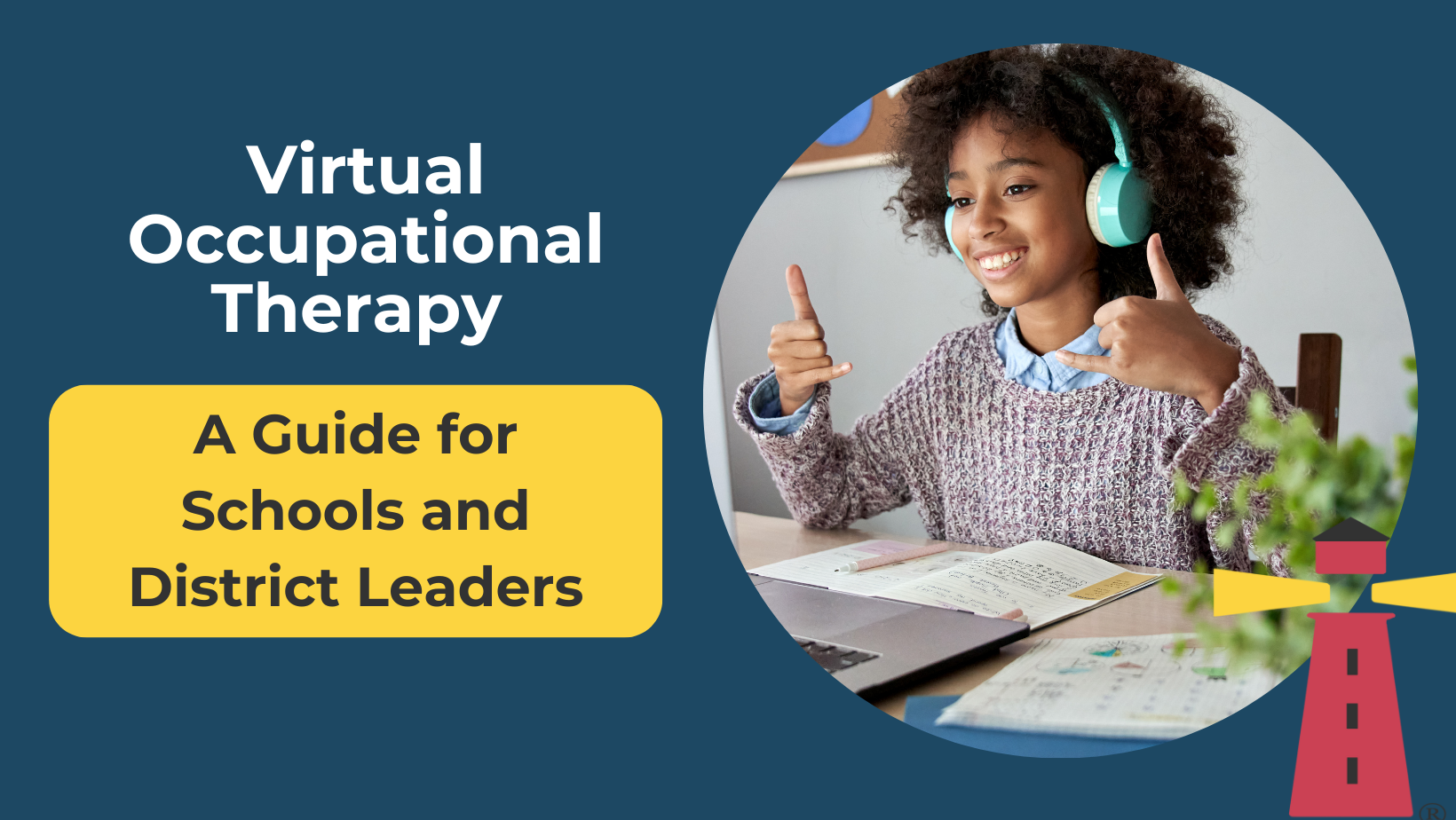
Virtual Occupational Therapy in School Settings
Staffing shortages, growing caseloads, and increasing service demands have pushed many school teams to rethink how occupational therapy is delivered. As a result, virtual occupational therapy has become a more common option in school settings, not as a temporary fix, but as a planned service delivery model. Still, questions remain. Can virtual occupational therapy support functional, student-centered goals? Does it align with IEP requirements? And how does it differ from traditional clinic-based telehealth? Understanding what virtual occupational therapy truly looks like in schools is the first step toward making informed, compliant decisions.
What Is Virtual Occupational Therapy?
Virtual occupational therapy is a service delivery model where occupational therapy services are provided through secure video platforms rather than in person. In school settings, virtual occupational therapy focuses on helping students build the functional skills they need to participate in learning, classroom routines, and daily school life. These services are still guided by the student’s IEP goals and delivered by a licensed occupational therapist, just in a virtual format.
In practice, virtual occupational therapy in schools is structured to fit within the school day. Sessions follow the same scheduling expectations as in-person services and often involve collaboration with teachers, paraprofessionals, or other support staff who are physically present with the student. The therapist may lead activities in real time, demonstrate strategies, or coach school staff on supports that can be carried over throughout the day. This helps ensure that skills are practiced in the environments where students are expected to use them.
It is also helpful to distinguish virtual occupational therapy in schools from clinic-based telehealth. Clinic services often take place at home and are supported primarily by caregivers. School-based virtual occupational therapy, on the other hand, is embedded within the educational setting. Goals are connected to classroom participation, access to instruction, and functional independence at school rather than medical or outpatient outcomes.
When implemented thoughtfully, virtual occupational therapy is not a lesser version of in-person services. It is a different approach that emphasizes collaboration, real-world application, and consistency across the school day. Understanding how virtual occupational therapy functions in school settings helps teams make informed decisions about when and how it can best support student needs.
How Virtual Occupational Therapy Fits Into School-Based Services
In schools, occupational therapy is considered a related service under IDEA. Its purpose is to support students in accessing their education by addressing functional skills that impact participation, learning, and independence. Whether services are delivered in person or virtually, the role of school-based occupational therapy remains the same. The format does not change the intent of the service or the responsibility to align therapy with educational goals.
Virtual occupational therapy fits within existing school-based service frameworks when it is tied directly to a student’s IEP. Goals, service minutes, and progress monitoring continue to guide decision-making. The difference is not what is being addressed, but how the therapist connects with the student and the school team. Virtual delivery allows occupational therapists to provide services without being physically on campus, while still collaborating closely with educators and support staff.
Schools already use a range of service delivery models for related services, including push-in, pull-out, consultative support, and blended approaches. Virtual occupational therapy can be implemented within these same models. For example, a therapist might provide direct virtual sessions with a student, consult with teachers on classroom strategies, or support staff with implementing accommodations and routines. The chosen model should always reflect student needs rather than convenience.
It is also important to note that service delivery decisions are made by the IEP team. Virtual occupational therapy may be one option considered alongside in-person services, depending on factors such as staffing availability, student needs, and the educational environment. Thoughtful discussion and clear documentation help ensure that virtual services are used appropriately and remain student-centered.
When approached intentionally, virtual occupational therapy becomes part of a continuum of school-based occupational therapy services. It offers flexibility without altering the core expectations of related services and allows schools to maintain access to support while staying aligned with established special education practices.
When Virtual Occupational Therapy Works Well in Schools
Virtual OT services can be highly effective when they are matched to the right goals and delivered with intention. In school settings, occupational therapy is most successful when strategies carry over into the classroom, routines, and daily expectations students face. Virtual delivery often supports this carryover by emphasizing coaching, modeling, and real-time problem solving within the student’s actual learning environment.
Fine motor and visual-motor skill development
Virtual occupational therapy in schools works well for fine motor and visual-motor goals when activities are grounded in real materials students already use. Therapists can guide students through handwriting tasks, cutting activities, or visual-motor exercises using classroom supplies, worksheets, or digital tools already in place. Because these skills are practiced in the same context where they are expected, teachers and support staff can more easily reinforce strategies throughout the school day.
Executive functioning and organization
Executive functioning goals are particularly well suited to virtual OT services. Therapists can work directly with students on planning, task initiation, organization, and time management using actual classroom assignments, schedules, and routines. Virtual sessions also allow therapists to coach staff on visual supports, checklists, and environmental modifications that help students stay organized and independent beyond the therapy session.
Sensory regulation and routines
Sensory regulation often relies on consistency and predictable routines rather than specialized equipment. Virtual occupational therapy allows therapists to collaborate with school teams to develop regulation strategies that fit naturally into the student’s day. This might include movement breaks, classroom calming strategies, or sensory-friendly transitions that staff can implement consistently. Coaching in real time helps ensure strategies are practical and sustainable within the school environment.
Self-care and independence goals
Self-care and independence goals benefit from being addressed where students actually perform these tasks. Virtual occupational therapy can support skills such as managing materials, following routines, and increasing independence with classroom responsibilities. Therapists can observe how students navigate their school environment and provide targeted guidance to staff, helping students build skills that translate directly into greater participation and confidence at school.
When virtual OT services focus on coaching, collaboration, and real-environment practice, they align closely with the purpose of occupational therapy in schools. Rather than isolating skills, this approach supports meaningful progress that extends beyond individual sessions and into the student’s daily learning experience.
Common Concerns About Virtual Occupational Therapy
As virtual occupational therapy becomes more common in school settings, it is natural for teams to have questions. Occupational therapy is highly individualized, functional, and often hands-on, which can make virtual delivery feel questionable at first. Addressing these concerns openly helps schools evaluate virtual OT services realistically and determine when they are an appropriate fit.
“Occupational therapy is too hands-on to be virtualâ€
This is one of the most common concerns, and it makes sense. Occupational therapy often involves movement, materials, and physical interaction with the environment. In school-based practice, however, much of the therapist’s role centers on observation, strategy development, and coaching. Virtual occupational therapy shifts the focus toward guiding students and staff through activities using materials already available in the classroom.
Rather than replacing hands-on experiences, virtual services often enhance them by supporting the adults who work with the student daily. Therapists model techniques, suggest adaptations, and provide real-time feedback, helping strategies carry over beyond a single session. For many functional school-based goals, this approach aligns closely with how occupational therapy is meant to support access and participation.
In many school settings, cameras can also be positioned to give therapists a clear view of what students are doing. This may include viewing handwriting tasks, fine motor work, posture, or how materials are being used at the desk or table. With thoughtful setup, therapists can observe movements, provide immediate feedback, and adjust strategies just as they would in person.
Student engagement and attention
Another concern is whether students can stay engaged during virtual sessions. Engagement depends less on the screen itself and more on how sessions are structured. Virtual occupational therapy is most effective when activities are interactive, purposeful, and directly connected to classroom routines or assignments.
Short, focused tasks, visual supports, and collaboration with on-site staff all contribute to stronger engagement. When teachers or support staff are involved, therapists can adjust activities in the moment and help redirect attention as needed. Over time, this shared approach often supports better consistency and follow-through across the school day.
Technology access and consistency
Technology can feel like a barrier, especially in schools with limited resources or inconsistent connectivity. Successful virtual occupational therapy relies on clear expectations, reliable scheduling, and simple technology solutions that fit within existing systems. Most services are delivered using secure, familiar platforms that require minimal setup once routines are established.
Consistency also improves when schools identify a designated space, device, and point person to support sessions. With these structures in place, virtual OT services can run smoothly and predictably, reducing disruptions and allowing therapists to focus on student progress rather than logistics.
When schools take time to address these concerns upfront, virtual occupational therapy becomes easier to evaluate objectively. Understanding both the limitations and the strengths of virtual delivery helps teams decide when it can support occupational therapy in schools in a way that is thoughtful, practical, and student-centered.
Compliance Considerations in Virtual School-Based OT
When schools consider virtual occupational therapy, questions about compliance naturally follow. Special education compliance does not change based on service delivery format, but virtual services do require thoughtful planning and clear communication. Focusing on best practices helps schools implement virtual OT in a way that supports students while remaining aligned with IEP services and special education requirements.
Alignment with IEP goals
Virtual school-based OT should always be driven by the student’s IEP goals. The format of service delivery does not alter the goals themselves or the intent behind them. Therapists and school teams benefit from ensuring that activities, strategies, and supports provided virtually are clearly connected to the functional skills outlined in the IEP. When services remain goal-driven and student-centered, virtual delivery can fit within existing special education frameworks.
Service minutes and scheduling
Service minutes for virtual occupational therapy are scheduled and delivered in the same way as in-person services. Consistency and clarity are key. Schools often find it helpful to establish clear schedules, designated spaces, and expectations for who will support the student during sessions. Thoughtful planning reduces missed sessions and interruptions, supporting both service continuity and compliance.
Documentation and progress monitoring
Accurate documentation remains essential for all IEP services, including virtual OT. Therapists document session activities, progress toward goals, and any adjustments made based on student response. Progress monitoring should reflect observable skill development and functional application rather than attendance alone. Clear documentation supports instructional decision-making and provides transparency over time.
Parent communication and transparency
Open communication with families supports trust and shared understanding. While requirements may vary, many schools choose to discuss virtual service delivery with parents and document those conversations, even when formal consent is not strictly required. Explaining how virtual occupational therapy will be delivered, what goals will be addressed, and how progress will be monitored helps set clear expectations and reduce misunderstandings.
Clear, proactive communication also supports collaborative decision-making. When families feel informed and included, conversations about virtual services are more likely to stay focused on student needs rather than the delivery format alone.
When virtual school-based OT is implemented with attention to alignment, consistency, documentation, and communication, it can support both student progress and special education compliance. A best-practice approach allows schools to use virtual services thoughtfully while maintaining clarity, accountability, and a strong focus on student outcomes.
What Virtual Occupational Therapy Looks Like in Practice
Online occupational therapy in schools is most effective when it is practical, collaborative, and closely connected to the student’s daily environment. Rather than relying on specialized tools or simulated activities, virtual services focus on real routines, real materials, and real-time problem solving. This helps students practice skills where they are actually expected to use them, with support that extends beyond the therapy session itself.
Coaching during classroom routines
Virtual occupational therapy often centers on coaching during everyday classroom activities. Therapists may observe students during writing time, transitions, or independent work and provide guidance as routines unfold. With cameras positioned to show the student’s workspace, posture, or materials, therapists can offer immediate feedback on positioning, grip, organization, or pacing. This live coaching helps teachers and aides reinforce strategies consistently throughout the day.
Guided activities using school or home materials
Online occupational therapy frequently uses materials that are already available to the student. This might include pencils, notebooks, scissors, classroom manipulatives, or digital worksheets. Therapists guide students through activities while observing how they interact with these materials in real time. Shared screens, visual supports, and document cameras allow therapists to model tasks, demonstrate adaptations, and adjust activities based on student response. Using familiar materials supports skill generalization and reduces reliance on specialized equipment.
Collaboration with teachers and aides
Collaboration is a core component of virtual occupational therapy in schools. Therapists regularly communicate with teachers, paraprofessionals, and support staff to align strategies and reinforce goals across settings. Virtual sessions may include brief check-ins with staff, shared planning time, or follow-up guidance after observing a student in action. This collaborative approach helps ensure that strategies introduced during online occupational therapy are carried into the classroom and embedded into daily routines.
When virtual occupational therapy is implemented with thoughtful use of cameras, shared materials, and collaborative coaching, it becomes a highly visible and interactive service model. These practical elements help schools move from abstract ideas about online therapy to a clear understanding of how it supports occupational therapy goals in real educational settings.
What Schools Should Look for in a Virtual OT Provider
As more districts explore virtual occupational therapy services, choosing the right provider becomes just as important as choosing the service model itself. Not all virtual providers are structured the same, and the quality of support can vary widely. Schools benefit from looking beyond availability and focusing on the systems, experience, and collaboration practices that support consistent, student-centered services.
Experience with school-based occupational therapy
A strong virtual OT provider should have direct experience working in school settings. School-based occupational therapy is different from clinic or outpatient work, with a clear focus on educational access, classroom participation, and functional goals tied to IEPs. Providers who understand school schedules, team structures, and service delivery expectations are better positioned to integrate smoothly into existing systems.
Systems that support reliable service delivery
Consistency matters in virtual occupational therapy services. Schools should look for providers with clear systems for scheduling, communication, and coverage. This includes predictable session times, clear expectations for documentation, and processes that support continuity if staffing changes occur. Strong systems reduce disruptions and help ensure students receive services as planned.
Collaboration with school teams
Virtual occupational therapy is most effective when therapists work as part of the school team. Providers should emphasize collaboration with teachers, paraprofessionals, and administrators rather than operating in isolation. Regular communication, shared planning, and openness to feedback help align therapy strategies with classroom routines and school-wide expectations.
Commitment to consistency and student-centered care
Finally, schools should consider how a virtual OT provider supports consistency across students and campuses. This includes clear onboarding, alignment with IEP goals, and ongoing support for therapists delivering services. Providers who prioritize thoughtful implementation and student-centered decision-making help ensure virtual occupational therapy services remain focused on long-term progress rather than short-term fixes.
By evaluating experience, systems, collaboration, and consistency, schools can identify virtual occupational therapy providers that support both service quality and sustainable implementation. A careful selection process helps ensure virtual services enhance school-based occupational therapy rather than adding complexity to already demanding systems.
How Lighthouse Therapy Supports Virtual Occupational Therapy
When implemented thoughtfully, virtual occupational therapy can be a practical and effective way to support students in school settings. At Lighthouse Therapy, our approach is built around consistency, visibility, and collaboration. Students and OTs use the same kit, which helps activities translate smoothly from therapist guidance to student practice and supports carryover beyond the session.
Cameras are used intentionally so therapists can clearly observe students’ workspaces, movement, and use of materials, allowing for real-time coaching and adjustment. Teachers, aides, and, when appropriate, parents are involved to support routines and reinforce strategies throughout the school day. This shared responsibility helps virtual services stay connected to real classroom expectations.
Virtual occupational therapy works best when it is student-centered, aligned with IEP goals, and supported by clear systems and communication. With the right structure and partnership, it can expand access to occupational therapy in schools while maintaining quality, consistency, and meaningful support for students.