

Episode Description
When education teams face competing good ideas but lack a framework to choose, analysis paralysis sets in. Jeremy Sawtelle, Director of Specialized Student Support at Shasta County Office of Education, reveals how the secret hexagon tool—a structured rubric borrowed from healthcare—transformed decision-making across Northern California schools by removing power dynamics and scoring ideas on evidence-base and contextual fit.
Noteable Quotes
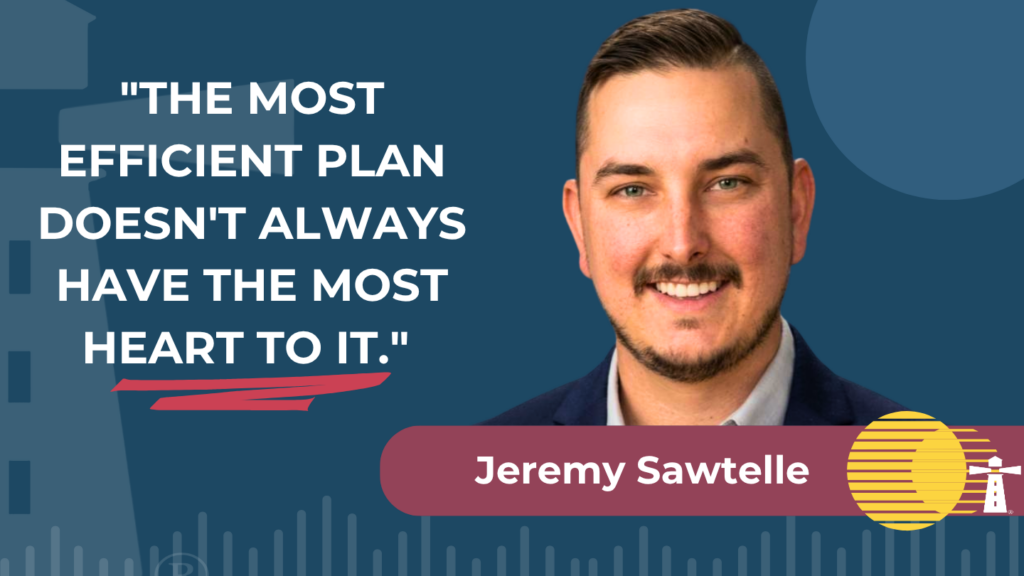
- “The most efficient plan doesn’t always have the most heart to it.” [00:17:04]
- “How do we know which one to implement? They all have merit.” [00:15:37]
- “We wanna feel like it’s not another thing. It’s part of what’s already happening.” [00:21:09]
- “Text is just text. There’s no nonverbal communication.” [00:21:09]
- “Everything kind of does sound like a good idea without shared values.” [00:23:58]
Full Podcast Transcript
Jeremy Sawtelle [00:00:00]
Well, thank you so much for having me. It’s it’s really great to be here.
Brighter Together [00:00:04]
So Jeremy, tell us a little bit about you and how you be came to be the director of specialized student support and maybe even a little bit about Shasta County Office of Ed.
Jeremy Sawtelle [00:00:17]
Absolutely. it would be nice to say that in education we wear one hat, but that’s never really the case. there’s always multiple roles and things happening and and different asks. so for me, my background is in special education. I was a former special education teacher and and did that for about eight eight years and then
Brighter Together [00:00:25]
Mm-hmm.
Jeremy Sawtelle [00:00:42]
was moved into what is this other opportunity out there in terms of like the larger system because there’s there’s some different things and in that classroom level where you’re always wondering like how is it that I’m living in this ecosystem and and how did all this kind of come to be and and you run into some walls and you just want to see that. So I went into administration and was recruited into
this director position, which I’m going on my eighth year here, which has been supporting, so I help support Northern California on a few projects. One of them, which is called the Geographic Lead Agency, where I co lead coordination across the eleven northern counties of California, which is interesting, it’s a about twenty percent of the state geographically, ’cause it’s just it’s rural, but it’s it’s pretty massive. and then the other half and and some of my other work,
Brighter Together [00:01:14]
Wow. Congratulations. Yeah.
Brighter Together [00:01:33]
Wow.
Jeremy Sawtelle [00:01:40]
being really school improvement based and systems improvement and helping identify problems and and work through different things with school teams and different organizations. And then I also support as as the co-lead for the nine northern counties for PBIS, which is positive behavioral interventions and supports in schools. So helping with all things behavior and student behavior related and staff behavior at times. a lot of that too.
Brighter Together [00:02:08]
Mm-hmm. Right. So PBIS is kind of is it like a shootoff or is it just under the umbrella of multi-tiered system of support, MTSS? would you say they’re like like next to each other or is it just one of the spokes of MTSS?
Jeremy Sawtelle [00:02:26]
I think that’s a a lot of the systems work I get to do is it’s very amazing to me. there there’s so much alignment and we we often call PBIS MTSSB for a behavior track, because if you’re looking at multi-tiered system of sport, it is the most evidence-based framework we have in terms of addressing office referral, suspension and and a few other pretty key metrics in the schools. So that’s been really
Brighter Together [00:02:35]
Mm, mm-hmm.
gotcha. Okay.
Jeremy Sawtelle [00:02:54]
amazing work to be part of. But I think that systems piece kind of what you’re bringing up is how we have a lot of frameworks and things and how does it all come together? And that’s been interesting. But yeah, one of the through lines there is is always coming back to classrooms and behavior management and PBIS is definitely kind of front and center. We have almost one in four schools kind of certified in in California as PBIS schools. So it’s it’s a pretty big movement.
Brighter Together [00:03:05]
Mm-hmm.
Brighter Together [00:03:23]
nice. And it’s so critical right now because you’re addressing issues with the kids and because a child can be going along and everything’s fine. And then something horrific happens in their life. And all of a sudden you have a totally different child. And that is truly what PBIS does. Part of what it does is recognize what happened here and how do we help this child, right?
Jeremy Sawtelle [00:03:49]
Yeah, and and it’s it’s seeing much more of that holistic picture. I mean, it it it should there’s an expectation sometimes where a a child’s going to come to a school and take the worksheet and take the book and do the work and feel very internally motivated to achieve and to do those things. And it’s a lot of PBIS is that that connection and connection human relationships, human connection is a lot of currency and we we want
people to understand that and and lean into that. And I think that’s that’s a lot of the fun conversations we get to have is how are we how are we feeling connected to the students in the room? How are we feeling connected to the school system? And and that’s a big I mean it’s 2026 and that’s definitely a a conversation happening I’m nationwide.
Brighter Together [00:04:39]
Right? Yeah, for sure. For sure. Yeah. And and the the more we get into technology, the more and more and more it’s gonna be needed because it’s so easy to to plug yourself into something and not into human interactions. And I s I see I mean, I know there’s a lot of really great things about technology, and I’m I’m not saying don’t embrace technology, but
But as a as an as a speech pathologist, I really see a some of the breakdowns in communication. You cannot get pragmatic interactions very well on a platform or you know, meaning like fr Facebook or Instagram or even text. You know, text is just text. There’s no there’s no nonverbal me moving my hand, you know, I’m a hand talker, I talk with my hands all the time.
but those things those things, those pieces that we lean into, the the nonverbal communication just gets lost. And so I think that’s some of what’s happening with our kids.
Jeremy Sawtelle [00:05:44]
Well think in then in the spirit of efficiency and all of that, we we have I we assume best intentions and we know a lot of what we’re adding in is really trying to streamline the educational process. And we were some of the work we we do and thinking through like a recent study it was I want to say Gallup and it was sixty to sixty five percent of
Brighter Together [00:05:54]
Mm, mm-hmm.
Jeremy Sawtelle [00:06:14]
like nonprofit and and educators just feeling a sense that they’re they’re concerned about their mental well being they are concerned about just their their burnout and there’s just such an increase in turnover and all these things and you’d think with more technology, with more integration, with more efficiency, we should be doing a lot better in those metrics. We should be feeling more confident, feeling like we have a better grasp on things. And that’s not not a strong correlation there. We’re actually seeing more anxiety, more
Brighter Together [00:06:38]
Right.
Jeremy Sawtelle [00:06:44]
mental health concerns. and so I definitely think that’s that you’re making a a great point there of we the humanness of this, the connection to each other, the connection to just school, what is school, why are we here is is really important. Adding more technology doesn’t and and clearly in a lot of cases not contributing to a better
Brighter Together [00:06:54]
Mm-hmm.
Jeremy Sawtelle [00:07:12]
human connection with each other and s and alleviating some of that the burnout and anxiety.
Brighter Together [00:07:17]
Yeah. Yeah. And you have to be in a good place to be able to learn for sure. So yeah. So I get it. Well that’s fantastic. I love that. So so tell us I I asked you this question and I’m just gonna before we started. So Shasta County Office of Ed is in the within the CELPA, but they’re separate, right? in in Reading, is that correct?
‘Cause we were t I was ask I was asking it because I’m like, I know the CELPA and you can tell us what a CELPA stands for because I don’t even know the acronym. I know what it is, but I don’t know, you know. And then there’s the county office of education, but understanding that they’re two different entities, but sometimes they’re together. I c if you could kind of just touch on that for us, I’d love that.
Jeremy Sawtelle [00:08:04]
Yeah, so depending on the structure of the county office, there’s we call it like a a nested system in in improvement science where you have like a county, you have a district, you have a school, you have a classroom, and each of those are unique and and complex human centered systems. And the CELPA’s primary focus is fulfilling some of the federal and state legislative obligations for supporting students who have
Disabilities, among other things. Again, back to education can’t always be one clear path of what the role is. But overall, yes, having having that primary focus of ensuring some compliance, ensuring some improvement in schools really primarily related to special education. And then the county office being all things school.
Brighter Together [00:08:38]
Right, right, right.
Jeremy Sawtelle [00:08:54]
The unique piece for us is that we have so most of my role is regional. So it’s not just Shasta County, it’s that Northern California school improvement. So I I have that unique serving on some of the state leadership teams and things, I travel quite a bit and get to go into different schools and kind of see how things are surfacing across California, not just having that kind of we we are in a rural area in Northern California, but
Brighter Together [00:09:02]
I was gonna say, yeah. Uh-huh. Right?
Jeremy Sawtelle [00:09:23]
the problems and and challenges are are out there, but there also there’s amazing things happening in places that you don’t otherwise get to really experience or see unless you’re in a position to travel multiple hours to get to these places. So that our role is a pretty widespread geography of support to school systems.
Brighter Together [00:09:40]
Yeah.
Brighter Together [00:09:46]
So how did it end up landing in Shasta County versus I mean, you’re talking you cross county lines quite a bit if you’re talking about the region, right? So how did that come about, do you know?
Jeremy Sawtelle [00:09:59]
primarily an avenue that that’s unfortunate but also at the same time is is an avenue of of that connection is compliance. And so compliance work, when we have school compliance challenges, somebody is going out, we often hear like in quotes the state is coming in, which is pretty fun for us to hear sometimes when like all arrive and I don’t think I I come across as as any
thing any level of intimidation and I obviously hope not to because I’m there to to help. But those compliance pieces are a typical avenue. And now we just do a lot of school improvement work where it’s hard for things are moving quickly and and these these challenges and things that schools are facing not always surface in metrics. Some schools are very small or they’re not
Brighter Together [00:10:33]
Right. To help, right? Come to help, yeah.
Brighter Together [00:10:42]
Yeah.
Jeremy Sawtelle [00:10:55]
they’re just aware of it, but it’s not something we measure in California. I think that’s a whole unique thing of value systems becoming priorities, which is what we measure. And I think California is in a place where we’re in a pretty widespread revision or just trying to understand what are our values for schools, what do we want out of schools? It’s a it’s we’re that explicit conversation is happening at some levels. And I think that’s our
Brighter Together [00:11:23]
Mm-hmm.
Jeremy Sawtelle [00:11:24]
just state in general right now. And so this compliance goes in for certain metrics for certain things, but it always uncovers other things that we want to support with and help out, which is more of that whole child, whole community and the health health and well being of all.
Brighter Together [00:11:42]
Right. And it’s about support. It’s not about you did this and you didn’t do that. It’s not that’s not the point, right?
Jeremy Sawtelle [00:11:48]
Absolutely. Yeah, we continuous improvement is a lot of the background. And so we look at one of two frameworks, one being improvement science, the other being implementation science. some that’s coming out of healthcare, coming out of places like Toyota, like really large companies and organizations in other other sectors have have figured out and been able to kind of like just
narrow into frameworks where you can do really strong organizational improvement. Education is pretty recent in the adoption of these. and education has a typical or history of whatever is kind of shiny or new this year. We hit the go button in August, we run through the year, see how it goes, and then we we change things up the next year. And that’s not sustainable. And we’re seeing things in that that more continuous improvement lens of
Brighter Together [00:12:25]
Mm. Okay.
Brighter Together [00:12:41]
Right.
Jeremy Sawtelle [00:12:45]
How do we help a school really anchor in what is an area of focus and what is the what is the challenge? What are the successes we have? What assets do we have right now? What are our current initiatives? We’ve we’ve helped some schools and it’s we say, what are all the things you’re doing? Just all of the things you do for kids. And and these can be elementary schools. And it’s well over a hundred things listed out. And their staffs are not overly, overly large. So it’s definitely
Brighter Together [00:13:10]
Mm-hmm.
Jeremy Sawtelle [00:13:15]
Systems improvement is definitely a place where we we find a lot of benefit and have had a lot of great work happening with with those two frameworks.
Brighter Together [00:13:22]
Awesome. Awesome. So let’s switch gears just a tiny bit because I know that you have co authored a book. I would love to give you an opportunity to talk about the subject matter, the title, the information, how that came about. Tell us about that, that experience and and endeavor that you’ve completed. I love that, because it’s published.
Jeremy Sawtelle [00:13:47]
Yeah, it is. so last year, well about over a year ago, we were my colleague and I were starting to just kind of piece together. we have a lot of different certifications in that improvement science and implementation science. And again, those two frameworks I know in in different in speech pathology, there’s different frameworks and they don’t always like you do this one or you do this one, and it’s like, well, there’s a lot of similarities here.
We found that that to be true as well. And so we started to blend those and and piece them together into a toolkit for educators, for schools. basically we want it to be what we call topic agnostic, where i we have a lot of different things we want to work with in in schools, but at the end of the day, we are we’re working with people, we’re working with a lot of complexity and cha the landscape is changing. And so
Brighter Together [00:14:16]
Uh-huh.
Jeremy Sawtelle [00:14:46]
If we were building a house, which tool do you use at which time is kind of our theory in this. So if you go into a school, which tool do we need at which time to help solve some of these challenges or remove some barriers? And it’s been a much kind of bigger reception than we anticipated, because we just thought we were putting together some of our thought process, and then it it has launched into
We were actually presenting this morning at a a university about it and had a great time doing that. And it has been we’re we’ve we’ve been to multiple counties and really talking through again the helping a team who in compliance sometimes a team is formed to to solve a problem or because of an unwanted metric.
Brighter Together [00:15:37]
Mm-hmm.
Jeremy Sawtelle [00:15:37]
But they don’t always know why they’re there or what the purpose is, but they know that literacy scores, or especially in my background in special education, there’s special education outcomes that are just not not ideal and now they’re out of compliance for that. But the team doesn’t really always know where to start. And sometimes when we sit at a table, we can say, Well, I have this idea of what we should do. And then somebody else says, I have this idea. And if the table is big enough, everybody might have a competing idea.
How do we know which one to implement? How do we know how to move forward? They all have merit. And so our framework and and the way we move through that is basically the vetting of looking at different ideas to help move things forward and really strategically building out a process, building out a system to measure are the efforts and the things that we’re doing having an impact or not? And and seeing that,
Brighter Together [00:16:07]
Right.
Jeremy Sawtelle [00:16:35]
And so we we use a variety of tools to to kind of get a team there and to help them elicit a better understanding of their the water they’re swimming in. And sometimes that’s difficult to see. And so that’s overall exactly. Yeah. So there’s different phases of this this improvement journey that we help teams go through through this book and its protocols, templates, action plans. And we have we’ve been again very humbled and
Brighter Together [00:16:47]
Can’t see the forest for the trees. Right. Right. Yeah.
Jeremy Sawtelle [00:17:04]
and very grateful for the reception of it so far and are really excited. The next piece of it is coming to what we call the psychology of change. And like an addition there is how do we help the leaders at the table who are feeling somewhat overwhelmed, who are needing to lead the team? How do we help the team collaborate better and and show up in a way
that we can get to the system’s work. Cause the most efficient plan doesn’t always have the most heart to it. And we’re trying to help organizations, help schools with buy-in, with burnout, with getting some of these these complex challenges into a healthier routine and helping the individual and the the the the leadership team and the guiding team behind it just kind of
be a in the best place as possible. A lot of that is coming from your field of mental health and the amazing work we learn from that. it’s that integration into daily practice that we are we’re really hoping to kind of compile and put into a usable format.
Brighter Together [00:18:14]
So what is the actual title of the book and where do people go if they want to find it?
Jeremy Sawtelle [00:18:20]
the improvement and implementation playbook. and it is living in a a few different places right now. the Chass County Office of Education website is definitely our main main place that it is. And then there’s a few it’s been adopted by C C E’s toolkit. It was the resource of the month for December, which is California Collaborative for Educational Excellence, which is a a statewide
organization and and part of our kind of multiple tiers of of government. So we were highlighted there in December and so it’s it’s there. There’s a few few different avenues. And it’s by design and a virtual book and we want it to be iterative. We want to learn from it. We want when you look at it, the tools and things in there to be updated and to feel like it’s something that’s kind of more alive than rather something we print. We do also wanna publish a book about just
Brighter Together [00:18:52]
Nice.
Jeremy Sawtelle [00:19:18]
more of like a a novel side of thing, but for this toolkit it’s a digital digital playbook.
Brighter Together [00:19:24]
That’s great. You’ve got cause you can really get stuck when you were talking about the people a around the table, because I’ve seen it and I think I’ve been there. you can get stuck in paralysis of analysis. Well, I want to do this. Well, I think this will work better. Well, I think and when you don’t and it’s like nothing happens. You know, it’s like you want everybody feels like there’s a need, but and we leave the meeting thinking that we’re we’ve got a plan and then nothing happens, and that’s you know, that’s frustrating for sure.
when you get when you kind of get stuck. So I love the fact that you have a framework and you have a way for people to go, hey, wait a minute. You know, here’s here’s here’s our ideas. Where do they align? How do we how do we take this tool and plug in what we’re experiencing and have a plan? That’s fantastic. I love that.
Jeremy Sawtelle [00:20:14]
Yeah, I think so when we have we wanna give merit. I mean, these are experts in the field who who have ideas and things that they really see, but we all we all see different sides of the problem or of of the system. And so one of the tools we use is called the hexagon tool, coming primarily out of healthcare. And we can actually score ideas on a rubric.
Brighter Together [00:20:22]
Mm-hmm.
Brighter Together [00:20:30]
Mm-hmm.
Jeremy Sawtelle [00:20:41]
how is the is the idea evidence-based? Will it fit in the context? There’s two different sides to the excon. So we’ll sit down with teams and say, okay, you have six things you want to try to help student literacy or or this classroom or whatever it is. Let’s let’s kind of work through some questions. And by the end of it, we have six ideas with six scores. It’s no longer me versus you or me versus the team or it
Brighter Together [00:20:42]
neat.
Brighter Together [00:21:09]
I
Jeremy Sawtelle [00:21:10]
We wanna keep this in a place where the relationships are home exactly or any power dynamics. We wanna feel like a lot of this is in a place where it really comes down to what’s likely to have the most impact. And so after about twenty minutes of of that, we can we can show here’s two things that look pretty good. Let’s try these first and then through this process actually get data and check the fidelity of implementation and work through all of that. And we’ve had
Brighter Together [00:21:12]
Popularity, yeah.
Brighter Together [00:21:18]
Mm.
Jeremy Sawtelle [00:21:40]
pretty phenomenal outcomes of of what you’re saying that analysis paralysis definitely is a a state a lot of teams find themselves in and any anytime we can create a path it helps tremendously.
Brighter Together [00:21:49]
Right.
Brighter Together [00:21:56]
And I I love the fact too that you’re leveling the playing field in a way so that you don’t end up with just somebody at the top just dictating how things are gonna go. And I’m not saying that that there’s a ton of teams like that, or maybe there are and maybe there aren’t. I don’t know, but it happens and it can happen. And you know, if you’re the if you’re the low man on the totem pole, but you’re at that table, you have some expertise. You you’re there for a reason, but if you’re intimidated.
me, I’ve never been intimidated by anything in my entire life, I don’t think. But but definitely I I’m sure I’ve intimidated people, but that’s not true early on, I probably would have been. But you you’re early in your career and you’re sitting at the table and you want to learn, but you’re afraid to speak up because, you know, you’ve got all these people that have way more experience than you, but that doesn’t mean that you don’t have the right answer and that your idea may not be the best one. So you’re giving them a way to say, hey, what if we look at this? And I and that just
It really is a leveling of the playing field and what is really gonna be the most helpful because you’ve done the data and because you’ve run the numbers and because you’ve got the experience will come to the top. And and honestly, when that happens, kids win, students win, schools win. And that’s what we all strive for, isn’t it?
Jeremy Sawtelle [00:23:14]
Absolutely. And and that’s the like when we come back to the values conversation, like when when a team is really anchored in their values of w what who we are, what we do, this is and that’s an identity, and not everybody has the luxury of being part of a team like that. but we can go we can go in a easier direction. In absence of that, everything kind of does sound like a good idea. We’re not really going in a common direction. And so that’s a pretty pretty
Brighter Together [00:23:39]
Yeah.
Jeremy Sawtelle [00:23:42]
critical piece, especially with the the leadership of having them be able to just see that this is this is a team and we can’t as as leaders spend our entire career being the best decision maker in an organization that’s not that’s not sustainable, it’s not realistic, you’re not always gonna be right. It’s not a leader. So yeah, it’s it’s helping create the space.
Brighter Together [00:24:00]
That’s not really a leader either. Yeah. Right. Exactly. Exactly.
Awesome. Awesome. Well, I I wow, 25 minutes went really, really fast. It’s been a great conversation. So where do people go? Give us again where do people go if they have a question for you? Cause I’m sure people will have questions. Cause I know that you can probably be reached through your through the Shasta County Office of Education. So let’s give them that website where they can find it. And then again tell us where we c they can go if they wanna find because I’m sure we’ve we’ve sparked somebody’s interest and we want to make sure that they
can find the resource because it sounds like an incredible resource.
Jeremy Sawtelle [00:24:40]
Yeah, we do so on that Shasta County Office of Education website and in that there’s gonna be an improvement and implementation whole section there, which will have the book and also a link to we have pretty open spaces created for this conversation. for if somebody’s interested, we just block off virtual meeting space to have systems coaching and so
that’s another way to work with us is just part of our role is to be coaches in this work. And so we have a link within that where we can be contacted, set up brief meetings, talk through things, and then we offer training support. And our our whole goal is to to be in a place where we’re feeling like there’s an authentic integration. There’s so many things happening.
all the time and we wanna feel like it’s not another thing. It’s part of what’s already happening. And so that’s a big big area of focus for us.
Brighter Together [00:25:42]
Mm-hmm.
Brighter Together [00:25:48]
Yeah, don’t just give me another username and password, please. Right. I’ve heard that more than once. not another username and password. my gosh. I don’t can’t keep them straight as it is. Yeah. Okay. So Shasta County is S-H-A-S-T-A. For those of you that are just listening. so it’s Shasta County Office of Education. And Jeremy Saltel is S-A-W-T-E-L-L-E.
Jeremy Sawtelle [00:25:51]
Yeah. Yeah.
Brighter Together [00:26:14]
And I love the fact that I’ve said this multiple times and I will continue to say it. Educators are some of the most generous people when it comes to their knowledge because we love the kids and we want every child to be successful, right? No child left behind to coin a phrase from somewhere. Gee, I don’t know where that came from. but and and just, you know, it every individual, every child matters. And the fact that you guys are
Jeremy Sawtelle [00:26:42]
Absolutely.
Brighter Together [00:26:43]
are doing things to help kids get through their day and their lives and navigate and graduate and become the next generation is phenomenal. So thank you, Jeremy. Thank you for coming on. Thank you for your time and for your passion because it’s obvious that you love what you do and and the kids win because of it. So thank you.
Jeremy Sawtelle [00:27:02]
I appreciate it. Very honored to be here and and thank you so much.
Brighter Together [00:27:06]
Absolutely.