

Episode Description
Mary Masciovecchio, Director of Special Education at Berrien Springs Public Schools, reveals how a small Michigan district built and scaled exceptional specialty programs—from a 60-year-old Deaf and Hard of Hearing initiative to a unique preschool combining SLP and teacher expertise. Discover how managing 28 alternative education centers across Michigan while maintaining deep student impact requires delegating wisely, investing in staff development, and staying relentlessly focused on least restrictive environment principles.
Noteable Quotes
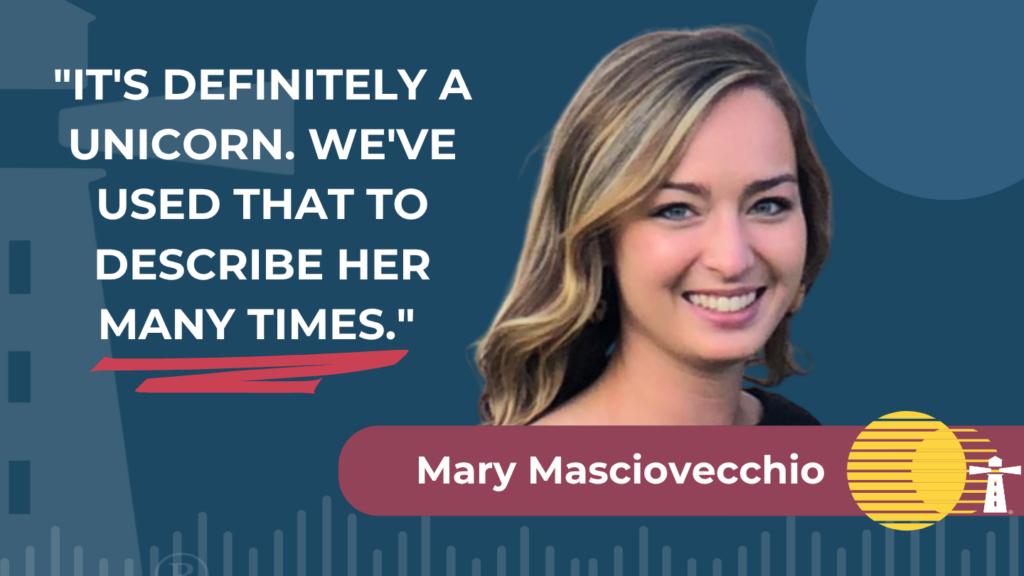
“It’s definitely a unicorn. We’ve used that to describe her many times.” [00:05:50]
“There’s always something new and different, but that’s what keeps it exciting.” [00:15:55]
“We’re relentless in helping students access spoken language and communication.” [00:06:18]
“If we’re asking our students to be lifelong learners, our staff are gonna be lifelong learners too.” [00:11:30]
“What can we do for our students within their resident district?” [00:19:06]
Full Podcast Transctipt
Lighthouse Therapy (00:01.588)
Hello everyone and welcome to the brighter together podcast. My name is Janet Courtney and my special guest today is Mary Masi Avecio. Mary is the director of special education at Barian Springs public schools in Barian Springs, Michigan. Mary, thank you for joining me on the show today.
Mary Masciovecchio (00:20.056)
Thank you for having me.
Lighthouse Therapy (00:21.748)
So Mary, tell us a little bit about how you became or your career path to become the director of special education at Berrien Springs. And then tell us a little bit, I know I’ve talked to a couple of other people at Berrien Springs, but I would love to hear Berrien Springs from your perspective.
Mary Masciovecchio (00:37.964)
Yeah. So I originally came to Barian Springs as a teacher in their Deaf and Hard of Hearing program. One of the unique things we have that we serve as Barian and CAS, our neighboring county, is we have an auditory oral Deaf and Hard of Hearing program. So I came in as a preschool teacher when I moved to the west side of Michigan and I was in the classroom for a couple of years and then earned my administrator’s certificate and kind of moved up into more administrative roles. This is my fifth school year, I think, as special education director.
Lighthouse Therapy (00:43.775)
Mmm.
Mary Masciovecchio (01:07.888)
And like you had said, you talked to some other people from our district. We have a pretty unique district, little under 2,000 students on campus. And I say on campus because we literally are on a campus. All of our buildings are within walking distance, which is really nice when the weather gets warmer.
Lighthouse Therapy (01:23.463)
nice.
Mm-hmm.
Mary Masciovecchio (01:27.468)
What we also have that you don’t see or doesn’t meet the eye initially is all of our virtual and alternative education programs. So we have a couple on campus, but mainly throughout the state of Michigan, we have 28 centers under a couple of different umbrellas or names that provide virtual asynchronous.
sequential learning to students that qualify for alternative education programs in which a traditional setting just doesn’t really meet their needs. And so that is a really unique space that we offer for students. In terms of special education on campus, very proud of the DHH program that we have. have two educational audiologists that work full time in a hearing center.
It’s free of charge for all students, birth to in Michigan, 26, that they can come and get diagnostic hearing evaluations. We can do brainstem response for medically fragile students or students that can’t participate in play audiometry. It really, it helps with the followups for failed hearing screenings. You know, the health department will do their screenings, but they don’t always, parents don’t always have the opportunity to follow up with ENTs and audiologists and things like that.
Lighthouse Therapy (02:28.234)
Mm-hmm.
Mary Masciovecchio (02:41.232)
So our hearing center is a blessing to the community. We do Barian and CAS and then our center-based DHH program right now is about preschool to fifth grade. We also have a provider that services our early on or first steps, know, wherever you are, it’s called a little bit different, but that’s a unique thing to our district. It’s been here for about 60 years. So it’s been a longstanding pillar for the community, for the county.
Lighthouse Therapy (02:52.979)
Okay.
Mary Masciovecchio (03:10.176)
And it’s a low incidence disability area. So it’s definitely something that not every district encounters, but when they do, we’re here to help. Special education wise, we have a couple other programs on campus that are a little unique. We have a preschool for students with severe language impairments. So children ages three to six that really, know, communication, articulation, speech and language is a severe impairment for them.
Lighthouse Therapy (03:12.584)
Yes, it is.
Mary Masciovecchio (03:39.266)
The teacher is a certified SLP and a certified teacher. You don’t want to be Yes, professional students. And so we’re able to provide that. It’s a county program. So again, we’re bringing in kids from all over the county and providing top-notch services to help get them, close that gap and prepare them for kindergarten in their resident districts, their least restrictive environment. So on campus, we have some unique stuff, but.
Lighthouse Therapy (03:43.003)
wow, good for her. Wow. Yeah. Yeah.
Mary Masciovecchio (04:05.856)
off campus with our alternative education programs, I think is really where we can innovate and do more and more for students.
Lighthouse Therapy (04:10.954)
Mm-hmm. Yeah. Yeah. I don’t know if you know this about me, but at one point in my career, I was an SLP at Jackson, Jackson Public Schools, and they had had a SLP that had been in their deaf and hearing, a hard of hearing program for years and years and years. And then she passed away suddenly. And then I had, I had come on. Now this was when my youngest was a baby. So we’re talking 23, 24 years ago.
Mary Masciovecchio (04:23.469)
Okay.
Lighthouse Therapy (04:39.402)
But they did that for a couple of years. And that’s when cochlear implants were just coming into the scene and U of was doing really, really. And they still are. know they still still do cochlear implants, but they were one of the ones, the pioneers in the cochlear implant world. And just it was an amazing time to be in that position and to be doing what I was doing. I learned so much about about speech and about, you know.
And I was it for Jackson as far as the Hearing Impaired Program. And I took some extra sign language classes and use it and lose it. And I’ve lost most of it. But it was an amazing time in my career and a unique opportunity for me to be able to do that as well. So you’re talking in a place that’s very close to my heart. So love that. And my first year, actually, when I went to college, very first time was to be
Mary Masciovecchio (05:29.292)
Yes.
Lighthouse Therapy (05:34.568)
I was so I didn’t know either one. But I thought I’d be a teacher of the deaf and hearing handicapped. And then I ended up going into speech later. I love that you have an SLP that’s got both. That’s incredible. So that’s like a unicorn with wings or something. I don’t know.
Mary Masciovecchio (05:45.932)
Yes.
Mary Masciovecchio (05:50.804)
It is definitely a unicorn. We’ve used that to describe her many times. So, it’s, it’s a really remarkable program. there aren’t many like it in the state. I mean, you’ll find many early childhood special ed programs and you’ll find, you know, some preschool programs with service providers, but to have both, you know, so embedded and immersed with each other, the classroom experience with, you know, the routines and the classroom management and the early literacy skills, but also parallel.
alongside with the speech and language piece and really just being relentless in helping students access spoken language and communication and all of that good stuff.
Lighthouse Therapy (06:25.362)
Mm-hmm.
Lighthouse Therapy (06:32.06)
Yeah. So are you finding that there are some people that hear about you when they have a child that has those needs that will move to that area so that they can access those services?
Mary Masciovecchio (06:43.566)
We’ve had, I can’t think of any that have moved for the services. We have had some that are saying, hey, you know, we’re looking at houses. We might move here, we might move there. And we’ll say, awesome, like, glad you’re looking, just so you know, this is a county program available to students in Bearing County. And then they’ll say, oh, we’re not leaving. We’re not going anywhere then, you know? And we’ve had some families that…
Lighthouse Therapy (07:01.78)
Yeah.
Mary Masciovecchio (07:04.843)
you know, we’ll have the third of three siblings. And so they all come through the program and the parents are aware. And our early on team is really helpful in advocating for students coming out of early on if they need placement. And then our local districts, we, you know, release out to SLPs about this time of year, like send us your referrals. We get to know these kids. want to help.
the districts and so we’ve got really good relationships with our local districts and the early on team to be able to, we always are functioning at capacity with State Max in that classroom and so I haven’t had any families move in. If I do, I’ll let you know that would be phenomenal but we have had some people say, I will not be moving because I need to stay within the county because I want my child to continue with the program.
Lighthouse Therapy (07:42.854)
No. Yeah.
Nah.
Lighthouse Therapy (07:54.003)
Yeah, absolutely. Absolutely. And what a blessing it is to the to those kids in your county that have those services. And and I’m glad we’re talking about it because now more we’ll hear about it. So so it’s something that you’ve had. It’s you. It was a part of what you walked into right when you took the job. You said it’s been there for like 60 years. So what you said?
Mary Masciovecchio (08:11.864)
Yes.
Our deaf and hard of hearing programs been here for about 60 years. The SLA preschool has probably only been here for about 10 years. So that one’s not as kind of long standing. We’ve had some early childhood programming. Obviously we’ve got speech and language therapists that service like our three to five year olds, but the classroom type structure is probably within the past 10 years. But the DHH program has been around for about 60 years.
Lighthouse Therapy (08:21.202)
Okay.
Mm-hmm.
Mary Masciovecchio (08:39.636)
it came out of the rubella epidemic and the hearing loss that came out of that. And so they were training a lot of general education teachers initially to be deaf and hard of hearing teachers because there was just an influx of need. And so the programs evolved, it used to go all the way through high school, but…
as early identification and early intervention and all of those pieces come about, students are exiting earlier and earlier. And so we’ve kind of consolidated back down. We no longer have a high school program. I phased out the middle school program. And so really about fifth grade is the top that we go. But again, least restrictive environment. Once students are able to access the curriculum, with supports that are portable, like the portability factor.
Lighthouse Therapy (09:18.314)
Yeah.
Mary Masciovecchio (09:24.746)
What are we providing here? Can it be provided in their resident district at their neighborhoods with their siblings and you know, everything so we have a consultant that services students in their resident districts once they’re Able to be in their districts. or you know many students Never even step foot in our center-based program. They’re identified. They receive early intervention They can receive speech therapy from their local slps, and they’re keeping right up with peers technology Like you said with cochlear implants coming about
Lighthouse Therapy (09:28.318)
Right.
Mm-hmm. Mm-hmm.
Lighthouse Therapy (09:53.651)
Yeah.
Mary Masciovecchio (09:55.214)
Michigan has EDDI, which is the Early Detection Hearing and Intervention. And so they have metrics. They want students identified by three months, amplified by six months, intervention by nine. And so really with the newborn hearing screenings and different pieces like that, students are able to get access to sound so much sooner. Yes, yes, the critical stage of development, yes.
Lighthouse Therapy (10:16.222)
Which is critical, which is absolutely critical. Yeah, for speech development, speech and language development. Yeah, preaching to the choir. I get it. I totally get it. Yeah, but it’s amazing too to have that. So let’s shift just a little bit because you said 7,000 students about, I think that’s what we had talked about. And you do special education direction for about a thousand of those 7,000 kids. So holy moly, how do you do that?
Mary Masciovecchio (10:24.366)
Yeah.
Mary Masciovecchio (10:45.004)
Yeah, I have a really great team. Definitely for starters, a really great team. So I oversee some coordinators here on campus that assist with our on campus programs. I work very closely with some great coordinators that oversee some of our off campus alternative education programs. And they’re really the ones day to day operations, boots on the ground working on.
their operating procedures and their audits and making sure that staff are trained and have the resources they need. We were very lucky in this district to have a lot of resources, both at the local level and at the county level. And so we’re able to get trainings and professional developments and pieces like that, because if we’re asking our students to be lifelong learners, our staff are gonna be lifelong learners too. So really looking at, you know,
Lighthouse Therapy (11:28.223)
Mm-hmm.
Mary Masciovecchio (11:30.7)
we’ve started work on the profile of a Shamrock professional and what it means to be a professional in this district and to really hold professional learning and lifelong learning to a high standard. And really looking at the research to move the needle for our students.
Lighthouse Therapy (11:48.541)
Very cool, very cool. you’ve got, do you go, I mean, do you leave Berrien Springs and go around the mitten, so to speak? Is that part of your job? Okay.
Mary Masciovecchio (11:57.9)
Yeah, as necessary. I think I have on my calendar coming up, I have to pick up some braille equipment from a center that we have in Howard City, Michigan. So it’s about two hours north of here. I’ll be at a conference in northern Michigan. So I’ll stop and grab the braille equipment. So as needed.
Lighthouse Therapy (12:10.314)
Hmm.
Mary Masciovecchio (12:17.682)
We do quite a bit of front loading for professional development every fall where we’re actually able for the one time a year to bring everyone together. And so we bring all of each of kind of our sects. So we have link learning, which will all come together and do professional development together in August. Success Virtual Learning Centers of Michigan is kind of another branch of our family tree and they’ll come together and bring their staff.
Lighthouse Therapy (12:27.018)
Gotcha. Okay.
Mary Masciovecchio (12:42.466)
But with 28 centers spread across the state, really I have to hand it over to those coordinators and the regional directors and center directors. They know their programs inside and out. And so really I’m a resource I support, but they’re the ones that are doing the day to day.
Lighthouse Therapy (12:57.898)
And you guys, Barian Springs is in Southwest Michigan, correct?
Mary Masciovecchio (13:01.996)
Yeah. So Southwest Michigan, it’s kind of the fruit belt. There’s a lot of farms. have very sandy soil. the, the fruit, the fruit farms are abundant. We also have Andrew’s university, which I think, Mr. Spenner had talked about when you, when you had did the podcast with him, but it’s an international university here in Barian Springs. So for being a small town, it really brings in a lot of diverse, languages and families and cultures. So it’s very prominent here in our, our local on campus district.
We have about 40 different languages represented. have ESL teachers in every single building. We have an immersion model for our English language programs, but yeah, EL teacher in every building is almost unheard of in most districts, but we’ve really tried to make sure we can personalize that learning experience for all.
Lighthouse Therapy (13:48.724)
Mm-hmm.
Lighthouse Therapy (13:53.449)
You guys are the diamond in the rough that just has continued to blossom and become this amazing district. Not that other districts aren’t doing a good job. Please don’t hear that to me if you’re from me, if you’re listening, but just the things that you’ve done and the way that that the programs have grown and just it’s just an incredibly unique situation. But so.
I love what you guys do. I just absolutely love what you guys do. It’s such a blessing to the community, a blessing to Michigan, a blessing to those kids that would not have graduated from high school without you. And they’re graduating, my understanding is correct with the, they don’t get a GED, they go out with a degree, correct?
Mary Masciovecchio (14:34.734)
Yes, yep, they’re earning credits towards their Michigan Merit Curriculum Diploma and they earn a diploma.
We have some adult ed programs that will do GEDs, but the 7,000 students that we’re counting in our membership are all on a diploma earning. We’ve got some students that are a certificate of completion with a seal of employability in some of our cognitive impaired type classrooms, but we still focus on vocational and that seal of employability to really give them the skills necessary to be functioning members of community and to continue to give back to the community that shaped them.
Lighthouse Therapy (14:55.967)
Great.
Mm-hmm.
Lighthouse Therapy (15:11.016)
Yeah, someone said to me on a podcast, we don’t want to graduate them to the couch. I was like, that’s so true. I never thought about it that way, but that’s so true. So.
Mary Masciovecchio (15:15.202)
Yes.
Mary Masciovecchio (15:19.35)
Yeah. And there’s so many opportunities, you know, with CTE programs. This County has close to 30 CTE programs. think we have five here in the district, just locally on campus, construction trades, different pieces where we’re really trying to give them the hands-on experience. So that when they do graduate, you know, they’re prepared to enter that workforce. Graduation, the day after graduation looks different for every student. But, you know, we can prepare them while we have them.
Lighthouse Therapy (15:43.626)
Right.
Awesome, awesome. So what would you say is one of your biggest challenges in your job right now?
Mary Masciovecchio (15:55.606)
I think just the diverse needs of students. Every week, every month, we’re met with something new. And so it’s continually learning of what now, what next. There’s years where five kids show up that all have feeding tubes, and we need nurse training, and we need staff training, and now we’re, there’s always something new and different, but that’s what keeps it exciting.
you know, keeps it allows us to continue to innovate to meet the unique needs of students. And so we’re always talking about innovation in the space of like alternative education and how can we innovate with technology and AI and all of those pieces. And then special ed kind of the other side of it where it’s, you know, we’re always forced to innovate because we’ve got such diverse, unique students in front of us that we’re individualizing for. And so I think it’s always, you know, looking at what else can we do? What more can
Lighthouse Therapy (16:20.861)
Right.
Lighthouse Therapy (16:43.412)
Mm-hmm. Yeah.
Mary Masciovecchio (16:50.576)
And we do.
Lighthouse Therapy (16:51.594)
Mm Yeah. Yeah. Special education has always been individualized education. And I’ve seen a trend that is a beautiful trend where all education has started to become individualized, especially with the career tech technical education that you were talking about and and all of these programs that are helping kids transition into what is the next thing in some. And it’s not just the special needs kids. It’s it’s let’s get the kids ready.
that are going to graduate and go to college. Let’s get the kids ready that are going to graduate and go work in the steel mill. Let’s go. Let’s get them ready that are going to go graduate and work in an office or whatever it happens to be. And it’s just it’s so important that and it’s a it’s a great trend. I love that for kids because that was not something I graduated 40 years ago. Wasn’t there. I’m sure they had something but it wasn’t like it is today for sure. So.
Mary Masciovecchio (17:47.191)
Yeah.
Lighthouse Therapy (17:48.127)
Yeah, that’s amazing. OK, so one more question and you we know and you’ve heard probably heard me say this question, but if you could fix one thing in your world can’t be money, right? One thing in your world that you have to deal with pretty regularly and you would love to never have to deal with it ever again. What would that one thing be?
Mary Masciovecchio (18:11.438)
If it can’t be money and resources, I think time. More time with students, more time to train and develop staff, more time to innovate. It’s never ending and it never should end. But I really just think we only have so many minutes in a day to accomplish so much. And so if we just had more time with students, with staff, for various pieces, but there’s always more that can be done.
Lighthouse Therapy (18:14.376)
Okay, that’s a good one.
Mm-hmm.
Mm-hmm.
Lighthouse Therapy (18:31.934)
Yeah.
Mary Masciovecchio (18:39.51)
And I think, we have a lot of really unique things in the district, but there’s still more, you know, there’s still, you know, what else could we do in terms of early childhood education? What other, low incidence programs could be offered to students within our district? So we’re not, you know, sending out to other districts and our, our County is unique and we’ve got a lot of County programs and we’re able to, you know, share resources and things like that. But I always look at, know, what can we do for our students within their resident district? And so.
Lighthouse Therapy (18:44.575)
Yeah.
Mary Masciovecchio (19:06.54)
more time or resources or staff or things like that, just to be able to expand what we’ve already started.
Lighthouse Therapy (19:15.56)
Yeah, I love that because, you know, it’s very clear to me that you’re never going to be done. You’re never going to be in a place where you feel like you’re done, you know, and that’s education. We know that, but there are people that get comfortable, you know, it’s like, okay, we figured this out. So we’re good, right? No, no, that’s not the, I mean, and even as myself being an entrepreneur and working in teletherapy since 2011, it’s constantly evolving. There’s
There’s new things happening. AI is going to change this landscape immensely. And we’re working to be prepared for it so that we can support schools even more. You know, finding ways to partner and be a resource that is a positive thing for schools is the reason that Lighthouse exists, you know. So so it’s it’s just always. And that’s the same thing here. You know, it’s like what new challenge, what new thing is going to happen, what new thing is. And sometimes we go, OK, let’s figure it out.
Hahaha!
Mary Masciovecchio (20:13.302)
Am I gonna seek out the next challenge or will the next challenge find me?
Lighthouse Therapy (20:16.97)
yeah, exactly. And most of the time they come and find me. Although I’ll tell you, even this podcast, when we started this podcast, this is, we’ve been talking about it for a couple of years before we actually did it because we were like, I’ve always, I’m of the mindset that, you know, we are, it’s brighter together because we’re brighter together. You know, it’s brighter together because talking to educators and talking to leaders in education and getting the stories out there, the positive stories out there are so important.
And, but it’s a challenge to do something like this. It’s a challenge to make sure that I have time set in my schedule. We hired a specific top podcast producer. had an outside agency helping us with it for a while. And just this last month and God bless them. did an amazing job, but we took it in house. was cheaper to do it in house. So we took it in house. So we hired, we had hired a producer and he has now stepped into that role and is doing it. And you know, it’s just, you just, you just keep doing.
We just keep doing it.
Mary Masciovecchio (21:15.286)
Yeah. And you think back to five years ago when you almost never could have imagined that you’d be where you are today. so some of the problems of five years ago versus the ones we have now, how far we’ve come, how much we’ve innovated and grown and learned in that process is huge.
Lighthouse Therapy (21:21.695)
Yeah.
Lighthouse Therapy (21:31.452)
Absolutely, absolutely. that’s that’s how that’s how it should be. Right. We know that. And it’s what makes you an amazing leader. And it’s what helps to grow your your business and your and your service. Because we’re servants, you know, or you and I have a servant heart. We want to serve the kids and we want to serve the family. So and that’s what we do. We just keep doing it. So so, Mary, where do people go if they want to find Barian Springs and maybe even ask you a question?
Mary Masciovecchio (22:01.282)
Yeah. So home with the shamrocks.org we are shamrocks are our mascot. So home with the shamrocks.org is going to be our district website. They can contact us through there and you know, whether it be our office, athletics, whatever it might be. they can kind of direct those inquiries to the right person. we have a Facebook account, each of our buildings has an account, things like that. But I think the best place to go is probably our, just our website.
Lighthouse Therapy (22:26.64)
Awesome. Well, Mary, it has been an absolute blessing and pleasure to have you on. So thank you for giving us your time and sharing your passion with us. I appreciate it.
Mary Masciovecchio (22:38.136)
Thank you for having me.
Lighthouse Therapy (22:40.715)
All right, there we go.