

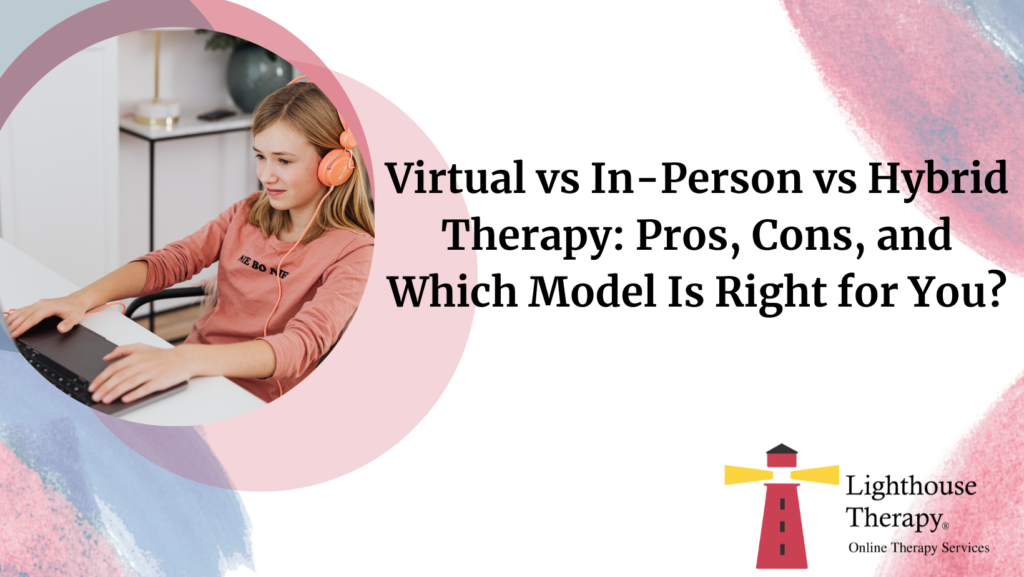
Over the past several years, therapy delivery has shifted in meaningful ways. What was once primarily an in-person profession now includes fully virtual and hybrid options across schools and healthcare settings. As a result, many clinicians are asking an important question: should I choose virtual, in-person, or hybrid therapy? Understanding the pros, challenges, and long-term career implications of each model can help you decide which path fits your work style, energy, and professional goals.
What Is Virtual Therapy?
Virtual therapy, often called teletherapy, is therapy delivered through secure video platforms rather than in a physical room. Instead of sitting across from a student at a small table in a school building, you’re connecting through a laptop or tablet in real time. Sessions still follow IEP goals and therapy techniques are still evidence-based. The difference is the medium, not the clinical skill.
In practice, teletherapy typically involves live video sessions, digital materials, screen sharing, interactive activities, and consistent collaboration with on-site staff when needed. For school-based clinicians, that often means working with a facilitator in the building who helps manage transitions, behavior support, or materials. Meanwhile, in healthcare settings, virtual therapy may take place directly with patients at home.
Most commonly, virtual therapy is used in K–12 schools, especially in districts experiencing staffing shortages. It’s also widely used in outpatient clinics, early intervention programs, and private practices that serve clients across geographic regions. In rural areas, in particular, teletherapy has expanded access to services that might otherwise be unavailable.
So why has virtual therapy grown so quickly? First, access. Schools and healthcare organizations can connect students and patients with licensed clinicians regardless of location. Second, flexibility. Clinicians can often design more structured schedules and reduce commute time. And third, sustainability. For many therapists, remote roles offer a way to stay in the profession long term without the physical and logistical demands of full-time on-site work.
In other words, virtual therapy did not replace in-person care. Instead, it expanded what is possible.
What Is In-Person Therapy?
In-person therapy is the traditional model most clinicians trained for. It takes place inside school buildings, clinics, hospitals, or early intervention centers. You walk into a therapy room. You greet students in the hallway. You collaborate face to face with teachers, administrators, and related service providers. The environment is physical, immediate, and often fast-paced.
In school-based settings, in-person therapy typically includes pull-out sessions, classroom-based support, IEP meetings, and real-time problem solving with staff. In clinical settings, it may involve hands-on assessment, treatment planning, caregiver education, and interdisciplinary teamwork. The rhythm of the day is shaped by bell schedules, room availability, and the energy of the building itself.
One of the biggest strengths of in-person roles is collaboration. Because everyone is physically present, conversations happen organically. You can pop into a classroom. You can debrief quickly after a challenging session. You can observe students in natural contexts without scheduling a separate virtual observation. That immediacy can make communication feel smoother and more connected.
There is also built-in structure. The school day starts and ends at predictable times. Meetings happen in designated spaces. Materials are physically available. For some clinicians, that structure provides clarity and routine that supports focus and efficiency.
Even with the rise of teletherapy and hybrid options, many clinicians still prefer on-site roles. For some, the energy of a school building feels motivating. For others, hands-on interaction and in-the-moment collaboration are deeply fulfilling. Being physically present can foster stronger relationships and a tangible sense of belonging within a team.
In short, in-person therapy remains a powerful and meaningful model. While other options have expanded the field, traditional on-site roles continue to offer connection, community, and daily engagement that many clinicians value.
What Is a Hybrid Therapy Model?
A hybrid therapy model blends virtual and in-person service delivery within the same role. Instead of choosing one setting exclusively, clinicians divide their time between on-site work and remote sessions. The result is a flexible structure that combines face-to-face interaction with the convenience of teletherapy.
At its core, hybrid therapy is about balance. You might provide in-person therapy at a school two days per week and conduct virtual sessions from home on the remaining days. Or you might see certain students on-site while supporting others virtually, depending on needs, staffing, or scheduling logistics. In some healthcare settings, hybrid models include in-clinic evaluations followed by virtual follow-up sessions.
There are several common hybrid structures. Some roles are split by day, meaning clinicians are fully remote on specific days and fully on-site on others. Others are split by caseload, with certain campuses or student groups assigned virtually. In some cases, hybrid roles evolve seasonally, shifting based on staffing patterns, maternity leaves, or district needs.
So why are hybrid roles growing?
First, flexibility has become a priority for many clinicians. Hybrid positions allow therapists to maintain in-person collaboration while reducing daily commute demands. Second, districts and healthcare organizations are trying to solve staffing shortages creatively. A blended model can expand coverage without requiring full relocation or travel. And third, many clinicians are discovering that they do not want an all-or-nothing choice. They want both connection and autonomy.
In many ways, hybrid therapy reflects how the profession is evolving. It acknowledges that high-quality care can happen in multiple formats. More importantly, it gives clinicians room to design careers that feel sustainable over time.
Virtual vs In-Person vs Hybrid Therapy: Key Differences
Now that we’ve defined each model, the next step is understanding how they truly differ in daily practice. While virtual, in-person, and hybrid therapy all rely on strong clinical skills and evidence-based intervention, the experience of doing the job can feel very different depending on the setting. In many cases, the biggest contrasts are not about therapy techniques at all. Instead, they center on structure, collaboration, workload, and energy demands.
Flexibility and Schedule Control
Flexibility is often the first factor clinicians consider. Virtual therapy generally offers the most control over daily scheduling. Without a commute and fewer building-based interruptions, many clinicians can organize their day into focused blocks of sessions and documentation time. Transitions are predictable, and it is often easier to protect short windows for notes or preparation between students.
In contrast, in-person roles are shaped by the rhythm of the school or clinical setting. Bell schedules, room availability, staff meetings, and unexpected student needs all influence the flow of the day. This built-in structure can feel grounding and collaborative, yet it naturally limits personal schedule control. Your day moves with the system around you.
Hybrid roles typically fall somewhere in the middle. Remote days may allow for greater autonomy and concentrated work time, while on-site days follow the building’s schedule. For many clinicians, this blend offers both independence and stability, which can feel like a sustainable compromise.
Collaboration and Team Integration
Collaboration also looks different across models. In-person therapy provides immediate access to teachers, administrators, and other related service providers. Conversations happen organically. You can observe a student in a classroom without scheduling a separate virtual observation. You can problem-solve in real time after a session. That physical proximity often strengthens team integration and relationship-building.
Virtual therapy, however, relies on intentional communication systems. Meetings are scheduled rather than spontaneous. Email and digital platforms play a larger role. When leadership structures are clear and consistent, remote collaboration can be highly effective and organized. Still, it requires more planning and proactive outreach to maintain strong connections.
Hybrid roles combine these approaches. On-site days create opportunities for face-to-face interaction, while remote days encourage focused, structured communication. For clinicians who value both collaboration and independent work, this combination can feel balanced and energizing.
Caseload Structure and Workload
Workload and caseload structure can also vary meaningfully. In virtual roles, schedules are often tightly organized, with sessions arranged back-to-back and documentation systems fully digital. This efficiency can streamline workflow, yet it may also increase screen time and reduce natural breaks throughout the day.
In-person roles often involve more variability. Students may be absent. Meetings may shift unexpectedly. You might be asked to consult in a classroom or assist during a moment of need. While this flexibility can make the day dynamic and engaging, it can also introduce unpredictability.
Hybrid roles require managing both environments effectively. Some days are highly structured and technology-driven, while others involve physical movement and hands-on support. Success in hybrid settings often depends on clear expectations and strong personal organization.
Energy Demands and Burnout Risk
Finally, energy demands differ across each model. Virtual therapy tends to reduce physical fatigue and sensory overload. There is no commute, and the work environment can be quieter and more controlled. At the same time, extended screen exposure and limited physical movement can create a different type of exhaustion.
In-person therapy requires physical stamina and sensory tolerance. Busy hallways, transitions, and constant interpersonal interaction demand energy throughout the day. For some clinicians, that pace feels motivating and socially fulfilling. For others, it can contribute to burnout if support systems are not in place.
Hybrid roles distribute those energy demands. Remote days may provide space for recovery from sensory input, while on-site days help offset potential isolation from fully remote work. In many cases, hybrid structures allow clinicians to recalibrate more easily across the week.
Ultimately, no single model is universally superior. Each comes with trade-offs and strengths. The key is understanding how these differences align with your energy, work style, and long-term career goals.
How Effective Is Virtual Therapy Compared to In-Person?
One of the most common questions clinicians ask is simple and important: is virtual therapy as effective as in-person therapy? It is a fair question. After all, changing the delivery model can feel significant, especially in school-based and healthcare settings where progress and compliance matter.
The encouraging news is that a growing body of research suggests that virtual therapy can be just as effective as in-person services for many populations and goals. Studies across speech-language pathology, counseling, occupational therapy, and mental health services have found comparable outcomes when sessions are delivered through secure telehealth platforms. In other words, when services are structured well and implemented intentionally, the medium does not automatically reduce quality. That said, effectiveness is not just about research headlines. It depends on implementation.
First, strong virtual therapy requires clear goals, structured sessions, and appropriate technology. When clinicians are trained in telepractice strategies and supported by reliable platforms, outcomes tend to mirror in-person results. Second, collaboration still plays a role. In school settings, for example, having a consistent on-site facilitator can significantly support engagement and carryover. When communication between the remote clinician and school team is clear, students often progress just as they would in person.
However, there are situations where one model may be more appropriate than another. For students who require extensive hands-on prompting, significant physical support, or highly specialized equipment, in-person therapy may offer advantages. Similarly, certain evaluations or assessments may be better conducted face to face, depending on the tools required and the student’s needs.
At the same time, virtual therapy can be especially effective for students who benefit from structured, distraction-controlled environments. It can also increase consistency in districts facing staffing shortages, ensuring that services are delivered regularly rather than delayed due to vacancies.
Hybrid models often bridge these differences. For example, initial evaluations might be conducted in person, followed by virtual sessions for ongoing intervention. Or students who need occasional hands-on support may receive periodic on-site visits combined with remote therapy.
Ultimately, effectiveness is less about the format and more about the quality of implementation. Clear goals, strong communication, and supportive systems matter more than whether a clinician is physically in the room. When those elements are in place, both virtual and in-person therapy can produce meaningful, measurable progress.
Pros and Cons of Each Therapy Model
Every therapy model offers meaningful benefits. At the same time, each comes with trade-offs. Instead of labeling one option as better than the others, it helps to look at the strengths and challenges side by side. That way, you can evaluate what aligns most closely with your personality, workflow preferences, and long-term sustainability.
Virtual Therapy Pros and Challenges
Pros
- Greater flexibility and schedule control
- No daily commute, which saves time and energy
- Reduced sensory overload compared to busy buildings
- Structured session blocks that can improve efficiency
- Ability to serve students or patients across wider geographic areas
- Fully digital documentation systems that streamline workflow
Challenges
- Increased screen time and potential for digital fatigue
- Collaboration requires intentional communication rather than spontaneous interaction
- Can feel isolating without consistent leadership and check-ins
- Requires strong comfort with technology and troubleshooting
- Engagement strategies must be adapted for virtual delivery
Virtual roles often appeal to clinicians who value autonomy and predictable structure. However, they require proactive communication and strong organizational habits to stay connected and effective.
In-Person Therapy Pros and Challenges
Pros
- Immediate, face-to-face collaboration with teachers and staff
- Easier hands-on prompting and physical modeling
- Organic relationship-building within a school or clinic
- Clear daily structure aligned with the building schedule
- Natural opportunities for classroom observation and consultation
Challenges
- Daily commute and travel time
- Higher sensory input and environmental distractions
- Schedule disruptions due to meetings, absences, or room conflicts
- Less flexibility in daily workflow
- Physical fatigue from constant movement and transitions
In-person roles can feel energizing and socially fulfilling. At the same time, they require stamina and adaptability in fast-paced environments.
Hybrid Therapy Pros and Challenges
Pros
- Blend of flexibility and in-person connection
- Reduced commute compared to fully on-site roles
- Opportunity to balance screen time with face-to-face interaction
- Greater adaptability for districts managing staffing needs
- Can support long-term career sustainability through variety
Challenges
- Requires managing two systems effectively
- Clear boundaries and expectations must be established
- Technology must be reliable for seamless transitions
- Organizational demands are higher due to shifting environments
Hybrid roles often attract clinicians who want the best of both worlds. However, success depends on clarity, communication, and thoughtful scheduling.
When comparing these models, the goal is not to find perfection. Instead, it is to determine which trade-offs feel manageable and which benefits feel meaningful in your current season of life.
How to Choose the Right Therapy Model for Your Career
Choosing between virtual, in-person, and hybrid therapy is not simply about logistics. It is a strategic career decision that shapes your daily experience, your energy levels, and your long-term satisfaction in the field. While there is no universally “right” answer, thinking intentionally about your current season of life can bring clarity. Several factors tend to influence this decision more than clinicians initially realize.
Career Stage
Your career stage often plays a meaningful role in what feels supportive. Early-career clinicians frequently benefit from environments where mentorship and spontaneous collaboration are readily available. Being physically present in a school or clinic allows for quick questions, informal learning moments, and daily exposure to team dynamics. That proximity can accelerate growth and confidence during the first several years of practice.
As clinicians move into mid-career stages, priorities often shift. After gaining experience and professional confidence, efficiency and balance may become more important. At this point, virtual or hybrid roles can feel appealing because they allow seasoned clinicians to apply their expertise while gaining more control over scheduling and workflow. For later-career professionals, sustainability often becomes central. Reducing commute demands and managing energy more intentionally can make blended or remote roles especially attractive.
Of course, these patterns are not rigid. What matters most is recognizing what type of environment supports your development and keeps you engaged.
Family and Flexibility Needs
Life outside of work also significantly influences this decision. If you are balancing childcare, caregiving responsibilities, or personal commitments, flexibility may feel essential rather than optional. Virtual roles often eliminate commute time, which can translate into additional hours each week for family or personal needs. Hybrid models provide a similar benefit while still offering some on-site structure.
At the same time, some clinicians value the clear boundary that in-person roles provide. Physically leaving the building at the end of the day can create separation between professional and personal life. Remote work, while flexible, sometimes requires more intentional effort to establish that boundary. Considering how you prefer to structure your time can help determine which model supports your overall well-being.
Personality and Work Style
Personality and preferred work style are equally important. Some clinicians thrive in dynamic environments filled with movement, conversation, and spontaneous interaction. For them, in-person roles provide energy and motivation. The daily rhythm of a school or clinic can feel stimulating and socially fulfilling.
Other clinicians prefer focused, structured environments with fewer interruptions. Virtual therapy often supports this style of work by creating predictable session blocks and minimizing environmental distractions. For those who value autonomy and quiet concentration, remote roles may enhance productivity.
Hybrid models appeal to clinicians who appreciate variety. Alternating between remote and on-site work can prevent monotony while maintaining meaningful collaboration. Reflecting honestly on where you feel most productive and least depleted is a helpful exercise when weighing options.
Long-Term Sustainability
Finally, long-term sustainability should guide your decision. Burnout rarely occurs because of one difficult week. More often, it develops gradually when workload, structure, and support do not align with your needs. Selecting a therapy model that complements your energy and lifestyle is one way to protect your career longevity.
Consider whether you can envision yourself working in this format several years from now. Think about professional growth opportunities, mentorship access, and leadership support within each model. A role that feels manageable and aligned today is more likely to remain fulfilling over time.
Ultimately, choosing between virtual, in-person, and hybrid therapy is about alignment rather than comparison. When your work setting matches your personal style and professional goals, you are better positioned to stay engaged, effective, and confident in your role.
Why Support Systems Matter More Than the Setting
It is easy to focus on the delivery model when evaluating a job. Virtual versus in-person. Remote versus on-site. Hybrid versus traditional. However, over time, most clinicians discover that the setting itself is not what determines satisfaction. The support system behind the role is what truly shapes the experience.
You can be fully remote and feel deeply connected if leadership is accessible and communication is consistent. At the same time, you can be physically in a school building every day and still feel isolated if there is no meaningful support. The environment matters, but the structure around you matters more.
Leadership
Strong leadership sets the tone for any therapy role. Clear expectations, responsive communication, and transparent problem-solving create stability, regardless of the setting. When leadership understands both the clinical realities of therapy and the operational demands of schools or healthcare systems, clinicians feel seen and supported.
Without that clarity, even in-person roles can feel chaotic. A building may be full of people, yet direction may be unclear. Schedules may shift constantly. Caseload expectations may expand without guidance. Physical proximity does not automatically equal professional support.
In contrast, remote roles with strong leadership often feel organized and predictable. Regular check-ins, structured communication channels, and accessible coordinators create connection, even at a distance.
Supervision
Supervision and mentorship are equally critical. Clinicians benefit from having someone to consult with on complex cases, IEP decisions, and ethical questions. Whether you are early in your career or highly experienced, collaboration strengthens clinical decision-making.
In in-person settings, supervision can sometimes be assumed but not clearly defined. You may share a building with other providers yet lack formal mentorship or protected consultation time. Without structured supervision, clinicians can still feel alone in their decision-making.
Virtual and hybrid models, when designed intentionally, often build supervision into the role through scheduled meetings and ongoing consultation. The key is not whether supervision happens face to face or through video. It is whether it happens consistently and meaningfully.
Indirect Time and Documentation Support
Another often overlooked factor is indirect time. Documentation, progress monitoring, collaboration, and preparation require dedicated hours. When roles fail to account for indirect responsibilities, burnout follows quickly.
In-person positions are not immune to this issue. Being on-site does not guarantee protected time for documentation or IEP preparation. In fact, constant interruptions can make it harder to complete paperwork efficiently.
Virtual roles sometimes allow for more structured documentation blocks, but that benefit depends on workload design and expectations. Hybrid roles also require careful planning to ensure indirect tasks are realistic across both settings.
Ultimately, sustainable roles recognize that therapy is more than direct minutes. Support includes acknowledging and protecting the full scope of clinical responsibilities.
The Role of Organizational Culture
Support systems are shaped by organizational culture. When communication is proactive, when expectations are transparent, and when clinicians are treated as professionals rather than placeholders, job satisfaction increases across all models.
At Lighthouse Therapy, we recognize that clinicians thrive in different environments. That is why we offer virtual, hybrid, and in-person roles. However, the delivery model is only part of the equation. What remains consistent is our clinician-first approach, structured supervision, access to leadership, and intentional support for both direct and indirect responsibilities.
In the end, choosing between virtual, in-person, and hybrid therapy is important. Yet the stronger question may be this: who is supporting you within that model? When leadership, supervision, and workload design are aligned, the setting becomes a platform for growth rather than a source of stress.