

What if one powerful question could transform how you lead and support students with special needs? In this compelling episode, Mark Pfaff, Director of Special Education at Tehama County Office of Education, reveals the transformative leadership insight that reshaped his entire approach to serving students in rural California.
Join us as Mark shares his remarkable journey through special education leadership, drawing from his extensive experience navigating resource challenges in rural school districts. With vulnerability and wisdom, he unpacks the critical importance of human connection, trust, and collaborative teamwork in creating meaningful educational experiences for every student.
Listeners will discover:
• How asking the right questions can unlock innovative solutions in special education
• Strategies for building trust and strong team dynamics in resource-constrained environments
• The power of connecting people, passions, and organizational missions
• Practical approaches to supporting diverse student needs with limited resources
• Insights into creating a supportive, family-like professional culture
“Trust is such a big component of everything that we do,” Mark reflects. “When you work so much with people, they become family.”
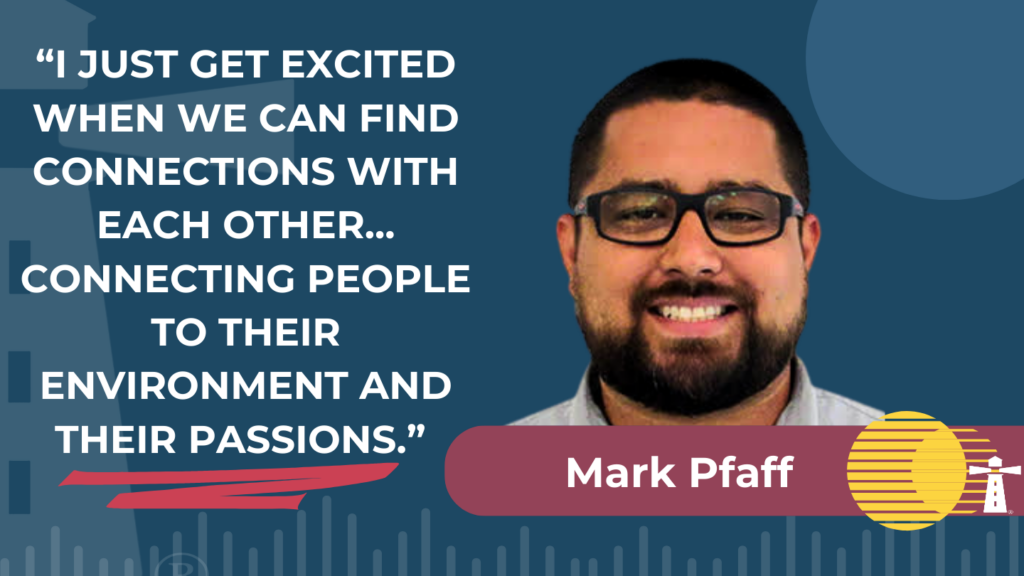
Notable Quote: “I just get excited when we can find connections with each other… connecting people to their environment and their passions.”
Whether you’re a school administrator, special education professional, or passionate about inclusive education, this episode offers invaluable perspectives on leadership, compassion, and systemic change.
Don’t miss this inspiring conversation – subscribe now and join us in reimagining special education support!
FULL PODCAST Transcript
Lighthouse Therapy (00:00.154)
everyone and welcome to the brighter together podcast. My name is Janet Courtney and my special guest today is Mark path. Mark is the director of special education at the excuse me at Tama county office of education which is in red bluff, California. Boy, I fumbled over that one mark.
Mark Pfaff (00:20.546)
lot of different ones. My last name, Tehama. I’d spell it off the cuff, yeah, it’s definitely…
Lighthouse Therapy (00:23.369)
Yeah, Tehama. Yeah, Tehama. Yeah, okay. Awesome. Well, well, even though I flubbed through it, I’m glad you’re here. Thank you for your grace. I appreciate that. So tell our listeners a little bit about what Tehama does and what your role is there.
Mark Pfaff (00:32.536)
Yeah, I appreciate it. No problem.
Mark Pfaff (00:43.438)
Well, we are a county office of education. We also have our SELPA, which is our special education local plan area that works alongside and we support around 14 school districts in Tehama County. It’s quite large. Couldn’t give you the exact number right now, but we’re serving schools that have under 500. Some of them are just K-8.
And they started as one school, one room school houses and they’re a little bigger now, but yeah, yeah, it’s from the big to the small, definitely.
Lighthouse Therapy (01:18.05)
Yeah. I was talking to a listener the other day in Colorado and all these gold mining towns and you know, they had these they did all these little schools and they as as we became more industrialized, right? They consolidated so they have all of these regions. So I’m sure that’s probably a little because you’re in that area, right?
Mark Pfaff (01:39.502)
Yeah, we have some schools that have consolidated into to create bigger school, unified school districts, but we still have some of the smaller ones too.
Lighthouse Therapy (01:48.792)
Yeah, yeah, crazy. Wow. Yeah, I mean, I’m sure you’ve got some really interesting and diverse history in that area as well. Yeah. Fantastic. So so tell me what is where is where is your passion and what what is it that drives you to do what you do?
Mark Pfaff (01:57.75)
Absolutely, absolutely.
Mark Pfaff (02:10.03)
Oh man, I just i just get excited when we can find connections with each other. being able to connect people and even connect people to not just other people and organizations, but like their environment and their passions, right? So being a teacher was one of the things that I wanted to do since I was fifth grade.
I grew up in the military. My parents met in Korea and we lived there for my first five years. And that’s where I started to really want to help people. And then when we got back to the States, there was still some things, but when I was in Germany, I had a teacher, amazing, amazing person. She had a child who…
needed some braces on his feet and she just helped us with so much and it just was a great example. So since then, I just knew I wanted to be a teacher. so finding the ability to that joy of connecting people, connecting people to ideas and each other is just amazing. Yeah, yeah.
Lighthouse Therapy (03:16.633)
Mm-hmm.
Wow.
Lighthouse Therapy (03:32.344)
Awesome, fantastic. We all have that one person, don’t we? And it’s so great because I asked you that question and you just lit up. like what, because, yeah.
Mark Pfaff (03:38.114)
Yeah.
Mark Pfaff (03:43.426)
Yeah, there’s so many ways to go with that. mean, it still is. Yeah.
Lighthouse Therapy (03:48.056)
Right, but you love what you do, right? You love what, so what kinds of things are happening, what are the goals or things that are happening with the Office of Education there that you can share with our listeners?
Mark Pfaff (04:03.212)
Yeah, if you’re not familiar with where Tehama County is, just visually for people, we’re kind at that bend of California when it kind of bends up, right? If you’re just looking at it, right? And we’re right in the middle. We’ve got three hours one way to get to the ocean and we can go to the mountains the other way. So we have such a diverse area, but it’s really rural.
Lighthouse Therapy (04:15.108)
Mm-hmm.
Mark Pfaff (04:32.866)
we can take an hour to get from one end to the other. We’re usually driving back roads. There’s a couple of, there’s one highway that kind of goes straight through, right? And we, so we’re, we have access. We have access to a lot of rural communities. What Tehama County is doing right now is I’m a regional implementation lead for CAPTN, regional implementation lead, REAL, for CAPTN. And CAPTN is an acronym. It’s California Autism Professional.
Training and Information Network. And as a regional implementation lead, in charge of the region. So when counties have separate regions, I’m in regions one and two. So that’s basically the North State. So we’re heading up a lot of training and information dissemination and for parents, for teachers on autism evidence based practices.
Lighthouse Therapy (05:18.478)
Okay.
Mark Pfaff (05:30.478)
So that’s one thing we’re doing. Another one is we’re part of a state initiative around alternative dispute resolution. So we have a team, I have a colleague that is heading that up with a couple other people here. So we are connected with the CELPAs, our current assistant superintendent, Veronica Coats. She is the CELPA president currently. So we are…
Definitely as a rural community, even though we’re way up here and we’re not as dense, we’re still leading a lot of big initiatives.
Lighthouse Therapy (06:09.848)
Very good, very good. That’s awesome.
Mark Pfaff (06:11.83)
Inclusion Initiative, yeah, all that stuff, everything.
Lighthouse Therapy (06:15.588)
Yeah, I love the inclusion model. As an educator of 31 years, I’m an SLP, it’s always nice when you see that the kids are just included and the disability isn’t what defines them. That’s just what they’re dealing with, right? So very, very cool, very cool. So when you are on these committees and doing these things, what kinds of…
of services or professional developments, you guys, you know, what do you offer for those things?
Mark Pfaff (06:54.39)
Yeah, so there’s a lot of training that is developed and brought to districts and counties throughout California. We would definitely be able to help identify for even through CAPTN, be able to identify someone in San Bernardino that could help you that is a cadre member. So we’re throughout California.
ADR, Alternative Abuse Resolution, working with families and school districts to facilitate difficult conversations and knowing that there is some science behind this, right? So using implementation science and improvement science to really guide the practices that we’re doing so it’s sustainable.
Lighthouse Therapy (07:22.383)
Okay.
Lighthouse Therapy (07:36.314)
Mm-hmm.
Lighthouse Therapy (07:45.762)
And is that is that just in your area or is that all over as well?
Mark Pfaff (07:49.582)
It’s all over. It’s all over. just we just are leaders in that piece. We hold leadership roles. So I I hold the leadership role in captain we work with UC Davis mine Institute and in various organizations to really develop over 500 cadre members throughout California to go out and disseminate information train in best evidence-based practices not just practices
but evidence-based practices and also training dispute resolution and helping people find common ground.
Lighthouse Therapy (08:27.588)
Right, yeah, yeah, because we all want the same thing. You know, it doesn’t doesn’t exactly, exactly. Yeah. And and that’s that’s really great. So so if there’s a district, would you say every district is aware of this and that it’s available to them?
Mark Pfaff (08:31.468)
Yeah, we’re just talking different languages, right? Right, right.
Mark Pfaff (08:44.268)
You know, education is an interesting place because although we’re all under that education umbrella, although we all have access to everything each other has mostly, not everybody knows. Not everybody knows. So that is the job of it. If everybody did know, we wouldn’t really need to do all of this. So we’re still getting out there and know, parents are becoming new parents.
Lighthouse Therapy (09:06.126)
Right, right.
Mark Pfaff (09:11.726)
no matter how many times they become a parent, they’re becoming new parents and they need support too. And so there are some limits that schools have and some limits that even support organizations like Far Northern Regional Center, they’re a part of CAPTN. They have seats at the table. Family Resource throughout California, Higher Ed, they all have seats at the table to…
Lighthouse Therapy (09:14.97)
Mm-hmm.
Yeah.
Mark Pfaff (09:40.45)
have a real discussion and work together. So in this region, in the North State from Butte County all the way up to MoDoc, Siskiyou County, that area all the way over to Humboldt Del Norte, I have people, access to people, not I have people, but I have access to people that can really help support districts when they’re struggling with something that they need help with. Yeah.
Lighthouse Therapy (10:06.102)
Awesome. That’s really, really great. Yeah. So, so if I am a school in California and I need some help with something like that, where do I go to find that information?
Mark Pfaff (10:19.486)
man. You so for captain, you can go to you can go to you could just type in say you go on to Google and you just type in Captain Autism. That’ll come up. If you go to captain.ca like California.gov, that’s that’ll take you to the website. That website actually also connects to a lot of the what they call the innovative practices kind of around inclusion. Right. But
Lighthouse Therapy (10:30.074)
Okay.
Mark Pfaff (10:49.228)
It’s more innovative. It’s this thought that we’re creating something that really should be and how to support all people. So there’s connections there. You can go onto our website and it’ll show all the people that we connect with.
Lighthouse Therapy (11:04.878)
Very cool. That’s really, really neat. So what would you say in your job is your biggest challenge then?
Mark Pfaff (11:12.11)
time. There’s so there’s really so much to do out there and really kind of picking and choosing where the focus is going to be. But there’s a huge team here at Tehama County and we support each other. run we do something a little different in Tehama County than some other counties do because some counties are separate from their self us. We are together. There are there are some things that we do like
Lighthouse Therapy (11:12.984)
Yeah.
Lighthouse Therapy (11:27.449)
Yeah.
Lighthouse Therapy (11:37.167)
Mm-hmm.
Mark Pfaff (11:41.048)
We run programs like I run, I’m the director for our TK to eighth grade extensive needs classrooms. So, and these classrooms are classrooms that in our districts, no matter how big or how small, if students aren’t able to access their services at their site or at a site that is a little bigger and has more resources, then the kind of final stop is coming to us.
And we have a smaller setting. have staff who are trained. And then we take that training and pass it on to them. And then students are able to access those things as they need them. And then we have them go back to their districts if that’s kind of what needs to happen. we support all students here. But Tama County does have a big team. And that team works pretty well together.
Lighthouse Therapy (12:34.532)
Mm-hmm.
Mark Pfaff (12:38.634)
When you work so much with people, become family. So that brings on some other nuances that you can’t expect. So yeah.
Lighthouse Therapy (12:41.859)
Yeah.
Lighthouse Therapy (12:48.666)
Yeah, so you guys, you actually have students at your building all year long. Yeah, most I mean, do you follow a typical school calendar is what I’m saying? Yeah, yeah.
Mark Pfaff (12:53.92)
Yeah, Yeah. Well, yeah, we, we, we, yeah. So like the program I run as a director for the TKA program that I run, I also run the, the DHH program that’s here in Tehama County, the deaf or hard of hearing programs that we have in the county. And then, and I also am manager, supervisor for speech therapists to help those smaller schools who don’t have
Lighthouse Therapy (13:11.726)
Yep. Yep. Good.
Mark Pfaff (13:23.886)
enough students or enough funding or enough people to provide the service to the students there that need it. We work with different vendors to get people out there.
Lighthouse Therapy (13:38.668)
Awesome. Awesome. Yeah, that’s, that’s right up my alley. Absolutely. I’m a you know, I’m an SLP too. So yes.
Mark Pfaff (13:43.404)
Yeah, yeah. OK, yeah.
Yeah. SLP. my gosh. You all are, you all are amazing. Amazing. I, have some really great SLPs. We’ve run into some really tight areas because as you know, there is a choice out there for, for people with real skill. They could be in person or they could be virtual and who, if you like being at home and, but you like working and you like doing the work, there’s a choice. Right. So,
Lighthouse Therapy (14:05.146)
Yeah.
Lighthouse Therapy (14:09.241)
Mm-hmm.
Lighthouse Therapy (14:16.313)
Yeah.
Mark Pfaff (14:17.516)
So we’ve, had a couple of retirements here and we’ve had a couple of things, but we had to find people and a lot of them were virtual. And, and some people are really hesitant about virtual, but there’s really not a lot of support saying that one is better than the other. There’s every, there’s always, everybody’s different too, right? So one SLP, whether they’re in person or whether I’ve got a group of them, they’re all going to be different, right? So.
Lighthouse Therapy (14:22.35)
Mm-hmm. Mm-hmm.
Lighthouse Therapy (14:31.738)
All right.
Lighthouse Therapy (14:35.289)
Mm-hmm.
Lighthouse Therapy (14:41.762)
Right? Yeah, and and the most we always say that teletherapy isn’t it isn’t a different therapy. It’s just a different modality, you know, different way to provide those services. And you can get a good SLP, or you could get a bad SLP. And unfortunately, sometimes people equate a poor service or
Mark Pfaff (14:53.506)
Ready,
Mark Pfaff (14:58.978)
Yes.
Lighthouse Therapy (15:06.618)
poor SLP and I’m not disparaging anybody, please don’t hear that from me. But we all have our skill sets and honestly, sometimes people just don’t mesh. There’s times when we say that all the time here, it’s like even if it doesn’t go well at that particular place because you didn’t get along with that person doesn’t mean that you’re doing a bad job, we just need to put you in a place where you can because there are always, and you know.
once a relationship is broken, it’s really hard to repair it. yeah.
Mark Pfaff (15:38.272)
really is that that space of trust and but you know that’s everybody we take experiences and we take the people that we work with and we do categorize them it’s human nature we’re going to categorize things right so we’re going to categorize it as good or bad right now in a lot of different ways you know we have to categorize things whether it’s this or that sometimes a lot of people can work in that gray area i’m a gray area kind of person on some things but on other things not so
Lighthouse Therapy (15:59.513)
Right?
Lighthouse Therapy (16:08.174)
Yeah, yeah, I always tell people I’m like, I get it if you don’t want. I mean, this is this is what I do. You know, this is what I do. So but I always tell people I’m like, if they’re when I when we get a lot of objections, no, I really want in person. I get that. I totally get that. And if I can find you in person, we will find you an in person. But the chances of that, especially which it’s January 27, 2026, it’s the beginning of the second segment. Yeah. Finding an in person is tough. Yeah, yeah.
Mark Pfaff (16:32.738)
Maybe later in March, maybe come back in February.
Lighthouse Therapy (16:35.522)
And that’s probably for the fall. So, you know, and, and, but it’s like, it’s one of those things where it’s like, I can get you a virtual person in seven days, in person, not so much, but it’s like, I would rather, would you rather, this is always my question. Would you rather your kids not have services at all or get a really good virtual therapist in there who, who knows what they’re doing and wants to work.
Mark Pfaff (16:52.588)
No.
Lighthouse Therapy (16:59.854)
You know, it’s rather than then being out of compliance and going, you know, we’ve had we have at Lighthouse, we’ve had schools come to us and they’ve been searching and searching and searching. And then we end up doing comp minutes for like a whole semester. So we’ll do a whole semester of comp while we’re doing a whole semester of direct. And it’s just, you know, we do what we what we have to do when we get there. But it’s just tough. I breaks my heart sometimes that people won’t consider.
Mark Pfaff (16:59.982)
and they’re out there.
Mark Pfaff (17:15.848)
my gosh.
Lighthouse Therapy (17:29.518)
the virtual piece because they only want in person and it’s like, yeah, cause they had a bad experience and I get that if you’ve had a bad experience, but you know, that was that experience, right? It’s like anything else. So yeah. Yeah. But I love what you guys are doing. Sorry. You got me, you got in, you got onto my soap box. Yeah. That’s that’s, that’s my passion. Obviously. Yeah. Yeah. It’s beautiful. Isn’t it? It’s beautiful. Yeah.
Mark Pfaff (17:40.46)
Yeah, exactly.
Mark Pfaff (17:44.974)
Yeah, I know. We’re good. Love it.
Mark Pfaff (17:52.344)
Connecting passions right there. Yeah, it is. It is pretty good.
Lighthouse Therapy (17:57.954)
Yeah. So, so where do people go if they want to specifically Mark find you or have questions? I know people are, I know a lot of people in California are going to be, and I’m assuming a lot of them know, but if you don’t know, and if they want to find out more information, where should they go or just connect with you through, through your website, how’s that work?
Mark Pfaff (18:22.092)
Yeah, so Tehama County SELPA has their own website. Tehama County Department of Ed also has their own website. but if you go to the County Office of Ed website, it will and you go to special education, it will connect you to the SELPA one. The County, the Tehama County SELPA website does have a lot of information that you can go into looking at supports and services.
and understanding what’s out there. Another good idea would be to go on to the CAPTN website. It’s www.captn.ca.gov. That’ll also help get you connected to a lot of links because the internet brings us such a big world, right? And there’s so much in it that people just don’t know about.
Lighthouse Therapy (19:16.046)
Mm-hmm.
Lighthouse Therapy (19:19.418)
Mm-hmm.
Mark Pfaff (19:20.342)
And sometimes when I show this resource to a teacher or a parent that has been doing this for quite a bit of time, they’re like, why haven’t I seen this? Right. And that’s the kind of man, if I knew what I know now, you know, kind of thing. Right. So going on to those websites will start you. I mean, I could list off a bunch of them and I’d have to actually look at the name to make sure I’m listing the right one.
Lighthouse Therapy (19:30.692)
Yeah.
Lighthouse Therapy (19:36.352)
Mm-hmm. Yeah, of course.
Lighthouse Therapy (19:47.139)
No, that’s fine.
Mark Pfaff (19:48.526)
But the California Department of Ed has also has a lot of areas of resources for people to access. If they’ve already gone on that, the ones I talked about with the Tehama County SELPA and CAPTN, those are gonna be the ones that are more specific around special education. Yeah. Yeah. So one more question. If you could just fix one thing.
Lighthouse Therapy (20:09.944)
nice. Yeah. So one more question. If you could just fix one thing, I can’t be money. But if you could just fix one thing in your world, you know, in your world of your job and what you do just miraculously fix it, you never have to worry about it again. What would that one thing be?
Mark Pfaff (20:33.944)
Trust is such a big component of everything that we do. mean, not everything that we do has been seen every single day, right? There’s something new that comes up. mean, we started talking about, you know, before COVID, right? And after COVID, those things, that thing that happened didn’t just happen and everybody just kind of moved on, right? We had to do a lot of stuff.
Lighthouse Therapy (20:34.842)
Mm.
Mark Pfaff (21:03.148)
Right. And that broke a lot of trust, because we had to go through a process of learning too. Right. And no matter how new you are as whether you’re an SLP or whether you’re a teacher or even an administrator, no matter how new you are, you are the expert. Right. And so they went to a lot of experts and experts were like telling them different things. So trust trust is a huge aspect. I, if I could just be like, yeah, just trust each other.
Lighthouse Therapy (21:05.498)
Yeah.
Lighthouse Therapy (21:21.165)
Yeah.
Mark Pfaff (21:32.96)
and actually follow through with it, know, not just blindly. Right, right. Everybody does. It’s reciprocated, right? So yeah.
Lighthouse Therapy (21:34.956)
yeah, well that’s part of trust. That’s part of the trust, yeah. Absolutely. Right? That’s a good one. That’s a really good one, Mark. I love your passion, I love what you guys are doing. I will definitely go and check it out, because it is something that I need in my wheelhouse. We have a lot of contracts in California, and I wanna make sure that, I’m not saying that they don’t already know, but you know, it’s like, hey, if this is something that you don’t know about, then.
we need to make sure that you do, you know, so it was really good. That’s really, really good. So thank you. Thank you for coming on the show, Mark. Thank you for telling us about what you’re doing and, you know, just keep it up. Keep up the good work. It’s, yeah, absolutely. Take care. Okay.
Mark Pfaff (22:04.546)
Yeah, exactly. Yes, absolutely.
Mark Pfaff (22:15.714)
I appreciate you, Tom.
All right.