


Why 50% of Your Teachers Are Leaving (And How to Stop It)
The teacher shortage is real—and it’s happening faster than you think. Half of all teachers leave the profession within their first five years, not because they’re switching schools or subjects, but because they’re abandoning education entirely. So what can leaders do to change this trajectory?
In this episode, we sit down with Sean Cooper, Director of West Georgia GLRS (Georgia Learning Resource Systems), to explore the systemic factors driving teacher attrition and discover practical, proven strategies that actually work to keep your best educators in the classroom.
What You’ll Learn:
Sean shares actionable insights on how to support early-career teachers through their critical first years, the power of “high-leverage practices” that have stood the test of time, and why building a culture of genuine support—not compliance—is your greatest retention tool. Whether you’re leading special education, instructional coaching, or school improvement initiatives, this conversation will give you concrete ways to reverse the exodus of talented teachers.
Key Takeaways:
✓ The real reason teachers leave: It’s not about pay or working conditions—it’s isolation and lack of meaningful support in those crucial first five years
✓ High-leverage practices work because they’re time-tested: These aren’t trendy strategies; they’re proven methods that veteran teachers have relied on for years
✓ Support means stepping back from compliance: When leaders focus on genuine help rather than paperwork and accountability measures, teachers feel empowered to ask for assistance
✓ Permission to ask for help changes everything: New teachers need explicit permission to reach out—this simple shift happens around October/November and transforms their entire experience
✓ You don’t have to know everything: Effective leaders build networks of “really smart people” they can connect teachers with—it’s about access, not expertise
Notable Quotes:
“The statistics are that 50% of teachers in the first five years leave the profession. They don’t change schools, they don’t change subject areas, they sit there and go, ‘I’m going into real estate, I’m going into banking.’ Like they leave the profession.”
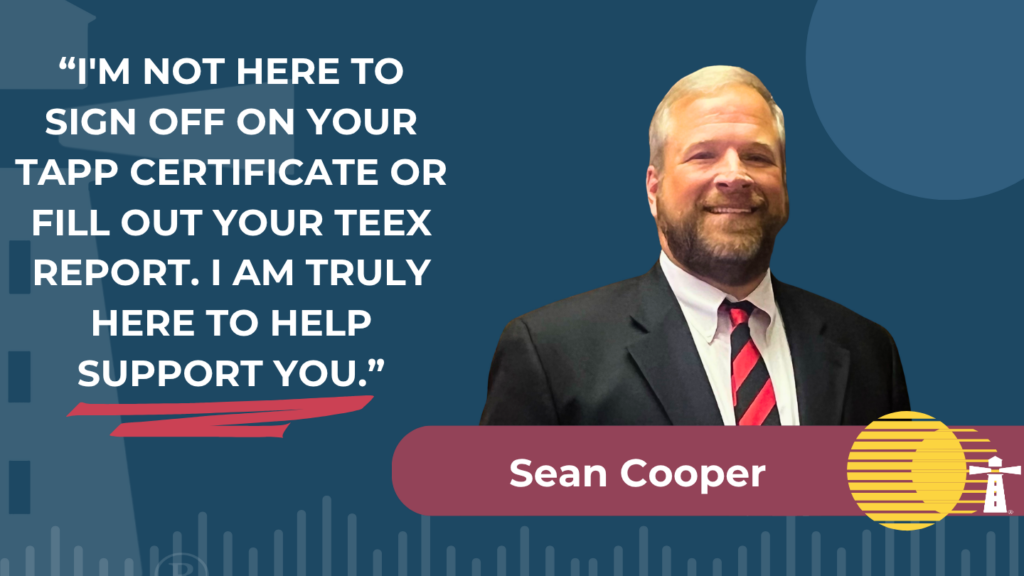
“I’m not here to sign off on your TAPP certificate or fill out your TEEX report. I am truly here to help support you.”
“All of a sudden this light bulb goes off in these teachers around end of October, November. And they start realizing, ‘I can call you and this is okay. And that’s why I’m here—to support you.'”
Ready to learn how to build a support culture that keeps great teachers in your schools? Listen now and subscribe for more conversations with K-12 leaders who are solving education’s toughest challenges.
FULL PODCAST Transcript
Lighthouse Therapy (00:01.67)
Hello everyone and welcome to the brighter together podcast. My name is Janet Courtney and my special guest today is Sean Cooper. Sean is the director of the West Georgia GLRS, which stands for Georgia Learning Resource Systems and that is in Elaville, Georgia. Sean, thanks for being on the show.
Sean Cooper (00:22.126)
Thanks so much for having me, I appreciate it.
Lighthouse Therapy (00:24.688)
So tell us Sean a little bit about your position and what the heck is a GLRS.
Sean Cooper (00:31.918)
When that comes up so often, people, when I say what I do, they’re like, what is that? And so in the state of Georgia, we have broken down the state into 18 regions. And so we have these regional RISA, which is our regional educational service agencies, and they support math, ELA, school improvement, and all those kinds of things. Well, the GLRS in the state of Georgia is through our Georgia Department of Education. They use some of their federal funds.
That comes to special education and we have people like me. They’ve broken down the state of Georgia and these different regions. And so I serve West Georgia GLRS districts 1112 and that is served 17 school districts and two Jeanettes and those are therapeutic centers for students with behavior disorders where they need to be on a separate campus. So two of those programs and 17 school districts.
Lighthouse Therapy (01:27.215)
You’re busy.
Sean Cooper (01:29.134)
I am, I go from the middle of the state. If anybody’s familiar with Georgia, kind of easiest way is I go from I-75, which is the interstate that goes from Atlanta straight down to Florida. have two districts that are on I-75 and I go all the way west to Columbus, Georgia and down to the bottom of Lake Ufala. So I cover half of the state in the middle of the state, that west side. And so a lot of traveling, but a lot of back roads. I don’t deal with that Atlanta traffic. So that’s always a good thing.
Lighthouse Therapy (01:36.028)
Yeah.
Lighthouse Therapy (01:43.536)
Wow, man.
Lighthouse Therapy (01:55.024)
Yeah, that’s a nice thing. That’s a nice thing. I bet you get some nice quiet road sometimes just going and enjoying God’s country. Absolutely. So you were telling me that you have a lot of the rural districts, the smaller, and that’s why you’re covering too before the show you were telling me that. So how many kids are we talking about?
Sean Cooper (02:00.437)
I do.
That’s it.
Sean Cooper (02:13.998)
Right.
So out of my 17 school districts, seven of my districts are one building school districts. So pre-K through 12th grade, all in the same building, all using the same media center, all using the same cafeteria, makes it easy for transportation to figure out the buses. Cause you’re like, if you see a bus, hop on it. It’s all going to the same spot. All the siblings go to the same school. My tiniest district this year has around 220 students pre-K through 12th grade. They have
nine seniors this year. And that sounds hard to believe. And so that’s a public school in one of our counties, and no private schools in that county. So I mean, there’s just very few students in some of these rural areas. Georgia is unique in that years ago, when they kind of split up our counties, they wanted everybody to be one day’s walk from the courthouse. And so that’s kind how they developed their counties. And so we have around 190 school districts.
Lighthouse Therapy (02:48.708)
Wow.
Lighthouse Therapy (02:58.33)
Mm-hmm.
Lighthouse Therapy (03:10.862)
Interesting.
Sean Cooper (03:14.986)
Along with that, we do have some city school districts. After 1960s, they passed a law that they wanted every district to be a county. But if you’re grandfathered in, so we do have some city school districts left that were grandfathered in. And now we have something called state charter systems, which are charter schools and they serve as their own LEA, Local Educational Agency. So lower 200 districts in the state of Georgia. Not like out West where you can drive two miles and be in the same school district.
For me, I can drive two hours and I might go through six or seven of my districts. So smaller square footage, square miles of distance, but just some very, very rural areas that I serve.
Lighthouse Therapy (03:50.117)
Wow.
Lighthouse Therapy (03:59.525)
Yeah, yeah. So what kinds of things do you do for your school districts? Tell me about what you do.
Sean Cooper (04:05.541)
So with GLRS, we have different kind of state priorities. Right now, some of our focuses are on HLPs, these high leverage practices. And we have a great program, which is our TPRP program, which is our Teacher Retention and Promotion program, really trying to work with our new SPED teachers. And so we know that
there’s a teacher shortage across the nation. Here in Georgia, we’re just like everybody else, we have a teacher shortage. And then on top of that, it is, and then when comes to special education, there’s even a bigger shortage. And so one of the things that we’ve set up and we’re in our, think our fifth year coming up is this HLP TPRP. But what we’re doing is that we’re working with the Cedar Center and AIR, which is the American Institute for Research.
Lighthouse Therapy (04:32.72)
Yeah.
Lighthouse Therapy (04:37.084)
Yeah, it’s nationwide, isn’t it? Yeah.
Sean Cooper (05:01.237)
And so we’ve got these high leverage practices for special education. So we’re teaching classes, but also with those teaching classes and with our audience being. Newsfed teachers or, what most of our teachers are is through our, we call our Georgia TAP program. And so that’s that Georgia teacher for Academy for preparation and pedagogy. But that’s basically somebody has a four year degree, not in education. And they’re going through a program. Every state calls it something a little bit different.
Lighthouse Therapy (05:21.585)
Mm-hmm.
Sean Cooper (05:30.498)
But that makes up a large percentage of our new SPED teachers are through that type of TAP program. And so we have six classes throughout the school year. And then on top of that, we provide, we do observations in the classroom as well as coaching. And so we’re supporting them, not just in the teaching, but also in the actual hands-on observations and coaching pieces, watching them in the classroom themselves. And so just a support piece.
Lighthouse Therapy (05:57.597)
So that’s cool because I told you before the show, literally just interviewed Lisa Gilbo, who is a TAP director in Deering, Georgia. But she was talking, I think, general. So you guys are doing the TAP program, for, it specific to special education then?
Sean Cooper (06:16.235)
You’re right, and so I have actually with my region. I have two tap programs because region 11 Muskogee County has their own tap program and then my Reese has a tap program. So we actually end up teaching the class double so we provide all classes in Muskogee, Columbus, GA as well as in Elaville at my or my fiscal agent is my chaplain Risa region. But the big thing is that everything we do with my job is always run special education and so.
Now we’ll meet always at the beginning of year with all the brand new TAP candidates and just kind of give them an overview of special education. Because once again, I tell people nowadays, if you’re teaching, you’re going to have students with disabilities in your classrooms. And so you might not be a special ed teacher, you can be a gen ed teacher, but those kids are still in your classroom. And I want to make sure they understand IEPs, accommodations, you know, and those type of things. So we do kind of an overview with that.
Lighthouse Therapy (07:01.308)
for sure.
Sean Cooper (07:15.137)
And then we actually have a LAP program, is for, once again, that career path where somebody’s been in teaching, maybe they don’t have a leadership degree. And just like our TAP program, we have a Georgia LAP program, which is for those people going into leadership, assistant principal, principal, all the way up to superintendent. And so we do work with those administrators, once again, making sure they understand special education. And so that is a big piece. So in my role,
Lighthouse Therapy (07:39.556)
good. Yeah.
Sean Cooper (07:44.418)
We’ve been focused a lot on special design instruction, something you hear called SDI, co-teaching. And so we provide those supports. We also work with our SPED directors to, you know, looking at things like disproportionality, you know, compliance, know, best practices, you know, looking at them through education. We have this thing called FTE, which is basically a count that we do in the fall and we do in the spring.
And it’s where we kind of look at who are your students, what are the programs that students are receiving. It goes into this massive formula and then the federal government spits out a number and says, here’s how much money your district has earned. And so it’s a very complicated thing. So we work with those districts understanding, because once again, um, in my region, uh, I’ve been in this job I’m going on, started my 11th year and out of my 17 SPED directors and two GNS directors,
one has been here as long as me. So I have a lot of young directors. And so they might have been phenomenal classroom teachers, but when it comes to actually being in that admin role and when it comes to, I hate to say this, but the paperwork, when it comes to actually like, what are those forms that we gotta be filling out? What are those reports we gotta be filling out? That’s a lot of times when we can kind of come in and support them because if you, it’s not that they can’t learn this stuff, it’s just they’ve not been exposed to some of these things that comes to like state reporting and things. And so.
Lighthouse Therapy (08:43.738)
Yeah.
Lighthouse Therapy (08:53.98)
Yeah.
Lighthouse Therapy (08:57.477)
Mm-hmm.
Lighthouse Therapy (09:06.02)
Mm-hmm. Yeah.
Sean Cooper (09:09.901)
we’re working with them. But that is one of the big things that I’m seeing is, you know, the traditional route on how it is across the country. But in Georgia, I have to always give a shout out to the University of West Georgia. They’re one of our universities that has put out a ton of teachers. But besides them, I’m a proud, my wife and I are both in the field of special education. We’re both proud alums of Georgia Southwestern State University and a
a little town called America’s Georgia that nobody’s ever heard of. But I always tell people I’m like, have heard of Jimmy Carter? Well, Jimmy Carter was raised in Sunder County, Plains, Georgia. That’s where my college that my wife and I both went to is in Sunder County. And so nobody can, you know, nobody’s ever heard of America’s. But when I say Jimmy Carter, they’re like, yeah, I knew he lived up like on a peanut farm or something. I’m like, well, that’s where we went to college and that kind of rural area. And they’re doing a phenomenal school of education, but we just don’t.
Lighthouse Therapy (09:40.981)
love that. I love that.
yeah, hmm.
Lighthouse Therapy (10:00.103)
Yeah.
Sean Cooper (10:08.595)
have young people, you we’re just not putting out the teachers. Even, you know, now in my own life, looking back 20 some, you know, 20, 30 years ago when I was in the School of Education, those numbers are going down. And so we’ve really looked at in the state of Georgia, how do we take from brand new teachers in our kind of tap programs? How do we, and especially in my area, which is always in the field of special education, how do we take them
Lighthouse Therapy (10:12.828)
Yeah.
Lighthouse Therapy (10:36.422)
Which is hard. Yeah. Yeah.
Sean Cooper (10:37.788)
It is. And so we have seen that the support piece that not just is great to have professional learning, it’s great to, you know, doing these trainings, but realizing there has to be that relationship. There has to be that follow up. And so that’s where we’re able to go in and do those observations. And I tell teachers all the time, I’m not signing off on your TAP certificate. That’s going to help you become a teacher. I’m here just to support you. I’m not.
doing your in the state of Georgia, every school stay has a different thing, but we have something called our TEEX and it’s our teacher evaluation system. And so I always tell people when I was in the school system as an administrator, I was doing those things. Now, when I go in, I’m not filling out your TEEX report. I am truly here to help support you, to help you, you know, answer questions. And it’s always that first like one or two times I go and observe, they still don’t trust me.
Lighthouse Therapy (11:25.616)
Nice.
Sean Cooper (11:32.941)
Cause they’re still like, are you going to tell what’s going on? But then it’s always amazing. Like all of sudden this light bulb goes off in these teachers and they get to about end of October, again, November. And all of a sudden they start realizing, I can call you and this is okay. And I can’t, that’s why I’m here. I’m here to support you. Yeah. I want to help you get better. And so I’ve just really been proud of that program. you know, really working on those high, those practices, which people always think, this is real detailed stuff. No, it’s.
Lighthouse Therapy (11:33.244)
Right?
Lighthouse Therapy (11:47.856)
Yeah, yeah.
Yeah.
Sean Cooper (12:03.02)
stuff that really what a high leverage practices is are things that just work. These are things that if you go talk to veteran teachers, like, I’ve been doing that for years. Like, yeah, you have. That’s why we call them high leverage practices. Right? These are things that we know they have, they have worked the test of time. have, they really make an impact. And so if you’re a brand new teacher, you don’t know those things. You might, you know, we have a lot of people who the last time they were in a classroom was when they were a student. And so
Lighthouse Therapy (12:07.867)
Right.
Lighthouse Therapy (12:12.834)
Mm-hmm. It’s intuitive, right? Yeah, yeah, exactly.
Sean Cooper (12:32.812)
When you’re coming back in, working on that classroom management, working on, you know, especially in the world of special ed, education, we have these things called IEPs, Individualized Education Plans, which are legal documents. And that’s scary for brand new teachers when I go, hey, when you fill us out, you’re filling out a legal document. Like we are bound to follow this. And they’re like, that sounds really scary. And I’m like, yeah, I don’t want to mess it up. You know, I don’t want to get in trouble. And so having that, you know,
Lighthouse Therapy (12:54.3)
I don’t wanna mess it up. Yeah, don’t let me mess it up.
Sean Cooper (13:01.1)
walking side by side with them and supporting them through that has been a big piece. And so that’s a kind of a foundational thing we have. Also with that, through the area of special education, we have our Georgia CC, which is our Council for Exceptional Children. And this is a national organization, been around since the 1920s, which is amazing to me because, know, some of I was born in 1975. And so it’s easy for me to remember when
special education federal law came about. It was 1975. And so in my lifetime, we’ve had federal law we now call IDEA. And so, but CEC, Council for Exceptional Children, has been around since the 20s trying to make sure that we’re supporting these students who do have our students with disabilities. And so here in Georgia, we have a Georgia CEC chapter. And this summer,
Lighthouse Therapy (13:33.723)
Yep.
Sean Cooper (13:59.337)
we host a conference. It’s a two-day conference. University of West Georgia partners with us and they host it and so we’re so thankful for them. And so had to give them a shout out for that but we have our conference this year. The title of this all means all and so we want all students to you know to be provided that free appropriate public education. We want to make sure all students have access to great instruction. We want to make sure all students we’re looking at
Lighthouse Therapy (14:06.389)
Nice. Yeah.
Sean Cooper (14:28.076)
not only their academic needs, but their social emotional needs. We want to make sure all students are being taken care of. And so I think that’s a big piece too, is having conferences like that where teachers can go and learn, but also where they can build these relationships. always tell people all the time, I don’t know everything. I definitely don’t. You can ask anybody around. sure don’t. But I always tell people, but I know some really smart people. And so when people call me, I’m like, I don’t know the answer, but give me a second.
Lighthouse Therapy (14:41.254)
Yeah.
Lighthouse Therapy (14:44.625)
Yeah.
Lighthouse Therapy (14:53.179)
Yeah. Yeah.
Lighthouse Therapy (14:57.766)
But I got someone for you. Yeah, that’s exactly it. Exactly it, yeah.
Sean Cooper (14:58.06)
I know somebody who, right. And it’s like, you don’t have to constantly reinvent the wheel that there’s smart people. are great people out there who are doing great things. And I always tell people, build those relationships, make those contacts. You know, nowadays it’s so much easier. It used to be when I was starting, you know, we had a Rolodex. Now young people don’t even know what a Rolodex is. That’s like a, a foreign term for them. They’re like, what do you mean? Well, I had it in this little address book. They’re like, what?
Lighthouse Therapy (15:03.952)
Right?
Lighthouse Therapy (15:07.739)
Mm-hmm.
Lighthouse Therapy (15:23.247)
Mm-hmm.
Sean Cooper (15:26.508)
Well, now your phone, you know, I will type in and make contacts with people and I’ll put in, you know, their, where their business line is supposed to be. I’ll go, this person is great in this area. This is my contact that knows about this. They’re doing some great things in this area. And so I, as I meet people, I’m always going, Hey, let me hear what great things are going on. So I can learn from those people. And so I can see, Hey, what worked well, what were some of the barriers that you hit when you’re trying to start this off? So can learn from maybe somebody else’s mistakes and go, Hey, I don’t want to do that.
Okay, I need to, you know, go in this direction. So that’s kind of to me a foundational piece that here in the state of Georgia that we’re doing for our brand new SPED teachers. But with that, what we’re seeing is we have, you know, we’re trying to get great SPED teachers in the classrooms. But the next concern I have and, you know, so my job, my paycheck is through GLRS, through, you know, Georgia Department of Education. But on the side,
Lighthouse Therapy (15:56.678)
Right.
Sean Cooper (16:25.867)
in kind of a voluntary role, I’m a member of our Georgia case. So this is our council of administrators of special education. There’s a national case organization that each state has G case. And with G case, am currently the finished up my vice presidency. Then come this summer, I’ll be the president elect. So five year commitment. it’s, oh, thank you. I’m at the very beginning of it. You just come check with me. You know, a couple of years down the road. Yeah.
Lighthouse Therapy (16:31.068)
Huh, yeah.
Yep.
Lighthouse Therapy (16:46.465)
congratulations! Yeah.
We were in, we were in Savannah. We were, we went to G case in Savannah. Yeah, we were in Savannah and you were talking about CEC national CEC was just, so those of you that are watching, we are, it is St. Patrick’s day. Sean and I are both in our white and green. So we did not coordinate, but it’s St. Patty’s day, which is great, but this will probably come out in May. But anyway, but just this past couple, what is it last week or whatever in Salt Lake city, Utah.
Sean Cooper (17:10.057)
You
Sean Cooper (17:21.141)
Yeah.
Lighthouse Therapy (17:21.556)
it was, and, I, my sales guy and two of my people, two, three of my people are in Salt Lake city. So we had a booth. didn’t get to go, but we hosted a dinner and had all kinds of fun people there from CEC. And, yeah, so between CEC and we were at national case and we went to G case, I’m like, yay, all these really amazing, cool things that are happening.
Sean Cooper (17:43.594)
Yeah, and I actually had opportunity. just got back from National CEC. So I was actually there with some of the lighthouse staff and enjoying spending time with them out in Salt Lake City, Utah. But that to me, seeing what great things other people are doing across the country. Previous to my role, that role with GK, so was the legislative chair for Georgia.
Lighthouse Therapy (17:58.405)
Yeah.
Lighthouse Therapy (18:03.302)
Mm-hmm.
Sean Cooper (18:10.879)
working on legislative at state and national level. And so through that, I got an opportunity to talk to people from other states. And it’s so important because when it comes to special education, it’s a federal law, but understanding that every state might interpret IDA a little bit different. And two, how does that work within here in Georgia? We’re a right to work state, so we’re a non-union state. So that’s always interesting when it comes to
Lighthouse Therapy (18:19.216)
Yeah.
Lighthouse Therapy (18:27.94)
Little bit different, yeah. Little bit different.
Sean Cooper (18:39.209)
talking to our friends, especially to the North of us who are in union States and talking to administrators. And they’re like, well, we can’t, you know, if we pull them after school, you know, so much, and we have to pay them and there’s all these different things in their union contracts. I’m like, I don’t know what that means in Georgia. And so I was, my wife and I were born and raised here in Georgia. So we’re pretty much done almost all of our teaching careers been in state of Georgia. So I’m not familiar with.
those kinds of things. But I think it’s so important to hear what other people are doing because there’s great stuff going on every day. And I know if you just sometimes turn on the news or any type of social media, I hate to say it, but just like any other career field, there’s always going to be those, that there’s 1 % of bad things happening. And so we’ve got to do a great job of promoting the great things that we’re doing. And so I’m just like opportunity like this to be able to share about.
Lighthouse Therapy (19:11.142)
Yeah.
Lighthouse Therapy (19:26.672)
Yeah, yeah.
Lighthouse Therapy (19:31.292)
Yeah, yeah.
Sean Cooper (19:36.107)
some of the great things that we have going on in Georgia. So we provide that for our new SPED teachers, know, that HLP, TPRP, we provide that throughout the year, supporting them throughout that whole process. Then once we have teachers in that area, then the next thing we realized, and lot of this came in post COVID, so a lot of these things have been going on for the last four or five years, because once COVID and we’re all shut in at our houses, we started realizing people needed support still.
programs were still going on virtually. And so the next thing that we created was through our G case is we have something called ADA, which is our Administrator Development Academy. And I’m so proud of this. We’ve been doing this for five years. And so we have cohorts that they apply. And this is for SPED teachers who’ve been five or more years. And so they’ve been in the classroom. They’re starting
to kind of become more of those veteran teachers. But now maybe they’re saying, maybe I’ll want to look at going into administration. Maybe I want to go into supporting those. Like I tell people my job all the time, they go, what do you do? I support those who support kids. And so I’m just that one step removed. I don’t work directly with students anymore, but I support those who support students. And so for people who looking at being a special ed coordinator, or maybe a special ed director, we have this Administrator Development Academy. We’ve had five cohorts.
Lighthouse Therapy (20:41.456)
Mm-hmm. Mm-hmm.
Lighthouse Therapy (20:51.548)
Mm-hmm.
Sean Cooper (21:04.286)
And this is through our Georgia case, our council of administrators of special education. We’ve had a, we just, our last spring conference, they, that’s kind of their ending of their cycles. So they start in the summer, they attend the fall G case conference. They’re attending additional classes throughout the school year. They work on a huge project. They come up with kind of a epic project.
that they work on throughout the year. And then they present that project at our spring conference. And then, you know, it’s a, it’s accredited through our case, our council of, our Gale. So Georgia administrators, Georgia association of educational leaders. So that’s our parent company. And so it’s accredited through them, micro credentialed, but we’ve had 172 people come through that program. And with that includes 81 school districts.
Lighthouse Therapy (21:36.131)
neat.
Lighthouse Therapy (21:54.682)
Wow.
Sean Cooper (22:00.552)
And so as I told you in Georgia, have around little over 200 County, know, district, County, and some charters, but that’s to me, it’s just a great number of these are people who are going through and throughout the year, they’re hearing from great special education leaders and they’re learning about, you know, coaching. They’re learning about things like this is what FTE is. This is, you know, when it comes to special design instruction, co-teaching.
learning those leadership pieces. And so it gives them an opportunity to be exposed to that instead of kind of thrown to the wolves, you know, instead of like, I can, a proud moment as a husband, my wife was part of the first cohort that went through and she is now a special ed administrator in the County where we live in Houston County. And so I see the fruits of this program that my wife was, one of the original cohorts that went through. But once again, I think it’s, you know,
Lighthouse Therapy (22:31.792)
Mm-hmm.
Lighthouse Therapy (22:36.932)
Yeah.
Lighthouse Therapy (22:51.206)
Nice. Yeah. Yeah.
Sean Cooper (22:59.944)
Such an important piece because we have these teachers who we see in them these leadership qualities, but we got to pour into that. We’ve got to encourage them. We got to give them an opportunity. And this has gone so well at the Georgia level that now actually on the national level, HACE has taken this on and now they have started their own national ADA, Administrator Development Academy.
Lighthouse Therapy (23:24.347)
Nice.
Sean Cooper (23:26.73)
My wife and I both are of our backgrounds. This is special ed, but kind of our specialty is around behavior. We both have been prior behavior specialist. And so we actually are presenters and then we present at the national case ADA sessions. And so we’re excited to be able to give back and be a part of that. that’s it. It’s just been a huge piece. When you go from ADA and then the next thing is you go, okay, so we’ve got people who want to be leaders.
Lighthouse Therapy (23:44.316)
Bye.
Sean Cooper (23:56.619)
That’s ADA. Now we have people who’ve been hired that might be a coordinator, they might be a program specialist, but they’re in somewhere in that role between, and they might even be a department head, depending on the of your districts, but they’re somewhere between a SPED director and a classroom teacher. So for them, we have created CSI, which is our coordinator skills institute. And so for those people, we’ve had four institutes, and so four years of programming.
Lighthouse Therapy (24:07.739)
Mm-hmm.
Lighthouse Therapy (24:11.482)
Right, right.
Sean Cooper (24:25.706)
Over the time we’ve had 278 people attend those over four years. And so a lot of times these are one day drive-ins. And so we will send out a survey and say, hey, what are those questions you keep happening? What do you need more information on? How can we support you? And then through that, we bring in guest speakers to provide professional learning, that technical assistance. And we try to those regionally.
Lighthouse Therapy (24:28.838)
Wow. Wow.
Sean Cooper (24:55.558)
Georgia, it’s a pretty large state. so everybody knows Georgia by Atlanta. And so I tell people like, that’s where most of our population is, is in the Atlanta area. But outside of Atlanta, if you’re coming from the swamp, Okefenokee swamp down there and, you know, Southeast Georgia, Waycross area, that’s four or five hours to get to Atlanta. And so from that standpoint, we really do try and make sure these are regionally
Lighthouse Therapy (25:02.076)
Mm-hmm.
Yeah. Yeah.
Lighthouse Therapy (25:19.14)
Yeah, yeah, that’s a long drive.
Sean Cooper (25:24.9)
so people don’t have to travel so far, but we’re really proud of that. That coordinator skills Institute, once again, hearing what the needs are and then GKs providing that throughout the year to help that group of coordinators. And so we’ve gotten to that next level. And then when you are hired as a SPED director, the Georgia department of education has something we call Zelda. And Zelda is for new SPED directors. And so they meet throughout the school year and they’re going over things like,
disproportionality, we have these different areas of indicators, areas looking at compliance, looking at your proportionate share. A lot of these terminology, what are sub-object numbers when it comes to budgeting and what are you allowed to use federal dollars for and how do you have to document all these things? And so they go through that SELDA program and so that’s through our Georgia Department of Education. And that’s just worked great, having that.
Lighthouse Therapy (26:02.032)
Hmm.
Sean Cooper (26:24.369)
I think we have something like 70 participating this year out of those 42, think are brand new sped directors. So we do have some people who there may be a coordinator and they know that their directors retiring. And so they sometimes go, or we have sometimes too. I always tell my sped directors all the times. It really almost takes two years of Selda because the first year, if you’re brand new in your job, when they’re talking about this stuff, you’re like,
Lighthouse Therapy (26:40.251)
Bye.
Lighthouse Therapy (26:50.844)
It’s like a fire hose, right?
Sean Cooper (26:53.225)
I don’t have a foundation. Like they’re like, go in the portal and do this. And you’re like, do I have a log into the portal? What is the portal? Where am I supposed to find this? And so it’s kind of sometimes takes you like, Oh, the second go around. Now I remember what you’re talking about. So we have around 70 though, that have been coming to that 40 over 40 brand new SPED directors. And so I really think in Georgia, we’ve done a great job of really from brand new feature.
Lighthouse Therapy (26:55.75)
Yeah.
Lighthouse Therapy (26:59.29)
Yeah, exactly.
Lighthouse Therapy (27:18.502)
sounds like it.
Sean Cooper (27:21.609)
How do we support them in the special ed classroom all the way through Selda? And then even with our new Selda, with those brand new SPED directors, those 42, we partner each one of them with a veteran SPED director. so we have a veteran SPED directors. We have at least one from each of our regions, of our 18 regions. They make up what’s called our advisory board on Gcase. And so we meet with them at least twice a year at our fall and spring conference to get feedback from them. But once again,
Lighthouse Therapy (27:43.696)
Mm-hmm. Yep.
Sean Cooper (27:51.902)
connects those brand new SPED directors with a veteran SPED director. Somebody they can just call on who’s outside of their district. So they’re not worried about, did I do something wrong? Am I going to be told on? But they can call these veteran directors and say, Hey, can you just listen to a hypothetical? Hypothetically, if you had a parent call you and ask you these kinds of questions, how in the world would you respond? And so once again, that’s just something that’s been amazing to me is
Lighthouse Therapy (28:02.192)
Yeah.
Lighthouse Therapy (28:09.105)
Right.
Sean Cooper (28:21.065)
In the field of education, no one’s trying to hide information. No one’s like, oh, I don’t want to talk to anybody about this. I want to share my information. People are constantly going, oh, what do you need here? I will send you a link to my Google Drive. Here’s everything. I tell people all the time, I will send you all the stuff. You don’t even have to give me credit. Look, just put your name on it if it’s going to make your life easier. Because we’re all about, at the end of the day, we want to be supporting these students.
Lighthouse Therapy (28:25.488)
Right.
Lighthouse Therapy (28:35.246)
I love that.
Sean Cooper (28:50.089)
We only supporting these parents of students with disabilities. Reality is in our job. There’s certain things that we’ve got to jump through some hoops. We’ve got to fill out certain forms and those kinds of things. But the hard thing is if you’ve never done that and you’re going, what does that form look like? Or what do I need to put into this? there’s people who’ve, all the time, we have just such an awesome opportunity now, 50 years into IDEA.
to be able to stand on those people’s shoulders and go, know, the reason that nowadays when you talk to schools and administrators, we don’t have to sit there and say, do we have a wheelchair ramp if we’re in a two story school? We don’t have to say like, y’all actually put in an elevator. No, that all came through the Americans with Disabilities Act, you know, through civil, you know, with the Office of Civil Rights. The reason that we can make sure that our students have free, appropriate public education and then no matter.
Lighthouse Therapy (29:19.748)
Mm-hmm. Yeah.
Sean Cooper (29:45.226)
what the severity of their disability is, we’re going to provide those supports if the kids need occupational therapy, physical therapy, speech, small group, whatever it is, especially, uh, special transportation, all those things. And it’s because the people have gone before us and have fought for those things. And, and so I think, you know, that’s the thing I always tell people all the time is like going to Salt Lake City and
Lighthouse Therapy (29:48.828)
All right, yeah.
Lighthouse Therapy (30:02.374)
Right.
Sean Cooper (30:09.769)
working, you talking to teachers out there. just had our spring G case conference, our special ed administrators here in the state of Georgia, being able to rub shoulders with these people and to learn from them, to share with one another, to actually have that, just that bond. mean, I always tell them that people in education, you know, I have a passion about a lot of things, but one of my biggest passions is in the area of special education for my wife and I both. My daughter is an occupational therapist working with students. And so, and so from that area,
Lighthouse Therapy (30:23.728)
Yeah.
Lighthouse Therapy (30:36.7)
on me.
Sean Cooper (30:39.273)
I love when I get to go to these conferences, I’m like, these are all my people. Like these are my people. Like, oh my gosh. Yeah, we’re all kind of, we all have same passion. And so just the opportunity to share with each other about what’s going on. And, you know, I love getting to share about, I love the state of Georgia. That’s where I was born and raised. My wife and I both, where we raised our kids. And I think here in Georgia, we’ve done a great job of really looking ahead and going, there is a teacher shortage. There is a special ed.
Lighthouse Therapy (30:42.916)
Yeah, exactly. These are my peeps. Yeah. yeah. Yeah.
Sean Cooper (31:09.267)
teacher shortage. And my whole thing is one day we have a great Georgia teacher retirement system. And one day I’d like to benefit from and retire. But my one concern is when I retire, who’s going to take my seat? And that’s when I look around, I look at my mentors in education and they’re retiring. As I said, now I’m over the, you know, born in 75,
Lighthouse Therapy (31:20.474)
There you go. Right.
Lighthouse Therapy (31:25.84)
Yeah, right.
Lighthouse Therapy (31:33.958)
Mm-hmm.
Sean Cooper (31:38.601)
I’m not 51. So from that standpoint, looking around and going, Hey, who is that next generation of young people coming up that we can build up to take our place and to take us to better heights? I mean, they’re going to be doing greater and greater things. And so we’re just trying to pave that way for them to give them those opportunities.
Lighthouse Therapy (31:55.879)
Yeah, that’s fantastic. So you’re not busy at all, Sean, not at all.
Sean Cooper (32:01.416)
No, not at all. Also, yeah, I’m the chair this year of our state advisory panel. Yeah, so but once again, it’s one those things of we’re empty nesters. I don’t, you know, you know, and so I tell people all the time, I’m like, you know, my kids are in their 20s. And so it’s kind of the wife, the life that my wife and I live. When people say, well, your office is to my office is an hour away, but
Lighthouse Therapy (32:07.544)
my goodness.
Lighthouse Therapy (32:13.424)
Yeah, I get it. Me too. Yeah.
Lighthouse Therapy (32:21.082)
Me too, yep.
Sean Cooper (32:30.568)
When you cover half the state, it’s like there’s nowhere you can live. That’s yeah, I’m always on the road or with a laptop or a cell phone. I can now reach out to everybody with technology. But I tell people, I’m like with our job, we’re volunteer firefighters. We’re on call 24 seven. A lot of times for my SPED directors are going to call me six 30 or seven in the morning because they call me before the school day starts because they have questions or it’s at the end of the day. But I’m like, I’m always so thankful for the opportunity to go look.
Lighthouse Therapy (32:32.444)
It doesn’t matter so much. Yeah. Yeah. Yeah.
Lighthouse Therapy (32:43.889)
Yeah.
Sean Cooper (33:00.68)
Yeah, call me. That’s what it’s great thing about cell phones is, you know, I’ve been there. I’ve been in those things of going, Oh, I’ve got a parent, I got a call back or I’ve got to go meet with a teacher and Oh, I wish I didn’t have somebody I could talk to just to talk this thing through. And I always took the L time. Hey, you know, I don’t mind call me. And if I don’t, like I said, if I don’t know the answer, I’ve got some great friends who are really, really smart.
Lighthouse Therapy (33:04.112)
Yeah.
Lighthouse Therapy (33:17.148)
Yeah.
Lighthouse Therapy (33:24.836)
Right, I’ll get you to the person who does,
Sean Cooper (33:26.84)
And I’ll get you to the right person. I will find out the information for you. So, yeah, I’m just kind of living the dream. you know, it is.
Lighthouse Therapy (33:35.099)
Sounds like it. Your passion is just exuding. It’s just pouring out of you and I love it because it is so much. What you’re doing is serving so many people and making such an impact for the next generation of teachers. a special education directors, I always said that is the hardest darn job because there’s so, and it really is. Katie Lowry, I just interviewed her a couple of weeks ago. Yeah, I love Katie.
Sean Cooper (34:01.105)
Yo, yeah!
Lighthouse Therapy (34:03.22)
She’s amazing. I met her at G case and we just had so much fun. She’s just a dynamite human being and but it’s a hard job and she talked a little bit about it can be isolating. And so having, having connections to people and cause she, you know, there’s one director at each school and that’s the person that has, it’s like, I told her, said, yeah, I mean, I’m this, I’m the CEO and founder. I’m the one that makes the decisions here. We, know,
So having people around you, putting smart people around you, it’s so incredibly important. And knowing that you have somebody you can email or pick up the phone or call or whatever. mean, ultimately we answer to Jesus and to God, but when you’re down here and he’s not answering, you gotta have somebody else to go to. And he will put those people in your path, absolutely.
Sean Cooper (34:41.893)
Right.
Sean Cooper (34:48.68)
What that’s exactly what about to say is that thing of, you know, there’s people that I’m all the time meeting and I’m like, oh my gosh, I’m so glad I got to cross their paths. you know, that, you know, you’re talking about Katie Lowry. So Katie is an FTE guru. And so I’ve actually had her come down to little, uh, we did training at George Southwestern and a little America’s Georgia and Katie drove down from North Georgia. Uh, my daughter lives up there.
in that area, but Katie drove down and shared her great insight about what she was doing with my new SPED directors. And that’s the kind of thing is that, you know, I used to work in a, where my wife currently works in Houston County and we had, it’s a larger district. think they’re the 10th or largest in the state, you know, over 30 campuses, they’ve got a large central office. And so we had these coworkers,
Lighthouse Therapy (35:39.772)
Wow, yeah.
Sean Cooper (35:44.85)
that you can sit there and go, I’m about to go into this really tough meeting or you can be available online. you know, this is back. I’m aging myself, but when we’re kind of still doing instant message. And so, you know, I’d be sitting at meet my laptop and I could be sending one of my coworkers going, Hey, this came up. I’m thinking we should do this. Does that sound right? But when you’re in a, you know, for my region, you’re maybe the, you know,
Lighthouse Therapy (36:04.22)
Mm.
Sean Cooper (36:10.791)
You’re the sped director. also might be in charge of transportation. You might be over all federal programs. Uh, the sped directors, the assistant principal and a lot of times, you know, they go, I don’t have anybody else in my re in my district who does what I do. And so that’s where those building relationships is so key. And I think as I was talking about today, through our ADA, through our cell to through these different things,
Lighthouse Therapy (36:13.882)
Yeah, lots of different hats. Pick one, yeah.
Sean Cooper (36:38.631)
you get an opportunity to come together. And that’s why I know that like when I went through cell to years ago, it was so nice to sit down and I’m thinking, went, Oh, all of y’all are brand new, just like me. And so I was like, and I can look around and go, do you have any clue what they’re talking about? And they’re like, I don’t have a clue what this is. I’m like, okay, I’m not alone. Great. We can. Yeah. It’s not just me because it is that sometimes you can be in a training and you kind of look around and you kind of play off like, yeah, I know what they’re talking about.
Lighthouse Therapy (36:48.732)
Yeah.
Lighthouse Therapy (36:53.936)
No?
It’s not just me. It’s not just me. Yeah. Yeah.
Sean Cooper (37:06.247)
And on the inside, you’re like, I have no clue what they’re talking about, but learning to meet those people. then two, realizing, you know, it’s just how my personality has always been. prior to my life and education, I spent over a decade in full-time ministry. And so I’ve traveled a lot with ministry and speaking a lot of different places. And I’ve just realized that people are people. That, you know, it’s one of those things of just put yourself out there.
Lighthouse Therapy (37:07.868)
Yeah.
Sean Cooper (37:35.962)
Introduce yourself, you know, ask people questions. People don’t mind telling about themselves. so meeting people and it’s just, there’s so many people over the years now that I’ve been able to go, my gosh, I have a friend who does that. And being able to call on those people and go, Hey, can you tell me how that works and stuff? And I know, just here in the state of Georgia, I was with, you know, John, who works with lighthouse and we were talking about, you know,
Lighthouse Therapy (37:37.276)
Mm-hmm.
Yeah.
Yeah.
Lighthouse Therapy (38:01.917)
Yeah.
Sean Cooper (38:05.817)
we met we’re like we know so many of same people he’s like do you know Dr. Kennedy? you know Jenny Millward? Dr. Millward? I was like yeah these are people kind of my mentors and he’s like yeah these and all of sudden you start going wait we run in the same circles and so
Lighthouse Therapy (38:08.604)
Mmm.
Yeah.
Lighthouse Therapy (38:16.944)
Yeah.
Lighthouse Therapy (38:20.592)
Yeah, yeah, George, he, John’s amazing. He just, and he’s so good at what he does. You know, he does sales for us, but he’s just such a people person and he’s so, he’s so good at what he does in connecting and just, you know, and he’s so even keel. He just, I don’t think I’ve ever seen him really upset. You know, he’s just a great guy. He’s just a great guy. Yeah. Yeah, he does. Yeah, he does. He does. Yeah.
Sean Cooper (38:41.223)
No, he just has that just laid back and just kind of like, he brings a piece. Like everything’s going to be okay. You know, Hey. And so he does kind of puts that piece, but I just, appreciate the opportunity today to have the opportunity to share about the great things going on in the of Georgia. I think we have a great plan. Yeah.
Lighthouse Therapy (38:53.371)
Yeah.
So, so where do people go? I’m going I’m going to give you, I’m going to, I want to give you a chance to plug. How do, if someone wants to get ahold of you, if somebody, know, somebody else is out there and we’ve talked about being connected so much, let’s give our audience on brighter together an opportunity to go, where do I go to either find Sean Cooper or to find GLRS in Georgia? Maybe that’s not in Georgia.
Sean Cooper (39:20.689)
So my contact information is S Cooper or let’s be honest is scooper. S C O O P E R. Yeah. S C O O P E R at chat. C H A T T F L I N T chat flint.org. It’s a Chattahoochee and Flint rivers coming together. So that’s where you get that name. So S Cooper at chat flint.org is my email address. And so I tell you all the time.
Lighthouse Therapy (39:27.388)
Scooper, that’s great. I’m sorry.
Lighthouse Therapy (39:40.806)
Nice.
Sean Cooper (39:47.272)
I give out my business card all the time with my email and cell phone. If you email me, just tell me how you found me, how we connected. Cause people will call me and they’ll, or they’ll email me with the situation. And I’m like, how do I know you? I speak, I do trains across state of Georgia. I do some national trainings. And so I’m always like, Hey, just tell me how I know you. And so then that way helps me with the connection so they can do that. If they want to hear more about what we’re doing from a standpoint of our ADA, our CSI.
Lighthouse Therapy (39:55.132)
Right.
Lighthouse Therapy (40:01.039)
Yeah, I don’t know what you’re talking about.
Lighthouse Therapy (40:10.181)
Yeah.
Sean Cooper (40:17.095)
Those type of things and supporting, can go, Gail is our parent organization, but if you just look up G-CASE, Georgia Council of Administrators of Special Education, we have one awards year after year for our newsletters. You can go to our website. They can share with those things. Dr. Zabrina Kandy is our, is who’s head of professional learning for CASE on a national level. This was, you know, the ADA was kind of her passion and dream that she got going in this day of Georgia. And now she’s spreading.
that knowledge and doing that on the national level by encourage people to look at G case, look at case, Georgia Department of Education, we just updated our website. They have information about the cell to and those HLPs. I want to make sure with that the Cedar Center as well as the American Institute for Research air. Dr. Tessie Rose Bailey has provided a lot of that high leverage practice information that we use in our trainings. So once again, it’s
brilliant people that have been willing to share their knowledge. And then we have an opportunity to share that. I kind of say where the boots hit the pavement and yet we’re kind of the ground level with, with GRS. And so, um, you know, there’s different ways of you getting away. I’m on LinkedIn, which has a lot of my information there too, but, um, I just encourage, uh, especially if you’re in a state outside of state of Georgia to really look at what do you have in place?
Lighthouse Therapy (41:26.896)
Yeah. Yeah.
Sean Cooper (41:46.322)
from beginning teacher all the way through that special ed director and looking at do we have those supports in place to really support those teachers. The statistics are that 50 % of teachers in the first five years leave the profession. They don’t change schools, they don’t change subject areas, they sit there and go, I’m going into real estate, I’m going into banking. Like they leave the profession and I think if we can be building those relationships and providing that support to walk.
Lighthouse Therapy (41:52.508)
Mm-hmm.
Lighthouse Therapy (41:57.542)
Yeah.
Lighthouse Therapy (42:02.726)
Mm-hmm.
Lighthouse Therapy (42:07.79)
Yeah.
Sean Cooper (42:15.207)
through that journey with them, then hopefully, then one day when I get to start receiving that teacher retirement, our Georgia TRS check, retirement check, there’ll be those people taking place, you my place and continuing this passion and this movement forward to make sure that we are supporting our students with disabilities and providing them all that free, appropriate public education, but going past just free, appropriate public education that we are.
Lighthouse Therapy (42:23.568)
Yeah.
Lighthouse Therapy (42:29.67)
Right.
Lighthouse Therapy (42:42.908)
Yeah.
Sean Cooper (42:44.439)
meeting these students’ needs, but also meeting these parents’ needs, how we can be supporting these parents and going along this journey with them to hopefully provide the best future possible for these young people as they become model citizens in our communities.
Lighthouse Therapy (43:00.612)
Awesome, Sean, it has been such a pleasure. You are such an incredible wealth of fountain of knowledge and your passion is just beautiful. So and I hope someday we I’m sure someday in the future we will we will cross paths for sure. But thank you for being on brighter together. Thank you for your passion and God bless you and the work that you guys are doing. It’s amazing.
Sean Cooper (43:14.011)
I’m sure we will.
Sean Cooper (43:25.768)
Thank you so much. Thanks so much for this opportunity today. And I look forward to meeting with you face to face. I know our paths will be crossing here soon. So thanks so much. Have a great day.








First 9 Weeks Report Card Comments: 100+ Examples