

Summary
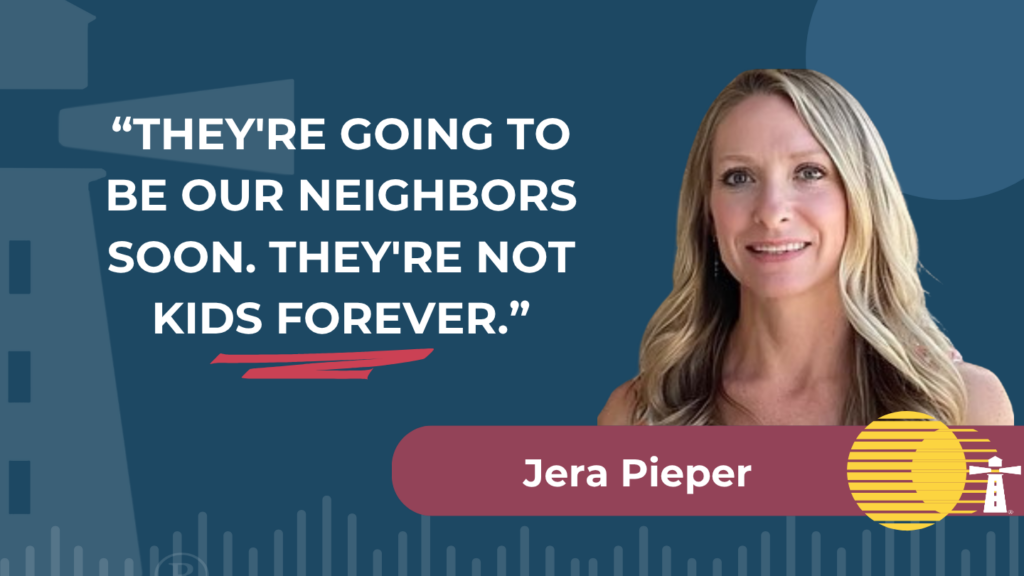
Jera Pieper, Director of Special Education at Franklin Jefferson County Special Education District, shares her journey from school psychologist to BCBA and now district leadership, emphasizing her passion for behavior support and systems-level impact. She explains how her co-op model serves 22 rural districts by pooling resources to deliver specialized services efficiently, while also navigating legal, operational, and staffing challenges. Jera highlights the importance of practical life skills, strong systems, and collaborative problem-solving to ensure student success—especially for those with the most intensive needs.
Topics Explored
- Career progression from school psychologist to special education director
- Role of BCBAs in school systems
- Special education co-op model in rural districts
- Delivering related services (SLP, PT, vision, hearing) across districts
- Staffing challenges in rural education areas
- Daily responsibilities of a special education director
- Legal compliance (IDEA) and IEP consultation
- Professional development and staff training
- Leadership and management style in education
- Conflict resolution among educators, parents, and teams
- Behavior programs and alternative placements
- Life skills instruction (cooking, budgeting, independence)
- Transition planning for life after high school
- Student success stories and long-term outcomes
- Importance of systems, efficiency, and communication in education
Full Podcast Transcript
Lighthouse Therapy (00:01)
Hello everyone and welcome to the brighter together podcast. My name is Janet Courtney and my special guest today is Jera Peeper. Jera is the director of special education at Franklin Jefferson County special education district and that is in Benton, Illinois. Jera, welcome to the show.
Jera Pieper (00:20)
Hello glad to be here.
Lighthouse Therapy (00:22)
So Jared, tell us a little bit about your career and how you got to this position as director of special education and then tell us a little bit about Franklin County, Franklin Jefferson County special education district.
Jera Pieper (00:35)
All right, can do. So I actually started out as a school psychologist. I have always been just very interested in how brains work. How do we learn? What is the best way to help people learn? And so I started as a school psych and really loved that. And as I got into that job, I felt like I couldn’t support teachers enough with those serious behavior cases. So I could only go so far with that school psych training and I needed to have some more support for that.
Lighthouse Therapy (00:56)
Mmm.
Jera Pieper (01:03)
So I actually went back to school to become a board certified behavior analyst and then kind of dove into a mixed role between a school psych and a BCBA, really working with kids in special education who had behaviors for any sort of reason, kindergarten through 12th grade for those, and really, really loved that and enjoyed doing that. Lots of consulting with teachers, being in there in those classrooms and observing. And so that was a super exciting role.
As I continued my education, I started to move up within the company. And so then I became a supervisor. We were more in charge of IEP fidelity, looking at goals, making sure we’re writing those IEPs really nice for those kiddos, that they’re individualized, that they cover what each kid needs, and that we’ve each got our working pieces and parts in there. ⁓ After doing that for a few years, then I began as the director of special ed. I’ve been in that role about eight years now.
Lighthouse Therapy (01:46)
Mm-hmm.
Jera Pieper (01:58)
So a much more administrative lead kind of on top of this pyramid of getting all of these services to our students. We work in Franklin and Jefferson County, so way down in the south of Illinois, pretty rural area, and we serve 22 different school districts. So we have a pretty good group of different school districts. They vary in size. You know, I’ve got some that are as small as, you 100 kids, and then I’ve got some that have thousands. And so for me, it was very important to…
Lighthouse Therapy (01:58)
Okay.
Wow.
Mm-hmm.
Jera Pieper (02:26)
learn all the differences, the distinctions and what makes each of those districts tick and really get in there and kind of figure out what’s that culture like and how do we support the special ed piece in that, provide those therapies, SLPs, ⁓ physical therapists, all of those things and kind of more of a management administrative role. So that’s where I’m working right now at Franklin Jefferson Special Ed.
Lighthouse Therapy (02:38)
Right, right.
Okay, so in is this an Illinois thing like do they do they outsource all of special education into a district in in all of Illinois or is that something specific to ⁓ rural areas? I’m just curious how that works.
Jera Pieper (03:03)
Yeah,
so it definitely differs on where you’re at. think the more rural areas lean on their co-ops for more support. So while my districts hire their own special ed teachers and their own aides, we provide all those supplemental special ed therapy services. Most of the co-ops in the Southern Illinois region, because I work with a lot of them really closely, are set up in a similar fashion. So we work, we’ll bring in and set up therapies for speech therapy and physical therapy.
Lighthouse Therapy (03:24)
Okay.
Jera Pieper (03:30)
A lot of us have our vision impaired teachers and hearing impaired teachers. So really any of those specialty areas, we find that we can have that group together in one co-op and then we can serve 22 districts more smoothly. You know, my district with a hundred kids doesn’t need a full-time SLP and a full-time physical therapist. So it really is kind of pooling together resources and pooling together funds so we can get each of those districts what they need.
Lighthouse Therapy (03:43)
Better. Yeah.
Mm-hmm. Mm-hmm.
Yeah, yeah, we’ve worked with one other district in similar in Illinois, exactly the same in multiple schools. And we would help them out with this one over here this year, because they had a maternity leave. And then we’d go over here and do this other thing another year. And yeah, it was it’s great. And I love the fact that you guys have that system, because it does there’s nothing worse than a school district that has one student that has PT. And how do I serve that?
child, you know, and how do I get that child the services because I can’t. mean, that’s something that we do as a company. It’s like just taking care of making sure I always tell people when I talk to them, it’s like, I don’t care how many how much you have or how much you don’t have. Let’s help us to fill in the gaps. We’ll help you fill. That’s the point of us as a contract company. Let’s fill in your gaps, whatever you can’t get because and sometimes it’s one and sometimes it’s I just need an assessment done. Well, I’ve got it.
Jera Pieper (04:30)
Yeah.
Yes.
Lighthouse Therapy (04:52)
who can do that assessment. So there you go. Yeah. So that’s really, really nice that you, that you, that the schools have that because it really does make it so much easier and the kids get the services they need. Yeah.
Jera Pieper (04:55)
Yeah, exactly.
Exactly. They get all the services
they need and we’re never having to worry about, no, who are we going to plug in or who can we provide for this kid because they’re already on staff. You know, they’re just building that back into their calendar for those kiddos. So that keeps delays from setting up with some outside providers or some things like that. We can kind of get right in there. But I will say as the pool shrinks for some of these positions, we’ve worked with some companies to get people hired into these.
Lighthouse Therapy (05:14)
Right.
Yeah.
Jera Pieper (05:31)
because we’re in a rural area, a little bit of a desert for some of these specializations. And so sometimes we’ve had to lean on some companies to provide remote services or one or two day a week, someone is traveling to our area. And so it’s definitely a mix and a match scenario depending on who we can get and provide those services to.
Lighthouse Therapy (05:41)
Mm-hmm.
Yeah.
Yeah, yeah, yeah, for sure. ⁓ And that’s the whole point. It’s like we’re, and that’s brighter together. All of the things that we do in education make us brighter together, right? Because we really want to make sure that the kids get the services that they need. So what does a typical day look like for you, Jera? I know that’s probably a terrible question because you don’t have a typical day, but okay, so give us a typical week. What does a typical week look like?
Jera Pieper (06:08)
Bye.
Sure, so a typical week’s gonna be, I’m typically gonna have to figure out if we’ve got missing people, know, attendance, we’ve gotta replace some subs, we’ve gotta make sure those programs are running smoothly. So our co-op actually does run several special ed programs within those districts. So we basically rent a room, we fully staff that, and those are the kids, maybe those schools don’t have the right staff to manage. So typically kind of those programs up and running, having a good day is how we start our week.
Lighthouse Therapy (06:33)
Aha, okay.
Jera Pieper (06:45)
and providing those. And then I’ll typically be in the office, you know, got lots of ISB reports, data, things like that to check on. ⁓ And there are always throughout the day, ⁓ some phone calls, hey, we’ve had an IEP ⁓ meeting and this question came up. I very much function as legal consult for a lot of my districts. And so I have heavy, heavy training in, ⁓ you know, law and IDEA and those types of things. And so,
Lighthouse Therapy (07:05)
Yeah.
Jera Pieper (07:11)
I am very much a consultant for all these districts. So when things come up, I’m usually the first call of, how do we handle this scenario? Or we’ve got a scenario that presents like this. What kind of ideas do you have? And so very much kind of ⁓ troubleshooting, problem solving throughout the week for specifics. ⁓ I also, and you mentioned kind of collaboration. I collaborate with a lot of our local co-ops and even with the superintendents association.
So I’m usually hosting some meetings for that or joining in a committee meeting for our legal panel that works through the state. And so I keep myself busy kind of jumping on some of those things. We provide a lot of professional development. So making sure all the pieces of that are set up and ready for our staff to come in or for the district staff to come in.
Lighthouse Therapy (07:36)
Mm-hmm.
Jera Pieper (08:02)
And other than that, I’m kind of kicking through whatever those daily tasks are. So writing IDEA grants and managing those functions or, you know, getting our policies up to date or making sure that really a lot of times they feel like we’re working through something and then going back through and ironing out some things. So, for example, when the restraint and timeout laws came out, we had to go through and rewrite some policies. We had to make sure some language was taking it out. We had to really look at what we were doing.
and make sure that we were following what their procedures were, but also best practice for what was working with our kiddos. I felt like we were in great standing for what we were doing, but our policies were old. And so updating those things, making sure they match what we’re doing, and always making sure, honestly, we’re going over and over some of our procedures to make sure that they’re smooth so that we’re smooth operating on the business level, and it’s all about service for the kids. We don’t want…
bumps in the road to have any effect on our kiddos. so just getting our grant funding, getting our budget in order, getting the right people hired in positions, those types of things are really important throughout the week and just kind of managing and keeping those things up. I would say, I typically tell people, I feel like I should go to work in like a fireman’s outfit because I’m putting out a lot of fires. You know, we’re always gonna…
Lighthouse Therapy (09:19)
⁓ Yeah, all day, every day. Yeah.
Jera Pieper (09:22)
All day, every day, there’s going to be some
calls that I didn’t expect and we go, oh my gosh, know, a scenario has come up. What do you recommend? And so I like being that problem solver. I kind of like thinking on my feet and trying to come up with ideas that work for everybody, because it’s not always a school district calling me. Sometimes it’s a parent calling me. Sometimes it’s a community member calling me. And so thinking about some of these problems, making sure we don’t have system wide problems that need fixed. And if they do, we’ll fix those, but really looking at those daily procedures.
Lighthouse Therapy (09:30)
Mm-hmm.
Mm-hmm.
Yeah.
Jera Pieper (09:52)
to make sure we have some smooth communication and that systems are running well so that everybody can just come to work and focus on their job. Working with those kiddos.
Lighthouse Therapy (09:59)
Right, right,
right. Yeah, because ultimately that’s why we do what we do, right? So those kids get the education that they need 100%.
Jera Pieper (10:03)
Yes. And as
much pressure as I can relieve from our teachers and our staff, the better they’re going to do because they have more time to focus on the kids and they have more time planning their own activities and their own things. And so, you know, we try to take any type of management off their plates and try to assist with those types of things so they can just focus on the kids.
Lighthouse Therapy (10:09)
Mm.
Yeah. So let’s talk about that a little bit because ⁓ I know we talked before the show a little bit, but how, what is your management style? You’ve got people in 22 different places. You’ve got people, I’m sure there are local people there. ⁓ How, what, how do you manage all of that without pulling your hair out? Cause your hair is long. It’s beautiful by the way.
Jera Pieper (10:45)
Yeah, thank you. It
can get interesting because we have a physical office located in Bitten, but we have two counties that we’re working in. And so some of those pieces are really planning and preparing very well, assigning people the right calendar and doing some of those pieces. My management style is very personal. ⁓ You know, for example, I know Mrs. Smith coaches basketball after school and she needs to
into her day close to this point. So that’s going to be the calendar she’s assigned. ⁓ I try to work really with people so their preferences are honored. So, you know, when you think of like a school psychology team, I may have someone who’s really good with behavior. I may have someone who just loves working with the little kids and wants to be in pre-K. And I may have someone who’s best with the high school students. I’m going to plug them in where their strengths are too. And so I think you really have to look at what are people’s strengths.
Lighthouse Therapy (11:29)
Mm-hmm.
Right.
Jera Pieper (11:38)
What do they like doing? Because they’re going to need to like what they’re doing and getting those pieces to all work together. You know, and so I very much think that it’s personal preference. It’s getting to know your staff. But a lot of what we do is very much appreciating the staff. If I know you’ve done something good, if I know that you’ve really worked hard for a kid or I’ve heard about ⁓ a good experience of a child, maybe you haven’t, I’m going to come tell you. I mean, I feel like I’m everybody’s biggest cheerleader.
Lighthouse Therapy (11:42)
Mm-hmm.
Jera Pieper (12:08)
What I really want to do is be on the sidelines, cheering them on so they can do their best. Because we know public education, sometimes we take a beat down. Sometimes it is not always, you know, fun and happy times. Our motto is very much, we are going to be here, but we might as well have fun doing it. So I think I have a lighthearted approach. And if something comes up that needs handled, people are not afraid to come to me because there’s not any issues where I’ve ever.
Lighthouse Therapy (12:16)
Yeah.
Yeah, yeah.
Jera Pieper (12:37)
unglued or really been hard on people and I’ve been told a lot we just sometimes need to come talk to you because you’re calming us down. We’re thinking we have you know these emergencies and you’re coming in going it’s okay we can manage this we can figure it out let’s problem solve ⁓ and so I think that that approach really makes it easier for people to come to me with problems and if they’re coming to me with them we can solve them before they’re too big. ⁓ I have a lot of people that really say you know your door is always open.
Lighthouse Therapy (12:46)
Right? Yeah.
Mm-hmm. Yeah.
Jera Pieper (13:06)
always open. Sometimes there’s a line outside my door because there’s enough people that need to talk to me, but I want them to know I am always available. Text, call, email, stop, buy. What do we need to chat about? And as a leader, sometimes you have to recognize sometimes people just need to vent some things out and you really actually don’t need to solve a problem. Letting them vent and sometimes I’ll come up with a solution and they go, okay, I think I’m going to try that. Perfect. Glad I could listen. Glad I could be supportive.
Lighthouse Therapy (13:09)
Yeah.
Hahaha.
Jera Pieper (13:33)
But I do think I have, you know, that management style that’s friendly and approachable, but they know I’m serious about what we’re doing for kiddos and that I work really hard for that. And so, you know, they are not afraid to come to me. I also think as part of my leadership, I don’t think anybody can be trained enough ever because I’m a nerd and I love it. I want to go to every professional development I can find. I want to hone in on something. If I hear about something new, like let me dive in.
Lighthouse Therapy (14:03)
Mm.
Jera Pieper (14:03)
And
so we have a very heavy professional development calendar. Our staff gets to kind of dictate that through some needs assessments. But I ⁓ don’t want to waste people’s time. Nobody’s got time to be out of the classroom. So if you’re to come sit with me for professional development day or some type of training, I want it to be practical, usable. And when you walk out, you go, OK, I know what pieces of this I’m going to use. And I don’t want to do a bunch of
Lighthouse Therapy (14:28)
Mm-hmm.
Jera Pieper (14:32)
kind of lofty training where they leave and they go, well, that sounded really great. But like, what do I do? I need practical tools in their hands. And so I’ve worked really, really hard to get good professional development training and adjust that schedule as needs arise throughout the year. So for me, you know, being very open, but making sure I’m training them so they have the skills that they’re going to need in those positions.
Lighthouse Therapy (14:36)
Yeah.
Mm-hmm.
Yeah, yeah. So what would you say is the toughest part of your job?
Jera Pieper (15:01)
I think the toughest part of my job is sometimes managing when parties disagree. You know, when we’re working with IEPs, sometimes different staff disagree on how to manage a child. Sometimes a school psych may suggest something or someone may suggest something that someone else says, I’m not doing that. How do we work through some of these problems? And for me, it’s typically bringing back the focus, the child and
Lighthouse Therapy (15:07)
Hmm.
Jera Pieper (15:28)
making sure we’re trying to make these things easy. We’re not going to come in and tell a teacher, hey, you have all these 5,000 things to do and we want you to do this full behavior plan. And it’s going to, you have to do something every three minutes. They’re like, can’t do that. So for me, it’s making sure when we’re consulting and we’re working that the solution we come up to is livable for everybody. Student can handle this. Teacher can make sure they implement it or an aid who can implement it. Parents are comfortable with what
Lighthouse Therapy (15:42)
Yeah, right, right.
Jera Pieper (15:58)
behavior we’re focusing on and how we’re managing that piece and everybody’s got to be on board. Working through some of those things can be difficult and I think we just have to work together, stay nice and level-headed and figure out what are those points where we’re kind of button up against each other and how do we work through those things. So for me that’s difficult because you know want to do, hey this is what the best thing is, but we’ve got to work with everybody.
And then I would mention on top of that, being from a small town area, a very rural area, if someone gets mad at you from a work thing, either you’re going to get nasty looks at the basketball game and at the park and at the grocery store. And so it’s very important for me that even if we don’t all agree, we can all live in this community together. ⁓ yes. And I think they’re very respectful of that because no one wants to go to their normal places and feel awkward either. And so.
Lighthouse Therapy (16:39)
Right.
together right now.
Mm-hmm.
Jera Pieper (16:57)
Even when we have those things, I’m not one that shies away from, hey, I know you’re not thrilled with me now, but like, let’s look long-term and let’s make sure this is a doable thing for us. And sometimes in those small town situations, grocery shopping can be kind of interesting.
Lighthouse Therapy (17:13)
Yeah. So on the flip
side of that, what would you say is your favorite part of your job or what are some of your biggest wins? Either one.
Jera Pieper (17:23)
I think right off the top favorites is an easy one. It’s the kids success. We just had a story last week where a student came in from one of our behavior schools. That’s a pretty locked down scenario. They’ve been removed from their home school. And some of those kids have some pretty high intensity, dangerous behaviors. One of the children who had graduated from there had come back in. He wanted to talk to his fellow students that he had gone to school with.
Lighthouse Therapy (17:27)
Yeah.
Jera Pieper (17:52)
He is currently at a four year university. He is currently working already at the department of corrections. He had bought himself a car and he was paying rent on a home. He’s only been out two years. That is the biggest success from a kiddo who a school said, you can’t even go here. You’re so dangerous to, hey guys, because of the support you provided us. And he said that because of you guys, I’m able to do this.
And the story was for the rest of the students, like you need to understand they are here for you. They do love you and what they’re telling you will make a difference. And you’re like, I’m getting chills talking about it. That’s what I want to hear every time we get a success story. Everybody’s like all the hard work, all the effort, all the bad days are worth it. When you know, a kid reached success and they say, Hey, I could have done it without you. And I appreciate you guys. So for me, that’s the easy one. And you don’t get as many of those.
Lighthouse Therapy (18:30)
Yeah, of course. Yeah, right.
Right? Yeah.
Jera Pieper (18:49)
I think as people would hope. So if you’ve got a teacher out there or anyone in the education system who really had an impact on your life, reach out to them. I’m telling you, even 30 years later, it will make their day. It will make them well up with pride and it will let them know what you did for your life’s work did have an impact. So reach out to those people. They love it.
Lighthouse Therapy (18:59)
Let them know, yeah.
Mm-hmm.
Yeah. And we don’t know, because we don’t, you know, we don’t, we’re not in your head. We’re not in your head. We, we work really hard to take care of you and want you to be successful and want to love into you and, and feed into what you need, your needs are. But, but we don’t always see it and it, and it can, at times it can be, can be hard because it’s like, you know, it’s, sometimes it’s a little bit of a grind, but it is worth it. And, and so hearing that and knowing that
Jera Pieper (19:17)
Yes.
Lighthouse Therapy (19:39)
And those, was telling someone in the last podcast that aha moment when you see that and they get it, it’s just such a beautiful thing, it really is.
Jera Pieper (19:47)
It is, it is so wonderful
to see them and growing into themselves. And so, you know, just to know we had a little piece in that we were able to, you know, let that little birdie fly and look at them. They’re soaring, they’re doing great. And so I love that, you know, for, for, it’s us.
Lighthouse Therapy (19:52)
Mm-hmm. Yeah.
Yeah, yeah, yeah, takes a village, takes a village
does. It really does. And, you know, that some people think that’s so cliche, but it’s really the truth. mean, it’s like parents are the first teachers, but they need the support of the schools and the schools have so many different people. So and so many specialized people that can help with whatever it is that you’re dealing with.
And that’s what they’re there for. And that’s what we’re there for, right? So it’s just so, and we get the privilege of doing that. it’s a blessing, I feel, to be a servant leader and to be able to do the things that we do in education. That’s the reason that we do what we do. It certainly isn’t for the pay.
Jera Pieper (20:30)
right.
Exactly.
Exactly. We’re in it for the heart. So if you if you love and appreciate us, come tell us. We need our hearts to pull good. That’s what we like. That’s what pays us. Yes. Well, and you had asked about some some wins as well. So that particular program is really one of my favorites because, again, it’s an off campus location. So it’s really our most restricted program. And students have engaged in some behavior that was pretty inappropriate for the school. So they’ve been moved to this off campus program.
Lighthouse Therapy (20:55)
Yes.
Yes, absolutely. need that. We absolutely need that.
Yeah, yeah, sure.
Jera Pieper (21:18)
And when I took over as the director, I already had been a psych and a BCBA at that location for some time, you know, kind of on and off. And I really thought there were some things I wanted to push and to change to make that a much more helpful program for our students. So I found and wrote some grants to get three full kitchenette sets so we can basically have like a culinary class. So we’ve got ovens, stoves, microwaves, all of those types of things.
Lighthouse Therapy (21:23)
Right, yeah.
Jera Pieper (21:47)
We’ve got washer and dryers, we’ve got refrigerators and freezers. And so now we have, we actually got enough stuff to set up a mock apartment as well. So we’re doing a whole lot of life skills. ⁓ We’re gonna show you how to wash and dry and fold laundry. We’re gonna go through lots of basics of cooking. ⁓ And in fact, just two weeks ago, the culinary program there invited us for their first dinner. So they had prepared a meal for us. They were so proud. It was the greatest thing ever.
Lighthouse Therapy (21:59)
Hmm.
Jera Pieper (22:16)
But for me, I’ve now got six kids who know how to feed themselves if they need to, who can feed a family when they get bigger. And so these are life skills we need that in these alternative programs, the kids just weren’t getting. And so for me, that was a really big win to get some of those really heavy duty, expensive equipment in there so that we can work on what’s life after high school. What are you going to do? We have a very strong transition to work program, but we needed those home skills. And so.
Lighthouse Therapy (22:21)
Mm-hmm.
Yeah.
Mm-hmm.
Yeah.
Jera Pieper (22:45)
You know, I actually had a student. reason I really went down that path was I had a student, one of my faves, bright, bright kiddo, pretty rough home life. And he stopped coming to school because students were making fun of him because his clothes smelled. He was wearing them day after day after day. They didn’t always have water. They didn’t always have laundry detergent. He couldn’t get new or different clothes. And so through some other grants, we’ve kind of stocked a store for those things because I don’t want any kid to not come to school for basic needs.
Lighthouse Therapy (23:00)
⁓
Jera Pieper (23:14)
not being met. ⁓ But after that, I was like, okay, we’ve got to make sure these kids can really take care of themselves in some of the situations they need to. And a lot of kids in that program were partnered with DCFS that has a residential home. So a lot of them, I think we’ve got about nine girls coming from a residential home. They’re not working on those skills there either. And so once you age out of a system, I want you to know how to manage a household, how to look at budgets, how to feed yourself.
Lighthouse Therapy (23:15)
Right.
Jera Pieper (23:43)
And that’s not a school program. That’s on top of the academics and all the other things that we do, but it’s so important for their life skills. And I think those things are things they really do carry throughout their life. So for me, that was a win to be able to really pump up and add coursework and classes and some areas that I think will help them throughout life.
Lighthouse Therapy (23:48)
Right, yeah.
Yeah, yeah, yeah. It’s, ⁓ it’s so crazy that to think that kids don’t know how to do some of that basic stuff. But they don’t, if you don’t, if you’re not intentional with putting your child in on the counter and watching you cook and having them, having them help and learning, learning that the stove is hot, you gotta be careful, you know, and
Jera Pieper (24:27)
Right,
right.
Lighthouse Therapy (24:27)
and that
you can’t put the darks in the dark blue jeans in with the white t-shirt. It’s not going to come out white. ⁓ It’s important. All of those things. Yeah.
Jera Pieper (24:34)
Right. And they were a little upset
the first day we started the cooking class because there was math involved and we’re like, we’re about to trick you into using math on a daily basis, but this is the math you’re going to need to use every day. so they’re really enjoying seeing how those pieces kind of fit together. And, and, Hey, you remember we talked about measurements in math. Now we’re using them and let’s see if we can get those measured out. Correct. So, so that’s been very
Lighthouse Therapy (24:45)
Yeah. Yeah.
Right. Yeah.
Yeah. And then just, you know, how do I balance my checkbook? You know, how do I pay my bills? It’s so it’s so different than what we used what I you know, I remember having a register now it’s all digital and does the math for you and.
Jera Pieper (25:13)
Right. I think
it’s less that they see. we actually, the whole program runs on a point system for behavior. ⁓ They exchange those points they earn for their good behavior for a store. They also get to choose what’s in the store. They’ll give us lists of things. we, things that are reinforcing that they’ll work for. But in the oldest high school group, we actually have that whole system set up like a bank account.
Lighthouse Therapy (25:29)
No.
Jera Pieper (25:38)
And so they have to write checks to use their points. They have to have a balance and a register. And so we’re teaching some of those banking skills, but in a way that really they understand and they really want to get it right because they want those prizes. They want those rewards and they like looking at, Hey, I’ve banked up so many points. Now I know I can spend this many. So we keep embedding things. said, we’re so tricky at teaching you guys because we keep embedding these things into those life skills or those daily things.
Lighthouse Therapy (25:38)
⁓
Right.
Mm-hmm.
But it’s so good, yeah.
Jera Pieper (26:08)
because that’s where you really use it, you know? So it’s been a super fun program for us there.
Lighthouse Therapy (26:10)
Mm-hmm.
And
not everything is, you we live in such an instantaneous society, you know, everything is right now, right now. But when you want a particular set of headphones and they’re $150, you have to save to get those headphones. And so you’re teaching them a skill, not only for that thing that they want while they’re there, but to understand that I don’t have $150 in my bank account, but I know that if I save, I can get there.
Jera Pieper (26:29)
Right.
Lighthouse Therapy (26:41)
That’s a skill that’s so incredibly important and so good for the kids to that’s probably why that one child is doing so well. You know, you’ve taught him all of those things.
Jera Pieper (26:48)
I know.
Well, and it’s funny that you say that because when they come in and they’re younger, that’s the problem. They don’t understand. You know, I have to engage in decent behavior throughout the day and then I get my rewards. We set it up and we talk that talk very much when they’re younger. So, hey, you’ve only owned 25 points today. You can buy something for 25 points or you can save for the next day. Every one of those first year newbie kids is spending their points. I guarantee it. I want to say.
Lighthouse Therapy (26:58)
Mm-hmm.
Mm-hmm.
Yeah, right away. Right
away. Yeah.
Jera Pieper (27:18)
And before
long, they see the kids with the bigger prizes or the bigger things or and it’s not always prizes. We do a whole lot of social things with that as well. ⁓ But they want that. And so they start to learn. If I if I add a couple of these days together, I can get something bigger. And by the time they’re in high school, that checkbook system is really just the way they’re tracking their own points because they know how that system works. So so it is great for that instant gratification versus no, you have to work for it.
Lighthouse Therapy (27:28)
yeah. Right.
Jera Pieper (27:48)
And if there’s a really bad behavior blow up, a consequence, you’re going to have to get some taken away. And that’s the consequence of the behavior. So.
Lighthouse Therapy (27:55)
Yeah. Wow. Fantastic. Absolutely fantastic. So Jera, where do people go if they want to learn? Cause you’ve shared so many things. I love it. ⁓ where do people go if they want to learn a little bit more about the things that you’re doing or, ⁓ finding Franklin Jefferson County?
Jera Pieper (28:12)
Sure, so we do have a website and it is just fjsped.org. ⁓ On that website, I always have my professional development calendar. So you can kind of look through and see what types of trainings we’re working on, what we’re focusing on. And on that website, we also have a listing and descriptions of some of those programs. So like I’ve talked about one of them quite a bit, we have four of those different types of programs that we run.
So kind of just some descriptions on there. One of them is leaning more towards communication disorders and autism. And so it kind of describes how that looks vastly different in the program. We’ve got lots of information on RTI, your tiered interventions and those things that we link out to some external websites. So we’ve really tried to provide as much as we can on our website and some really good links to some other pieces. Hey, you want some resources on?
looking at behavior charts because you don’t know what kind of chart you want. We’ll link all of those things. So what we’re trying to do is no excuses on lack of material or support or help. What do you need? We can get you there. We can get it for you. We can come train you. Just let us know what you need and we can provide that. So I feel like that’s helpful.
Lighthouse Therapy (29:16)
All right.
Very good.
Very good. Very, good. I love it. You know, it’s like we speak the same language, you and I. So so fun. So absolutely fun. It’s been such a pleasure to have you on the show, Jara. I appreciate it. And I love your heart. And I know that those 22 schools and all of those kids are blessed because you’re captaining that ship. So keep up the good work.
Jera Pieper (29:43)
you.
I appreciate that very much. It’s not an easy job, but it is one that fills the heart. So I like seeing those successes and working with our kiddos and you know, they’re they’re going to be our neighbors soon. They’re not kids forever. And so, you know, we got to get them ready to join the world with us and teach them everything that we can in that short amount of time while we’ve got them. You know, like I said, then they’re fly little birdie and we hope you do well. But it’s it’s good. And you know,
Lighthouse Therapy (29:48)
Absolutely.
That’s true.
Yeah.
Yeah.
Jera Pieper (30:10)
I would definitely say I love working in education because there are so many people like you as well that like, we’re here for this, we love it, and we’re gonna do whatever we can to make it the best for kiddos. And I just hope that people outside of the education world realize how much we care, how much we love their kiddos as well, and how much we want everybody to be successful.
Lighthouse Therapy (30:26)
Mm-hmm.
⁓ very well said. Very well said. Thank you. Thank you so much.