

Episode Description:
How One Georgia District Cut Student Suicides by Building Trauma Systems (Not Programs)
**When a rural Georgia school district faced a crisis, they didn’t just add another mental health program—they transformed their entire approach to supporting traumatized students. Here’s what happened.**
Student suicide rates continue to climb, and rural school districts face the added burden of limited mental health resources and geographic isolation. But Liberty County Schools in Hinesville, Georgia discovered something powerful: sustainable change comes not from crisis interventions alone, but from building trauma-informed systems that reach students before they reach their breaking point.
In this episode, we sit down with **Melanieann Pass, Project Director of Trauma Informed Support Services** at Liberty County School District, to explore how her team systematically reduced student suicides by shifting from isolated programs to integrated, community-wide trauma systems. Melanie shares the concrete strategies that made the difference—including suicide prevention coalitions, data-driven student identification, trauma-focused clinical interventions, and solutions for the modern challenges of social media and post-pandemic isolation.
**What You’ll Learn:**
– **Why programs fail but systems work:** The critical difference between adding mental health programs and building trauma-informed infrastructure across your entire district
– **The power of community partnerships:** How collaboration with SAMHSA and local partners through crisis intercept mapping created sustainable change
– **Data-driven identification:** A practical approach to identifying at-risk students through attendance patterns, counselor input, and behavioral data—not just test scores
– **Modern trauma drivers:** How social media, cyberbullying, and post-COVID isolation created a perfect storm—and what educators can actually do about it
– **Tier-based interventions:** A scalable model that moves beyond one-size-fits-all approaches to match student needs with appropriate interventions
– **Training that sticks:** How certification in trauma-focused cognitive behavior therapy equipped clinicians to address root causes, not just symptoms
**Notable Quote:**
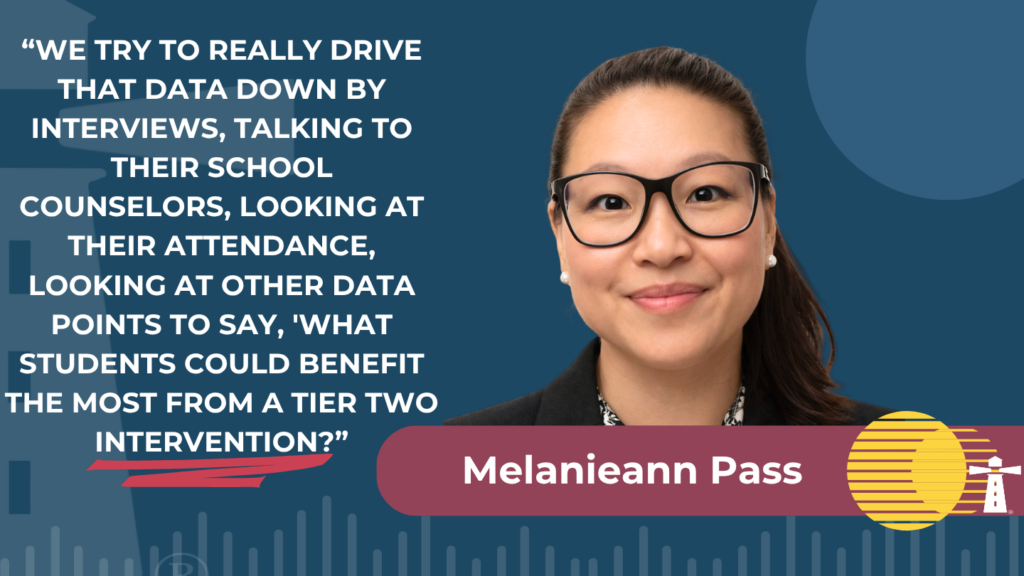
*”We try to really drive that data down by interviews, talking to their school counselors, looking at their attendance, looking at other data points to say, ‘What students could benefit the most from a tier two intervention?'”* — Melanieann Pass
**Perfect For:**
– District leaders and administrators wrestling with mental health crises
– School counselors and social workers seeking evidence-based frameworks
– Those responsible for student safety and wellness in rural or under-resourced communities
– Anyone ready to move beyond crisis response to preventative systems
**Ready to discover how one district transformed student mental health outcomes?** Press play to hear Melanie’s story and gain actionable strategies you can implement in your own school community.
**Don’t miss this episode—listen now and subscribe for more insights on building healthier, more resilient schools.**
FULL PODCAST Transcript
Lighthouse Therapy (00:01.326)
Hello everyone and welcome to the brighter together podcast. My name is Janet Courtney and my special guest today is Melanieann Pass. Melanieann is the project director of trauma informed support services at Liberty County School District and that’s in Hinesville, Georgia, which I found out is near Savannah. So Melanieann, we are super excited to have you on the show.
Melaniann Pass (00:26.763)
Well, thank you for the invite and it’s a pleasure to be here today.
Lighthouse Therapy (00:31.21)
Awesome. So tell our listeners a little bit about, this is a, this is a little bit, you know, we talk about multi-tiered system of support, which is kind of sounds like something close to that, but it’s a little bit different, right? So tell us what you do, how it became, came about and a little bit about Liberty.
Melaniann Pass (00:51.691)
Sure, so I can start with our demographics for Liberty County School System. We are a district of close to 11,000 students. are the most affordable housing from Savannah, Bryan County to Hinesville or Liberty County. So we have a lot of influx or increase in our population for people moving here. I would say our enrollment is up probably close to 1,000 this school year. So we are really growing. You know, a lot of people that may have
Lighthouse Therapy (01:00.079)
wow, big.
Lighthouse Therapy (01:17.014)
Melaniann Pass (01:21.625)
been here before in Hinesville, Georgia was very not as built up as it is today. So we’re moving right along pretty fast and rapidly as far as our growth. We have, like I said, about 11,000 students. have two high schools, three middle schools, seven elementary schools, one career academy and one alternative program in our school district. We are the school district that supports Fort Stewart’s in grade seven through
12th that live on post and then for the students that live off post which would be about 70 percent of the military families that live off post will be around we support them through pre-k through 12th grade and prior to my position here I was a military coordinator for the school district and in that capacity or in that role I helped facilitate the military interstate compact so students especially our high school students wouldn’t be impacted by having to take another class or class
Lighthouse Therapy (02:04.578)
Wow.
Lighthouse Therapy (02:17.468)
Melaniann Pass (02:21.451)
that didn’t fit into their graduation requirements but could have been the same coursework that they’ve done in another state when they moved here because we do have a lot of students that are moving quite frequently and I would say maybe two to three years depending on you know there I guess their military members position here at the installation. So sometimes that is impacted because people don’t place them in the right classes they’re unsure how to place them they’re telling them they can’t meet the state’s graduation
Lighthouse Therapy (02:27.192)
Mm-hmm.
Lighthouse Therapy (02:35.448)
Wow.
Lighthouse Therapy (02:39.416)
Yeah. Yeah.
Melaniann Pass (02:51.371)
requirement and so with that being said you know we were able to really work out our compacts overseas in state and really get those students on track to graduate. With that being said this is my ninth year here in Liberty County. I moved down here from Virginia and you know this is the furthest south I’ve been so it was really different you know moving from another state to Georgia and learning about their education and I really
Lighthouse Therapy (03:02.936)
Great.
Melaniann Pass (03:21.241)
really think Georgia has a great education system. They have the Hope Scholarship, the Zell Miller Scholarship, so when students receive a certain GPA when they graduate, they’re eligible to have like scholarships to help them in their post-secondary. So I think it’s really, really a brilliant thing that Georgia is putting the post-secondary education back into Georgia and their schools and universities. Since I’ve been here as a military coordinator, you know, you never think as an educator you would go through something like
Lighthouse Therapy (03:34.894)
Fantastic.
Melaniann Pass (03:51.123)
COVID and during COVID, know, we just, everybody was probably at a standstill. Like, what do you do? How do you educate these kids? You know, what is our plan? And to kind of gather and get everything together to work, you know, school district out was a lot. And I think the big part was students being isolated from their afterschool activities, you know, students seeing a lot of families that, you know, members or people that had passed away from COVID and just kind of
Lighthouse Therapy (03:52.642)
Right.
Melaniann Pass (04:21.117)
being isolated I think and not being able to do a lot of things that they would normally do. I think school connectedness is important when you’re looking at you know children students and schools and for kids to feel connected they come to school they’re increased attendance they’re able to join different activities they’re able to identify trusted adults and during that time you know we had a lot of students who were struggling internally and externally emotionally and so we
We did have a few suicides during that time from our students. for me it was like, you know, what do you do? Like, you know, I can sit here and say I’m sorry to parents or, you know, that was a terrible thing, which it is. But, you know, on a deeper level for myself it was like what can you do to kind of help and really change or impact students, impact community. As I mentioned before, moving from a different state to this state, was a big
Lighthouse Therapy (04:54.862)
Hmm.
Melaniann Pass (05:20.857)
eye opener for me because resources were limited. Clinicians weren’t readily available. Insurance was different down here. I came from Virginia where, you know, if you had Medicaid, you got immediate services. were service providers readily available. You know, if you had a crisis, your community service board would come out and assess the crisis and we were able to move students and families. And then maybe coming to more of a rural area or maybe another state that didn’t have as many resources.
was really hard to navigate those mental health concerns and problems. So that’s something that I really, really honed in on and like, hey, what can we do? From that point, I kind of went to reach out to people from the state level, like…
Department of Behavioral Health. Like, hey, you know, do you have anything that you could provide for suicide prevention? Like, what can we do to really work with students, you know, work with families, work with people that, you know, are struggling, but they may not be, you know, telling you, hey, I’m struggling. They’re kind of suffering in silence. Or they may be that model student that might be a perfect student that you look at to say, hey, they’re involved in ABC extracurricular activities. They get good grades. You know, they’re almost a perfectionist, but you don’t
know how they’re struggling internally. So those are some of the factors and some of the things that I was looking at to say hey what can we do to really help our community. And that was a battle so that you know sometimes you know you get help from your Department of Mental Health and you know really trying to figure out you know what can you do to move your community move your school system forward and how can you help provide some type of intervention and prevention for students. And I will say some.
Lighthouse Therapy (06:38.86)
Right.
Lighthouse Therapy (07:02.19)
Right?
Melaniann Pass (07:06.425)
your community may not be ready to acknowledge that there is a problem. They may not be ready to work together. And so trying to get everybody to work together was a real, I don’t wanna say battle, but it was a real accomplishment. One thing that I started to notice was, you know, we are a military community, but we have the highest veteran population in the state of Georgia. So, Hinesville, at the time we were looking at our statistics was about
Lighthouse Therapy (07:33.838)
Melaniann Pass (07:36.327)
about 24, 26 % of veteran population for Hinesville. And then in that case, we had a lot of veteran suicides pass during COVID, you know, lot of struggles. And then for some families, this is like their first duty station. And so things that they are struggling with as a new, you know, military spouse or, you know, just entering the military is different. So you kind of look at those factors too. And one great thing that we were able to create was a
Lighthouse Therapy (07:39.768)
Wow.
Lighthouse Therapy (07:59.513)
Mm-hmm.
Melaniann Pass (08:06.211)
a suicide prevention coalition for our community. And once we did that, we worked with our community partners, we worked with SAMHSA, SAMHSA came down and did the crisis intercept mapping for us, and really worked with our community partners. And from that starting point, we were able to really house and fully commit to a suicide prevention coalition. And we do that in conjunction with a lot of our community members here in Mercer University.
So we have a partner from a university that kind of helps and runs and she facilitates that. That’s Dr. Kimberly Roth. And so we meet monthly to come up with ideas of what we can do to really bring awareness to suicide, what prevention tactics and methods we can use, what can we do to help build our community, what trainings we can offer or what the community needs would be so that way we can offer things to help them.
We recently did a needs assessment for our community. And I feel that the Suicide Prevention Coalition kind of takes care of our adults in our community, because when you have veterans or you have a lot of suicides in your community that are dying by suicide, those are our family members to our students. Those are, you know, parents. Those really impact students. And so, you know, we got that up and running and that was a big, big, that was a lot of
Lighthouse Therapy (09:26.35)
All right. Yeah. Yeah. Mm hmm.
Melaniann Pass (09:35.953)
work. And then from there you kind of reach out to your Department of Education to say hey can you connect me you know what can we do to get possibly some grants because everybody that’s working in a school district knows money is limited you know sometimes money may not be readily available to provide services or provide personnel to help with that. So luckily we were able to partner with a few people. The state had introduced me to some folks and then I
Lighthouse Therapy (09:58.329)
Mm-hmm.
Melaniann Pass (10:05.837)
ended up meeting our evaluator, Dr. Emily Graybill. At that time, she was from Georgia State University. Now she’s a professor at Rutgers. And so we were able to partner and all come together to work on this grant. And then if it wasn’t for her, we wouldn’t be able to really have our grant up and running. And in addition to that, we worked with Frasier Counseling Center, which is a nonprofit counseling agency in our area that will come and provide services. So right now, I’m
Currently the project director for the trauma informed support services and our project title name is Project Wellness and Wellbeing for Liberty County. Back in 2023 we were awarded the grant and it was close to a million dollars a year for four years and that was for us to really build a tiered infrastructure under MTSS which is the most tiered system of support because you know social and emotional learning
Lighthouse Therapy (11:00.566)
MTSS, yeah. Right.
Melaniann Pass (11:05.657)
really blew up during COVID like, hey, what do we do? What is social emotional learning? What does it look like? How can we really provide those intervention and prevention methods to students? So that’s something that we’re currently trying to do is really build into our system, really work with our other partners under the MTSS program, which will be academics and behavior. And next year, the Georgia Department of Education is rolling out that all school districts have
Lighthouse Therapy (11:07.875)
Yes.
Melaniann Pass (11:35.599)
to align toward the Georgia MTSS process. And so in theory it sounds really great in theory, but during the application it’s really, really hard because sometimes people tend to continuously work in their own little silos. So it’s like how do we merge it? And so with the grant, I feel like the grant has really helped us really execute things and really get a great infrastructure going down. When you get a federal grant from SAMHSA, I feel like my first year really wasn’t
Lighthouse Therapy (11:42.497)
Mm-hmm. All right.
Melaniann Pass (12:05.433)
wasn’t a year of working it. It was a year of hiring personnel, doing all the training, just figuring out what you’re doing, trying to get your feet on the ground running, building the plane as you’re ready to take off. that was really, really a hard, hard year. And then, you know, sometimes when you do grant work, a lot of people don’t understand that it’s always changing. You’re always backing up, fixing it, thinking of a better method, a better framework on how you can execute
Lighthouse Therapy (12:17.235)
is there flying it, right? Exactly.
Melaniann Pass (12:35.553)
things, know, learning from your mistakes. And sometimes for people who don’t have lot of resiliency, it could be hard. So it could be a very hard job for them to really understand and comprehend. And I think that’s just the beauty of grant work is just, you know, learning and learning from your mistakes, piloting out small and trying to add on to bigger pieces. And that’s currently, you know, what we’re doing. We are in our third year of our grant. It really has gone by so fast.
…
Lighthouse Therapy (13:05.58)
Yes.
Melaniann Pass (13:07.089)
And you know, under the MTSS process, which is the multi-tiered system of supports, I’ll kind of explain it in case people who aren’t familiar with education will kind of understand what it is. So, you know, as I mentioned previously, we have about 11,000 students. So if you have students who may need social-emotional learning, it’s really hard to service 11,000 students. So what you want to do is build a really strong foundation, and that would be your tier one. And that would be having everybody in the school
Lighthouse Therapy (13:12.206)
Mm-hmm.
Melaniann Pass (13:36.905)
really practice and model that behavior. And then also working with your PBIS, your Positive Behavior Intervention Supports, to really work on the behaviors, really put out the social, emotional, and things in academics. We found that a lot of students who are struggling academically have a lot of underlying problems, and that could be emotional dysregulation, that could be a lot of family problems. And I also think with the generation of
social media, everything is so readily available to them. And they have a short attention spans. A lot of things they want to, I don’t want to say cyber bully, but sometimes maybe lack of better words, cyber bully other kids. And then it comes into the school system because they can say what they want to say on social media. They can provoke who they want to provoke on social media. And then sometimes it gets back and then that becomes another issue for us in the school.
system. So with those issues, you know, coming about, you know, with the social media, it’s been really tough. I was, I grew up in an era where I didn’t have social media, so sometimes, you know, you know, and it is addictive because I find myself scrolling at night and I’m like, okay, I need to be in the bed. But just having, you know, the lack of
Lighthouse Therapy (14:37.964)
Sure.
Lighthouse Therapy (14:48.906)
Me too.
Lighthouse Therapy (14:56.654)
Mm-hmm.
Melaniann Pass (15:00.691)
I would say, I don’t want to say communication, but the lack of talking it out resolving problems, conflict resolution.
Lighthouse Therapy (15:06.354)
I, I, yeah, I’ve said that before on the show. I don’t know how many times social media is ruining communication. really is. Cause there are so many pieces to communication that you just don’t get on social media and you’re getting the text and that’s, know, you’re getting what’s the print that’s on the phone or the, the funny meme or whatever, but it’s not communication. is not communication. Communication is so much more complex. Pragmatics, that whole pragmatics piece is just pulled out.
Melaniann Pass (15:13.685)
Yeah.
Lighthouse Therapy (15:36.088)
when you look at social media. so you get one, it’s like looking at something that’s three dimensional in one dimension, you know? So anyway.
Melaniann Pass (15:46.335)
Yes, and I also think too it’s a matter of interpretation because some people interpret things differently, know, so, you know. Right.
Lighthouse Therapy (15:49.997)
yeah. And the message can be misinterpreted because you are only looking at one dimension, you know, so much of what we do all day for communication is not just the words. It’s, know, I talk with my hands and you you get intonation and prosody and all of those things. And when you pull all of that out of communication,
It’s flat and you miss half of it and kids do not have the skills, do not have the social emotional ability to interpret those in a way without saying, Oh, she’s attacking me when she may not have been here. She, shouldn’t just say she, but yeah. So it’s, it’s definitely, I agree with you 1000%. It’s, drives me crazy. Obviously I got on the soap box there. So there you go. Yeah.
Melaniann Pass (16:39.383)
you
Yeah, it’s a battle, you know, and then I think Georgia is having the ban of cell phones, you know, in schools. So what we’ve tried to do to really kind of really work on that this school year and last school year was to have the little pouches where they have to put their cell phone in a pouch and it’s magnetic. They can only open it at the end of the day. They have certain areas where they can, you know, put it on a magnet and it unlocks it. And so that’s something that we were doing. But the kids are really smart now.
Lighthouse Therapy (16:47.022)
Texas too.
Melaniann Pass (17:11.081)
So they’ll buy the big magnet on Amazon and unlock it or hit it and then it unlocks. So they’re really brilliant out here. But you know, that’s something that again, you know, going back to the grant work is what we’re trying to do is build that strong tier one. And we’re 80%, really 100%, but our target would be 80%. And then also we’re screening students. So we’re also screening students through a universal screener. And I just want to make it clear, it’s not a mental health screener. It’s just a universal screener to see what they’re
Lighthouse Therapy (17:24.739)
Right.
Lighthouse Therapy (17:40.386)
Mm-hmm.
Melaniann Pass (17:40.713)
struggling with if they’re struggling with little anxiety or if they’re looking at the behavior, certain behaviors, things like that. So what we’re trying to do is really identify students who need help through that screener. And then once we have those students that are identified, we have an interview with them to say, remember that screener we did back in September? Do you feel like you might need more support? Or is there someone you can talk to? It’s just a series of maybe five little questions like that.
And sometimes those students will kind of open up and say, yeah, I think I might need a little support because I’m struggling or I’m transitioning or something happened. And then we’re able to kind of help identify students who are struggling internally and externally. And what I mean by that is internally, meaning emotionally, and then externally, sometimes behavior. Because sometimes you’ll see a lot of external behaviors, but you won’t capture those kids who are good kids. But they may not show up as behavior problems.
Lighthouse Therapy (18:38.946)
Right. But they have all of this internal stuff going on. Yeah.
Melaniann Pass (18:42.23)
Yes.
So what we try to do is really drive that data down by interviews, you know, talking to their school counselors, looking at their attendance, looking at other data points to say, hey, you know, what students could benefit the most from a tier two and a tier two would be our like intervention prevention, which would be a small group setting, maybe a check in, check out, you know, providing an extra layer of support to those students who might just need that little bit of additional support. And we’re targeting
15 percent of our population at that point. And then our tier three would be the students who need the most support which would be our other partner Frazier counseling will bring in the clinicians and they would come to the schools to service those students. So we do have a referral tracker process that we’re trying to do a centralized referral. You know so far we’ve done about 95 students this year that have been referred to us and sometimes you know we have a team and our
Lighthouse Therapy (19:33.422)
Mm-hmm.
Melaniann Pass (19:42.921)
multidisciplinary team looks at it, reviews it. We may send it back to the school to ask more questions. Or we may say, hey, this is a tier two issue. Maybe you could put them in a small group. Maybe you could assign the student a mentor and do a check in and check out. And then going back to our tier three, if they do need that last layer of support, the clinician will come out and see that student into our schools. And it is free to our students.
are a high poverty area. Everybody this year receives free lunch and free breakfast. Before that it was about 69, 68 % of free and reduced lunch for our school district. So we knew that paying for additional mental health supports would be kind of impossible for some students. They may not have the insurance. They may be temporarily living with a family member due to another situation. So we are able to really compensate
and pick up the cost for that clinical help. And so that’s really been a big thing for us. And then our clinicians are trained or certified in trauma-focused cognitive behavior therapy, and they’re able to really work with those students. And then in our tier two groups, we really trained our social workers, our school counselors, to really provide some skills to our students. Because what we find out, the common theme, when we look
at referrals were loss. know, a lot of students have a loss of a parent, a relative, sibling, somebody very significant and close to them. And we also kind of incorporated a local agency to come in called Kate’s Club to kind of help, you know, work with our students, to work with them in regards to a family loss or a death of somebody. Grief was a big issue. And then we also found out that, you know, a lot of students are just really strong
struggling, you know, we have a lot of students who have a lot of different family dynamics, you know, and then, you know, that would cause a lot of other underlying issues and behavioral issues. you know, we really are working to really help students. And, you know, sometimes you have staff members that need help. have, you know, people in our own little group of what we’re our grant trauma work that we’re doing that, you know, need help. And it’s just you’re not alone. So, you know, some
Melaniann Pass (22:12.441)
Sometimes I would think, maybe you’re alone, you you’d feel alone out here. I would say a lot of people would need the support. And it’s just a great opportunity for us to be able to have the financial means to really support students and families in our school district and to really also work with our community partners. One part of our grant is a cooperative agreement. So we really work out here and train our other partners like our early childhood education centers, really working in conjunction with
Fort Stewart, Behavioral Health, or really working with like EFMP at Fort Stewart, which was the exceptional family members program at Fort Stewart to really get them trained. So what I kind of do as a project director is really engage in my community piece and really cross train. So when I have certain trainings, I know other agencies may not have the funding to support that. So I will pay for it and have them work come to our training so they could re-deliver that therapy or whatever.
Lighthouse Therapy (23:10.647)
Nice.
Melaniann Pass (23:12.481)
skills or prevention intervention techniques that they need to their agency or to help service students. Our huge goal for us is to have therapy or
All year, so, you know, we’re working over the summer people think summertime, know is our downtime But honestly in education is my most busiest time Because we’re prepping we’re training we’re you know doing class work or not class work But we’re actually teaching classes during our summer institute to teachers who may not know about trauma-informed practices Our goal in our district is to have everybody trauma-informed In our school district so they know that trauma is there, you know, the three different types of trauma
Lighthouse Therapy (23:33.656)
Mm-hmm. Mm-hmm.
Melaniann Pass (23:55.561)
and then what behaviors to look for and how to deal with it because sometimes people may raise their voice or kind of yell and that could be a trigger for a kid that may have trauma or may not understand why the student is missing so much time or why the student has been absent for so many days. you know anything that we can do to connect services, connect
Lighthouse Therapy (24:05.826)
Mm-hmm.
Lighthouse Therapy (24:17.442)
Yeah.
Melaniann Pass (24:19.145)
you know, kind of like a wraparound service is, you know, one of our main goals here for the grant.
Lighthouse Therapy (24:26.634)
Amazing, amazing. So you were talking, you said the name of where the grant came from. Can you give me just a little bit more like how did you know to go there to get that grant?
Melaniann Pass (24:41.823)
Okay, so to my knowledge, I’m not an expert, but to my knowledge, I know it’s two mental health grants out through SAMHSA. SAMHSA, you would ask me and my brain would forget.
Lighthouse Therapy (24:51.67)
Yeah, Sam. So what is Sam? So tell me what Sam says. That’s okay. That’s okay. It’s if you can
Melaniann Pass (25:00.201)
Substance Abuse Mental Health Administration.
I probably don’t have the acronym correct, but I do believe that’s what it is. And that is a federal agency, so most of your grants are gonna run through the federal agency. And their goal is to provide prevention for substance abuse, mental health, things like that. And so, you know, luckily for the state of Georgia, they had the Project AWARE grant going on, and a lot of our localities here had the Project AWARE. And so TIS is kind of like the baby grant to Project AWARE.
Lighthouse Therapy (25:17.464)
Gotcha. Okay.
Melaniann Pass (25:33.257)
their five-year grant, we’re four-year grant. We are a service grant, so we are providing direct services to students and working with them. And so we were able to apply for that. It’s a long process, just like trying to upload, make sure you have your wording right, make sure you have the titles to your uploads right, make sure you have everything correct was beast. It’s a lot of work. And then me switching
Lighthouse Therapy (25:35.681)
Okay.
Lighthouse Therapy (25:40.109)
Okay.
Lighthouse Therapy (25:49.447)
I know. Yeah. Yeah.
Lighthouse Therapy (25:59.886)
Yeah.
Melaniann Pass (26:03.221)
into my role because I didn’t think I mentioned this but my background is school counselor so I was a school counselor for so many years.
Lighthouse Therapy (26:09.11)
okay. That makes sense. Yeah.
Melaniann Pass (26:10.879)
And then, you know, was able to really help in that role as a military coordinator, because I knew about high school Carnegie units, know, graduation requirements, all that great stuff. And then really kind of working into that social emotional piece and academics and career, the domains that we use as school counselors, you know, for the grant, especially honing in on that social emotional learning. So it was a lot of work. You know, it was a lot of work trying to get everything together. And I could not have done it without
Lighthouse Therapy (26:20.419)
Mm-hmm.
Lighthouse Therapy (26:39.67)
Yeah.
Melaniann Pass (26:40.873)
without, you know, Rutgers. Yeah.
Lighthouse Therapy (26:43.63)
That was amazing. That’s amazing. you’re making such an incredible impact on the students and where, know, what’s gonna, know, keeping them from making a decision that is not, I mean, they make that decision to kill themselves and that’s it, right? It’s tragic, so tragic.
Melaniann Pass (27:05.429)
Yeah, and I think just the additional support that students need because you know here in our community you have a lot of one parent families, have a lot of grandparents raising parents, know, and I think just, you know, I’m a different generation but you know looking at back like if I had to be a teenager now it would be very hard to be a teenager, you know, because I think they have more challenges than what I had growing up and you know just the ability to have that safe space to have
Lighthouse Therapy (27:08.483)
Mm-hmm.
Lighthouse Therapy (27:16.513)
Mmm.
Lighthouse Therapy (27:25.912)
Yeah.
Melaniann Pass (27:35.383)
that trusted adult to really know that if you need help somebody at school is there that cares about you and they’re gonna get you the help that you need and you know and I’ll be honest with you I feel like all educators are there you know are trusted adults and really care about students and really want to connect them to services or connect them to help so
Lighthouse Therapy (27:44.108)
Yeah.
Lighthouse Therapy (27:56.237)
Yeah, it’s a it’s it’s definitely a service industry where we have you have to you have to have some compassion to be an educator for sure. It’s not it’s not easy. It’s not any it’s not an easy job. That’s for sure. Well, I know we’re we’re almost out of time, but we’re I’m so impressed with what you guys are doing. it and it’s I know that you’re changing a generation and know that we’ve got you’ve got identification in place and you’re helping these students.
Melaniann Pass (28:05.214)
yes. It’s not easy. It’s not easy.
Lighthouse Therapy (28:26.282)
If someone has a question, where would they go about, finding you or finding this grant or just give me a little, like to give our listeners, I always tell people, tell us, tell us how we find out more about your school. Well, you have very specific like things. So, but I’m sure there are others that have questions. Where would they go?
Melaniann Pass (28:46.295)
You could go to our district website, is www.liberty.k12.ga.us. And then there, if you go under student services, you’ll find we have a page attached called TIS. And definitely you could reach out. If you have any questions, you could reach out. If anybody’s listening is interested in the SAMHSA grants, they have a SAMHSA forecaster that you can go to, or just Google SAMHSA. And then you can look at the grants available.
Lighthouse Therapy (28:53.912)
Okay.
Lighthouse Therapy (29:15.18)
And SAMSA, is it S-A-M-S-A? that how it, is that what?
Melaniann Pass (29:19.16)
HSA, hold on let me write it down. SAMHSA.
Lighthouse Therapy (29:21.998)
I just want to make.
Okay, S-A-M-H-S-A.
Melaniann Pass (29:29.395)
And it should be a grant forecaster out there that they could look at.
You know, I would also maybe talk to your local universities or colleges because you always have an evaluator or researcher that may know something that could assist you. Luckily for me, I was able to link up with Dr. Graybill and that really helped because, you know, you really have to have somebody experienced to kind of guide you. You know, it was a whirlwind for me to become a project director. You know, I’ve had a lot of jobs. I was a career switcher prior to becoming a school counselor.
Lighthouse Therapy (29:39.342)
Mm.
Melaniann Pass (30:03.999)
and I tell everybody this is probably the hardest job I’ve ever had trying to get people to see your vision, change their mindset, really work for students and things like that. So it’s hard. It’s not an easy job.
Lighthouse Therapy (30:19.81)
Yeah, but you’re doing it and you’re doing it for those kids and the adults too. And I love your passion and what you guys are doing. just, it’s so important. It’s so impactful to this generation and so needed. So thank you, Melanie and for your passion and for fighting for these kids. It’s just, from the conversation, I know it wasn’t, it’s still not easy, but you’re still doing it.
keep up the good work, you know, just it’s so sad when kids can’t learn because of something that’s going on and the fact that they have a place to go is so important. So thank you.
Melaniann Pass (31:04.417)
Thank you.
Lighthouse Therapy (31:05.558)
All right, well, it was been great to have you on brighter together. I know that people will probably have questions for you, so I look forward to other people learning because you know, this is the whole point of brighter together is to give people information exactly like what you’re doing so that we can help more kids because this this goes out and you never know. You you know, you never know who else is going to listen to this and have a have have an opportunity to go.
I can do that. I can help my kids too. And that’s, it’s not a number that I know I’ll ever be able to put on this side of heaven, but I know that things are changing because of the good things that schools are doing. And so keep up, keep it up. Thank you.
Melaniann Pass (31:51.927)
Thank you.